Torta (Mexican Sandwich on a Bolillo Roll)
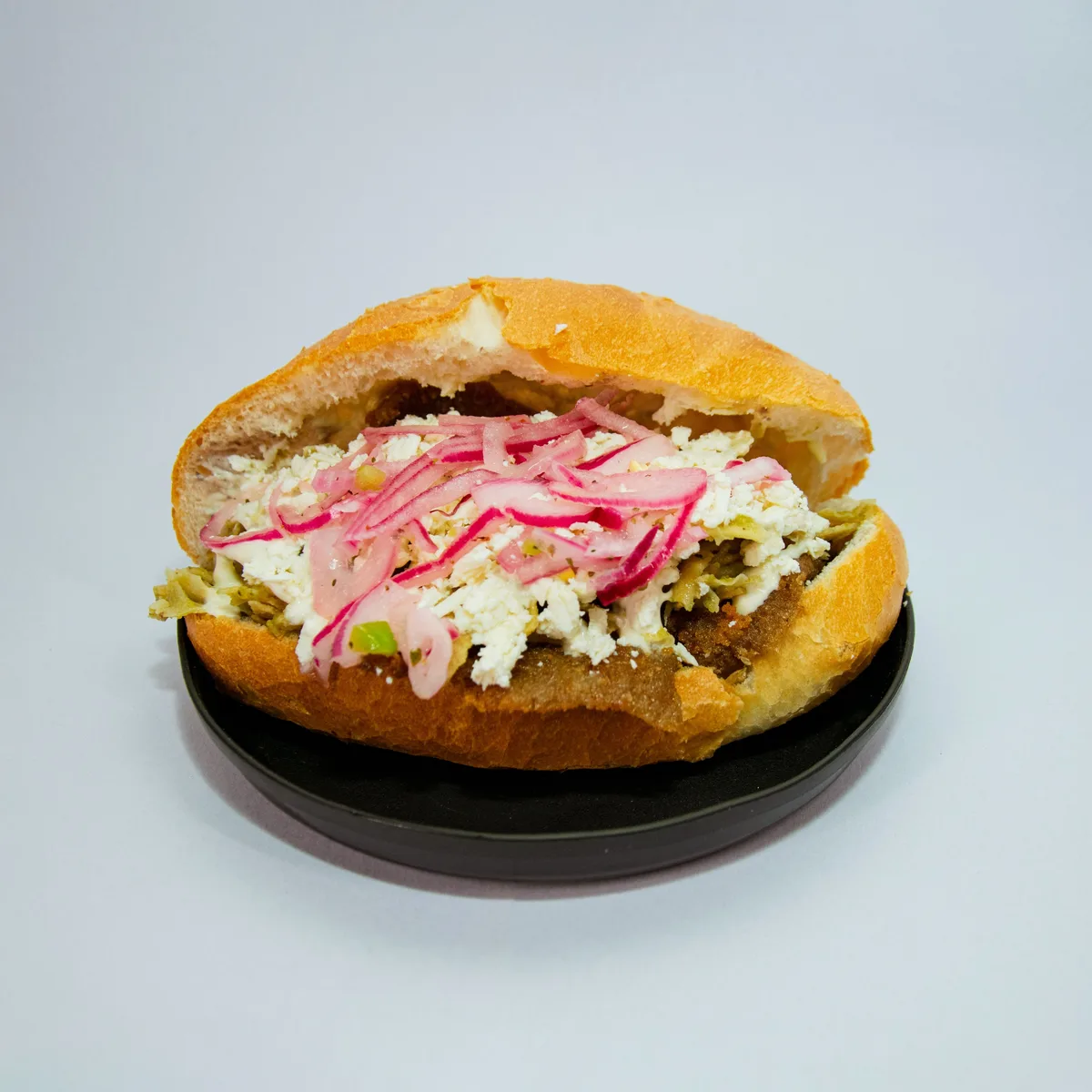
A torta is a Mexican sandwich built on a bolillo, a crusty white roll with a soft interior, and it is a full meal rather than a snack. Done well it holds together to the last bite. Done carelessly it turns into a wet roll with the filling sliding out of one end, and the difference is three small steps that take about four minutes: hollowing the crumb, toasting the cut faces, and using beans as a barrier. The recipe card carries the full method with USDA-calculated numbers, and this page covers all three.
Ingredients
Method
- Split the rolls lengthways and pull out a little of the soft crumb from each half, leaving a shallow hollow. This makes room for the filling so the torta closes.
- Warm the mashed beans in a small pan with a splash of water and half the salt until they are spreadable but not runny.
- Toss the shredded chicken with the lime juice and the remaining salt.
- Heat the oil in a skillet and toast the cut faces of the rolls, pressing them down, 1 to 2 minutes, until golden and dry to the touch.
- Spread mayonnaise on the top half of each roll and the warm beans on the bottom half, right to the edges.
- Layer the chicken onto the beans, then the queso fresco, tomato, onion, jalapeno and avocado.
- Close each torta and press it down firmly with your palm, or weight it under a heavy pan for a minute.
- Cut in half on the diagonal and serve at once, while the cut faces are still crisp.
What Makes a Torta a Torta
Tortas are sold everywhere in Mexico, from breakfast carts to late-night stands, and the format is consistent even when the filling is not. A split bolillo or telera roll, a spread, a protein, and cold garnishes: avocado, tomato, onion, jalapenos, lettuce, crema or cheese. Common fillings include milanesa, which is a breaded cutlet, carnitas, ham with cheese, scrambled egg, and shredded chicken as on the card. The torta ahogada of Guadalajara is its own thing entirely, a pork torta drowned in a thin tomato and chile sauce and eaten with a fork. This page builds the standard shredded-chicken version.
Why This Recipe Works
- Toasting the cut faces builds a moisture barrier. Bread crumb is a sponge, and the fillings in a torta are wet. Dry heat on the cut surface drives water out of the outermost layer of starch and browns it, and that thin dehydrated layer takes up moisture far more slowly than raw crumb. It is the same reason a toasted base holds under a poached egg.
- Pulling out some crumb is what lets the sandwich close. The crumb removed from the middle, called the migajon, is the volume the filling then occupies. Leave it in, and the filling has to push the two halves apart, which is why an untouched roll ends up gaping open and shedding its contents.
- The bean layer glues and seals at once. Mashed beans are thick and starchy, so they cling to bread rather than soaking into it, and they hold the chicken in place instead of letting it slide. Spread to the edges, they also block the tomato and avocado juices from reaching the crumb.
Ingredient Notes
The roll. A bolillo is the right bread: crisp thin crust, light open crumb, sturdy enough to press. A telera, which is flatter with two grooves across the top, is equally traditional. Outside a Mexican bakery, a French roll or a small ciabatta is the closest substitute, and the card calculates the rolls from a French roll entry and discloses that under it. What does not work is a baguette, whose crust is too hard and tears the roof of your mouth, or a soft burger bun, which collapses. Because bread varies quite a lot between bakeries and brands, the note under the card says to check your own label.
The filling. Shredded chicken tossed with lime, which keeps it from tasting flat against the rich spread. Chicken tinga is the upgrade, since its sauce is already reduced to cling. Leftover carnitas or carne asada both belong in a torta.
The garnishes. Avocado, tomato, onion and jalapeno, all sliced thin. Slice the onion as thin as you can manage; thick onion in a pressed sandwich pulls out in a whole slice on the first bite and takes everything else with it. Pickled jalapenos are the classic choice and their acidity cuts the avocado and mayonnaise.
The cheese. Queso fresco crumbled over, or Oaxaca cheese if you want it to melt onto the warm chicken.
The Method, In Short
Hollow the rolls, warm the beans, toast the cut faces, spread, layer, close, press, cut. Everything can be prepped in advance, but the assembly happens right before eating, because the clock starts as soon as wet filling meets bread.
On pressing. A torta is a compacted sandwich, not a tall one. Pressing does two things: it reduces the height so you can bite through it, and it locks the layers so they move as one piece. A minute under a heavy pan is enough. A sandwich press or panini grill gives you the pressed torta with a warm, melted middle.
Building One That Travels
If a torta has to sit for an hour, change the order rather than the ingredients. Beans against the bottom crumb and mayonnaise against the top crumb, with every wet item, tomato and avocado, in the middle where it touches only other filling. Salt the tomato slices on a paper towel for ten minutes first and pat them dry, since salt draws out water through osmosis and it is better out on the towel than in your bread. Wrap the torta tightly in paper rather than in plastic film, which traps steam against the crust and softens it.
Variations Worth Knowing
Milanesa. A thin breaded and fried cutlet of beef, pork or chicken, and one of the standard torta fillings across Mexico. The crust adds a second texture against the soft crumb.
Torta de jamon. Ham with cheese, avocado and jalapenos, the everyday lunch version.
Torta ahogada. From Guadalajara, filled with fried pork and then submerged in a thin, sharp tomato and chile de arbol sauce. It uses a birote roll, which is denser and more sour than a bolillo precisely so it can survive being drowned.
Breakfast torta. Scrambled eggs with chorizo and beans, closer to a folded breakfast sandwich. See Mexican breakfast recipes.
What to Serve With It
A torta is substantial on its own, so the side is usually small and sharp: pickled vegetables, chips with salsa verde, or a plain green salad. A cold agua fresca such as horchata is the traditional drink beside it. For more in this weight, see Mexican lunch ideas.
Storage
A finished torta does not keep, because the whole design fights moisture and it eventually loses. Store the parts instead: cooked chicken and mashed beans keep three or four days refrigerated, sliced onion and jalapeno keep a week, and the rolls keep two days in paper. Assemble in the four minutes before you eat. If you have already built one and cannot eat it, press it in a hot pan on both sides, which drives moisture back out of the crust and gives you something closer to a pressed sandwich than a soggy one.
Why the Bottom Half Goes Soft First
Gravity decides this. Every juice in the sandwich, from tomato, from avocado, from the chicken itself, runs down and collects on the bottom crumb, which is also the half carrying the weight. So the defences belong there: the bottom half is the one that most needs toasting, and the bean layer goes on it rather than on top. Mayonnaise, which is mostly fat, is the better spread for the top half, since fat repels water and the top has less liquid arriving anyway. Build it in that order and the bottom holds long enough to finish the sandwich.
FAQ
What bread is used for a Mexican torta? A bolillo or a telera, both crusty white rolls with a soft, open crumb. A French roll or small ciabatta is the closest substitute. Avoid baguettes, which are too hard, and soft buns, which collapse.
What goes in a torta? A spread such as beans, mayonnaise or crema, a protein such as milanesa, carnitas, ham or shredded chicken, and cold garnishes: avocado, tomato, onion, jalapenos and often queso fresco or lettuce.
Are tortas served hot or cold? The filling is usually warm and the garnishes cold, and the roll is toasted or pressed. Many stands press the whole sandwich on a griddle before serving.
How do I stop a torta going soggy? Toast the cut faces, hollow out a little crumb, spread mashed beans on the bottom half and mayonnaise on the top, and keep the wet garnishes in the middle where they touch only other filling.
What is a torta ahogada? A Guadalajara specialty: a pork torta submerged in a thin tomato and chile sauce and eaten with a fork. It uses a denser, sourer birote roll so the bread survives the sauce.
Is a torta the same as a Cuban sandwich or a bocadillo? No, though all three are pressed bread sandwiches. A torta is defined by the bolillo or telera roll and by its Mexican garnishes, particularly avocado and jalapenos.
Where to Go Next
Fill it with chicken tinga or carnitas, drink horchata alongside, and find more midday cooking at Mexican lunch ideas. The whole library starts at easy Mexican recipes at home.
Nutrition note: values are calculated from USDA FoodData Central. Where USDA has no exact entry, the closest catalog item is used and named here: bolillo rolls was calculated as “Roll, French or Vienna”.
Label note: most of the carbohydrate in this recipe comes from the bolillo rolls, calculated here from USDA’s generic entry. Brands vary, and some contain added sugar, so check the label on the one in your kitchen.
Written by Frank Thomson, Skillet & Spoon editorial. Every nutrition figure on this site is calculated ingredient by ingredient from the USDA FoodData Central database, never estimated and never rounded to look better. We do not publish net-carb figures or use non-nutritive sweeteners. How we develop and source recipes is set out in our editorial policy.