Taquitos (Rolled Crisp, Without Cracking)
Taquitos are corn tortillas rolled tightly around a small amount of filling and fried into crisp tubes. There is only one real obstacle, and everyone meets it on the first attempt: a corn tortilla straight from the bag splits the moment you try to roll it. The fix takes thirty seconds and is the whole difference between a tray of neat tubes and a pile of broken shells. The recipe card carries the full method with USDA-calculated numbers, and this page covers the softening step, the frying and the air fryer version.
Ingredients
Method
- Cook the onion in a spoonful of the oil over medium heat until soft, about 4 minutes. Stir in the cumin, chili powder and salt, then the chicken, and cook 2 minutes more. Take it off the heat and mix in the cheese so it binds as it cools.
- {‘Warm the tortillas until fully pliable’: ‘either wrap 6 at a time in a damp towel and microwave 30 seconds, or pass each one through hot oil for 5 seconds. A cold tortilla will crack when rolled.’}
- Working with two or three warm tortillas at a time, put about 2 tablespoons of filling in a line across the lower third of each.
- Roll each one up tightly into a tube and set it seam side down on a tray. Keep the rest covered so they stay warm and flexible.
- Heat the oil in a small skillet to 350F, deep enough to come about a third of the way up a taquito.
- Fry in batches, seam side down first, 1.5 to 2 minutes, then turn and fry 1 to 1.5 minutes more, until deep golden and firm.
- Lift onto a rack to drain rather than onto paper towel, so the underside stays crisp.
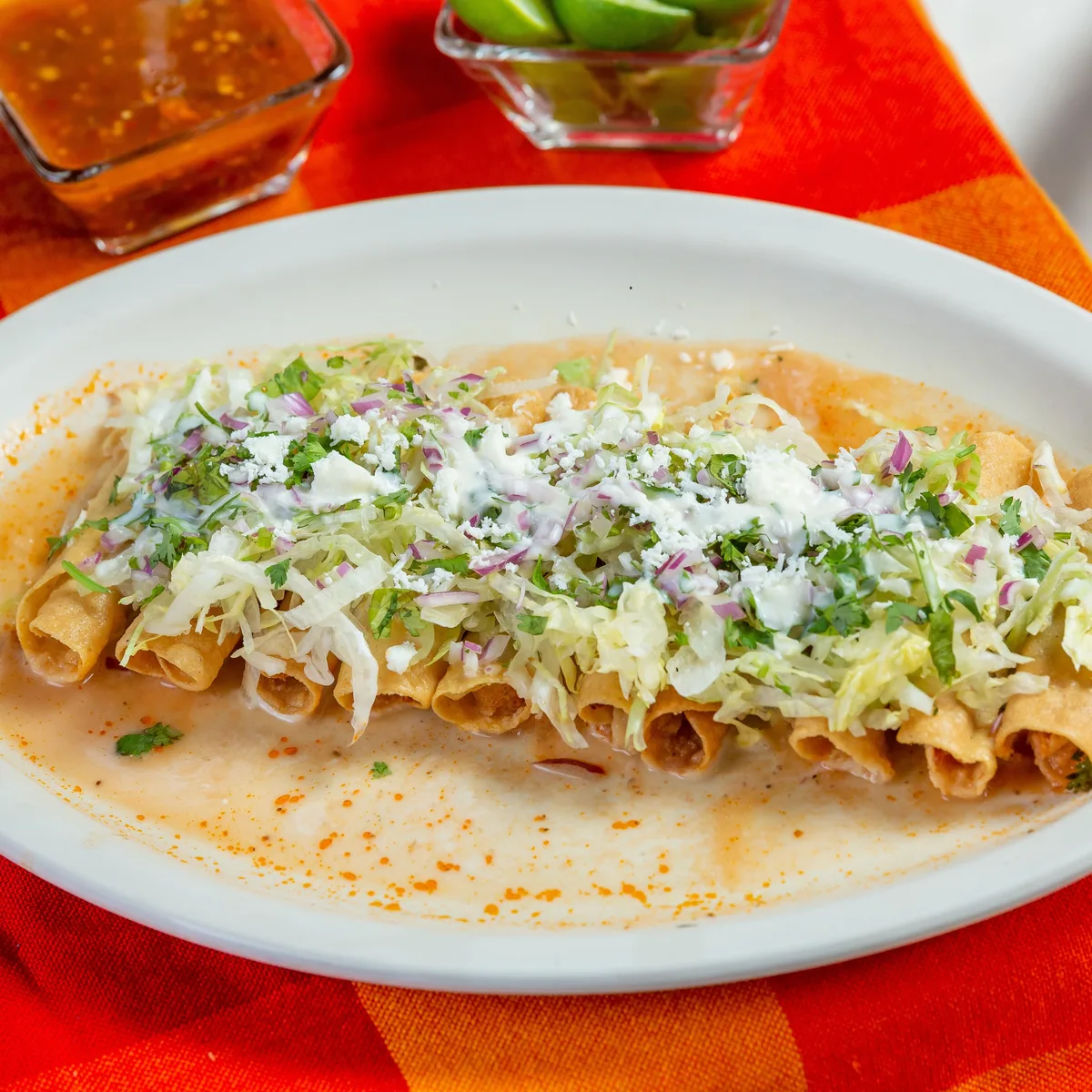
- Serve hot, with shredded lettuce, crema and salsa, or with guacamole for dipping.
Taquitos, Flautas and What to Call Them
Taquito means little taco, and in most of Mexico and the United States it describes a corn tortilla rolled tight and fried. A flauta, meaning flute, is the same idea made longer and thinner, and in many regions flautas are made with flour tortillas while taquitos stay corn. The naming varies by region and by restaurant, so both words are used loosely. What does not vary is the build: a small quantity of dry filling, rolled tight, fried crisp, and eaten with something cold on top. This version is the corn tortilla one.
Why This Recipe Works
- A warm tortilla bends and a cold one breaks, and the reason is starch. Corn tortillas are held together by gelatinised starch, which is firm and brittle at room temperature and becomes flexible when it is warm and slightly moist. Heat plus a little steam makes the sheet pliable enough to curl into a tight tube. Cold, that same sheet has no give at all, so the outer surface has to stretch further than it can and it cracks along the fold.
- Rolling tight is what keeps oil out of the middle. A loosely rolled taquito has a channel down the centre, and hot oil runs straight into it, which leaves the inside greasy and the shell soft. Rolled tight, with the filling in a thin line rather than a lump, the tube fries from the outside only.
- Seam side down first sets the seam. The overlap dries and stiffens in the first minute in hot oil, which holds the tube closed without a toothpick. Turned too early, taquitos unroll and release their filling into the pan.
Ingredient Notes
The tortillas. Standard corn tortillas, the softer and fresher the better for rolling. Thick, rustic ones crack more readily. Because corn tortillas vary between brands in size and thickness, the note under the card says to check your own label for the carbohydrate figure.
The filling. Shredded chicken with onion, spices and cheese stirred in while the mixture is warm, so the cheese partly melts and binds it. That binding matters: loose filling falls out of the ends during frying. Chicken tinga works particularly well, as does mashed potato with cheese, which is a common and very good Mexican filling. Two tablespoons per tortilla is the right amount, and more is the usual reason a taquito will not stay rolled.
The oil. Enough to come about a third of the way up the taquitos, at 350F. A shallow pan and two turns gives the same result as deep frying with far less oil.
What the card counts. The oil is counted in full, but most of a shallow-frying panful stays in the pan rather than on the food. USDA has no entry for what a fried piece actually absorbs, and putting a figure on it would mean estimating, which this site does not do. So read the fat and calorie numbers as the ceiling rather than the plate.
The Method, In Short
Cook the filling, warm the tortillas, roll tight, fry seam side down first, drain on a rack. Work in small batches of tortillas so they never cool down while you are rolling the previous ones, because they lose their flexibility within a minute or two of leaving the heat.
Two ways to soften. A damp towel and a microwave is fastest for a dozen. A five second pass through the frying oil is what taqueria kitchens do, and it seasons the tortilla and waterproofs it slightly at the same time. Either works; what does not work is a dry pan, which drives moisture out and makes the tortilla more brittle rather than less. There is more on this at how to soften corn tortillas.
Air Fryer and Oven
Both are genuinely good here, because a taquito is thin and crisps easily. Brush or spray the rolled taquitos all over with oil, which is not optional, since a dry tortilla in hot air dehydrates into something hard and pale rather than crisp. For an air fryer, 390F for 8 to 10 minutes, seam side down, turning once. For an oven, 425F on a rack over a tray for 15 to 18 minutes. The result is drier and snappier than fried, with a less blistered surface, and it holds well on a tray for a party.
What to Serve With Them
Taquitos want cold, sharp toppings against the hot crisp shell: shredded lettuce, crema or sour cream, crumbled queso fresco, and a spoon of salsa verde or pico de gallo. Guacamole is the standard dip. Served as a meal they go with authentic Mexican rice and refried beans. As party food, stand them upright in a glass with dips alongside; see Mexican party food and Mexican appetizer recipes.
Make Ahead and Freezing
Rolled, unfried taquitos keep a day in the fridge under a damp cloth and cling film, and they freeze for three months. Freeze them in a single layer on a tray until solid, then bag them, so they do not fuse together. Fry or air fry them from frozen, adding two or three minutes; do not thaw them first, because a thawed tortilla is wet and unrolls. Fried taquitos keep two days and re-crisp in a hot oven in about eight minutes. Do not microwave them, which softens the shell without driving off any moisture.
Why They Unroll in the Pan
The likeliest cause of a taquito that opens in the oil is a loose roll or too much filling, and there is a simple test before it ever reaches the heat: set it seam side down on the tray and watch. If the top edge lifts even slightly, that seam will open in the oil, because hot fat gets under the flap and floats it. A tight roll sits flat and stays put. The other cause is frying too few at a time in too much space, which lets a taquito roll over on its own before the seam has set. Crowd them gently so they hold each other in position, and turn them only once the seam has coloured.
FAQ
Why do my corn tortillas crack when I roll them? They were too cold. Warm them in a damp towel in the microwave, or pass them through hot oil for a few seconds, so the starch becomes flexible. A dry pan makes them more brittle, not less.
What is the difference between taquitos and flautas? Both are rolled and fried. Flautas are usually longer and thinner, and in many regions they are made with flour tortillas, while taquitos are corn. The usage varies by region.
Can I make taquitos in an air fryer? Yes. Brush them all over with oil first, then cook at 390F for 8 to 10 minutes, seam side down and turned once. Without oil the tortilla dries out rather than crisping.
How do I keep them from unrolling? Roll tightly with about 2 tablespoons of filling, set them seam side down, and fry seam side down first so the overlap sets before you turn them. If the seam lifts on the tray, it will open in the oil.
Can I use flour tortillas? Yes, and the roll is easier because flour tortillas are flexible cold. The texture is different: chewier and more bubbled, less snappy than corn.
What else can I fill them with? Shredded beef, chicken tinga, mashed potato with cheese, or beans with cheese. The filling needs to be thick and dry enough to hold its shape, whatever it is.
Where to Go Next
Fill them with chicken tinga, learn the tortilla handling at how to soften corn tortillas, and compare the larger fried version at chimichanga. The whole library starts at easy Mexican recipes at home.
Label note: most of the carbohydrate in this recipe comes from the corn tortillas, calculated here from USDA’s generic entry. Brands vary, and some contain added sugar, so check the label on the one in your kitchen.
Written by Frank Thomson, Skillet & Spoon editorial. Every nutrition figure on this site is calculated ingredient by ingredient from the USDA FoodData Central database, never estimated and never rounded to look better. We do not publish net-carb figures or use non-nutritive sweeteners. How we develop and source recipes is set out in our editorial policy.