Guacamole (Traditional Molcajete Style)
Guacamole is mashed ripe avocado seasoned with chile, onion, cilantro, lime and salt, and the traditional method does something that is easy to skip: it mashes the seasonings into a paste before the avocado ever goes in. That one change in order is the difference between evenly seasoned guacamole and a bowl of bland avocado with salty pockets. The recipe card carries the full method with USDA-calculated numbers; this page explains that order and settles the browning question.
Ingredients
Method
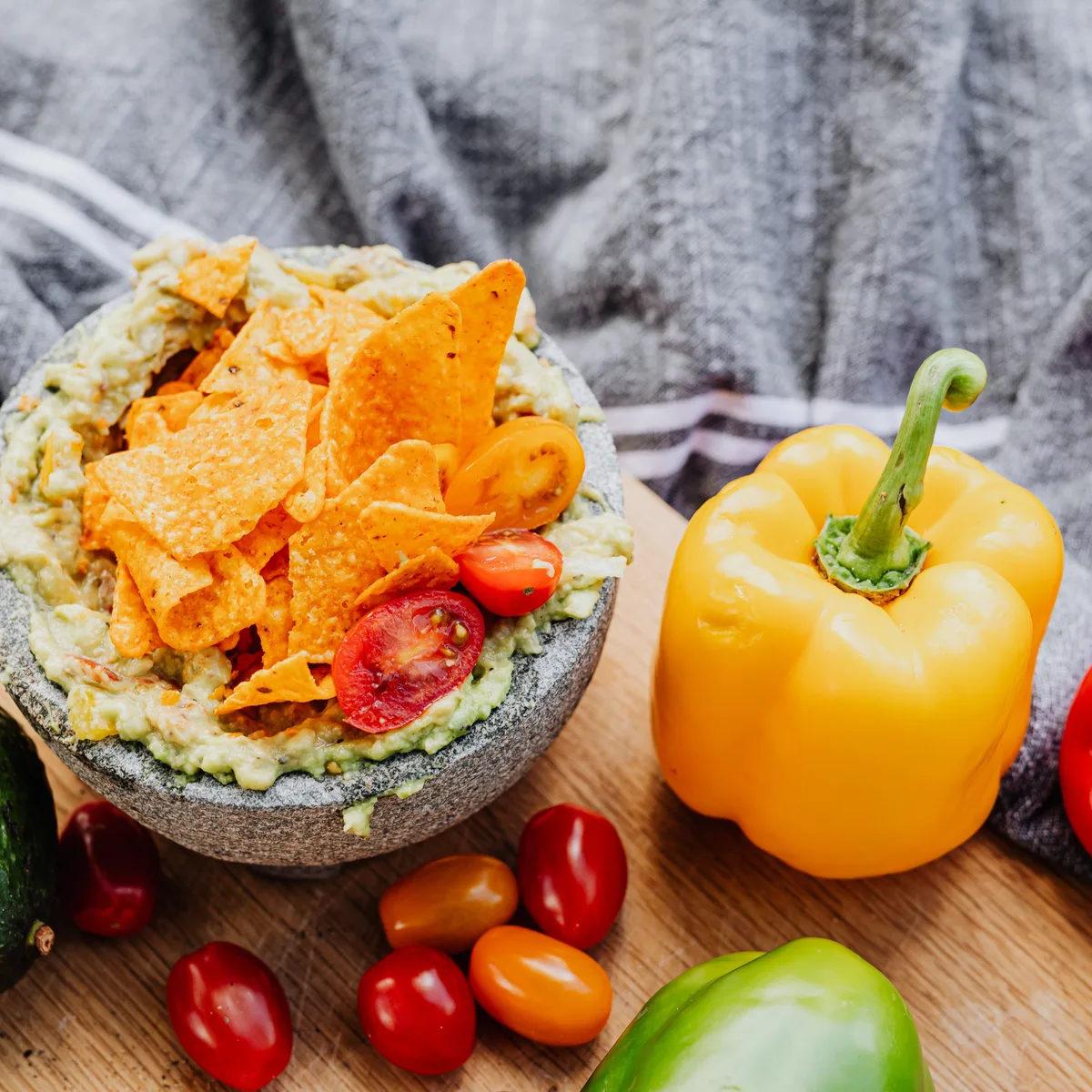
- Put the diced onion, minced jalapeno, half the cilantro and the salt into a molcajete or a sturdy bowl. Grind or mash them together into a rough paste.
- Halve and pit the avocados, then scoop the flesh into the bowl.
- Fold the avocado through the paste with a fork or the back of a spoon, pressing only enough to break it into large lumps. Stop while it is still visibly chunky.
- Add the lime juice and fold once or twice more.
- Fold in the diced tomato and the remaining cilantro last, with the lightest hand, so the tomato stays intact and does not water the mixture down.
- Taste and adjust the salt and lime. Serve within an hour for the best colour.
Why This Recipe Works
- The seasonings are mashed first, the avocado second. Salt and minced chile do not distribute through soft avocado by stirring. Avocado is dense and fatty, so stirring pushes it around rather than mixing it, and the more you stir to fix that, the more you destroy the texture. Grinding the onion, chile and salt into a paste first makes a seasoned base that avocado folds into evenly in three or four strokes.
- Lime goes in after the avocado, not before. Lime juice is there for flavour and for a modest slowing of browning, and browning happens on cut avocado surfaces. Folded in after the avocado is broken up, the juice coats those surfaces directly, and you can taste and adjust it against the finished mixture instead of guessing at the paste stage.
- The tomato goes in last and barely gets stirred. Tomato is mostly water held inside cell walls. Every stroke of the spoon breaks more of those cells and releases that water into the guacamole, which thins it and makes it weep in the bowl. Seeding the tomato removes the wettest part, and folding it in at the very end limits the damage.
Ingredient Notes
The avocados. Hass, and genuinely ripe: the fruit should yield to gentle pressure in your palm, not your fingertips, and the small stem cap should flick off to reveal green underneath. Brown under the cap means it is past its best. An underripe avocado will never mash to a good texture no matter how hard you work it, and mashing harder only makes it pasty.
The chile. Serrano is the traditional choice and jalapeno is the common substitute. The heat lives in the pale internal veins and the seeds attached to them, so seeding gives you the grassy chile flavour with much less burn.
The onion. White onion, diced as finely as you can manage. Large pieces of raw onion dominate every bite they land in. If raw onion is too sharp for you, rinse the dice under cold water and pat it dry; that removes much of the sulphur compound responsible for the harshness without cooking it.
The lime. Fresh, and added to taste at the end. Bottled lime juice is noticeably flatter and often slightly bitter, which is very obvious in a dish with this few ingredients.
What is not in it. No garlic, no cumin, no sour cream, no mayonnaise. Those all appear in perfectly good guacamole-style dips, but the traditional Mexican table version is avocado, chile, onion, cilantro, lime and salt, and this page is honest about the difference rather than calling an adapted version authentic.
The Method, In Short
Grind the aromatics with salt, fold in the avocado, add lime, fold in tomato and the rest of the cilantro. Under five minutes of actual work.
A molcajete is traditional and it does change the result, because grinding against rough volcanic stone crushes cell walls and releases aromatics in a way a knife does not. A bowl and a fork make excellent guacamole and nobody needs to buy anything. What matters is the order, not the equipment.
Why Guacamole Browns, and What Actually Stops It
Cut avocado turns brown because of an enzyme called polyphenol oxidase, which reacts phenolic compounds in the flesh with oxygen from the air to produce brown pigments. It is the same reaction that browns a cut apple. Nothing about it is harmful; it is a colour change, and the guacamole underneath the brown layer is fine.
That mechanism tells you what can and cannot work. Anything that removes oxygen slows it, so pressing plastic wrap flat onto the surface with no air gap, or covering the guacamole with a thin layer of water, works well. Acid slows the enzyme too, which is the real reason lime helps, though it is a modest effect and not a cure.
The avocado pit trick does not work in the way people think. A pit sitting in the bowl protects exactly the circle of guacamole it is physically touching, by keeping air off it, and does nothing for the rest of the surface. You can check this yourself: leave a pit in, come back in a few hours, lift it out, and you will find a green disc in a brown field. Plastic wrap pressed to the surface is the version of the same idea that actually covers everything.
What to Serve It With
Warm tortilla chips are the default, and they are better warm than straight from the bag. Beyond that, guacamole is a component: it goes on tacos, into a torta, beside carne asada, on top of refried beans in a layered dip, and next to a red salsa for contrast. See Mexican dip recipes for the rest of the table and Mexican appetizer recipes if you are feeding a crowd.
Storage
Guacamole is at its best within an hour and is still good the next day if it is stored properly. Press plastic wrap directly onto the surface so no air is trapped against it, then refrigerate. If the top layer has browned, scrape it off and the guacamole beneath is fine. It does not freeze well once it contains tomato and onion, because both release water on thawing and the texture collapses. Plain mashed avocado with lime and salt does freeze acceptably for a few months if you want to get ahead.
FAQ
How do I keep guacamole from turning brown? Keep oxygen off it. Press plastic wrap flat onto the surface with no air pocket, or float a thin layer of cold water on top and pour it off before serving. Lime juice slows the reaction a little but does not stop it.
Does the avocado pit really stop browning? Only under the pit itself. It works by blocking air from the small area it touches, so the rest of the surface browns as normal. Covering the whole surface is what you actually want.
What is traditional guacamole made of? The usual Mexican table version is avocado, chile, white onion, cilantro, lime and salt, with tomato commonly added. The Aztec original, whose Nahuatl name gave us the word, was simpler still: lime and cilantro arrived with the Spanish. Garlic, cumin, sour cream and mayonnaise are modern additions.
Should I use a molcajete? It makes a difference, because grinding on rough stone releases more aroma from the onion and chile than chopping does. It is not required. A bowl, a fork and the right order of operations get you most of the way.
Why is my guacamole watery? Usually the tomato. It holds a lot of water, and stirring breaks the cells and releases it. Seed the tomato and fold it in at the very end. Overripe avocados also break down to a looser texture.
How do I ripen avocados quickly? Put them in a paper bag with a banana or an apple at room temperature. Both give off ethylene, the gas that triggers ripening, and the bag keeps it concentrated around the fruit. It usually takes a day or two rather than hours.
Where to Go Next
The fresh red salsa that sits beside it is pico de gallo, the cooked green one is salsa verde, and the whole library starts at easy Mexican recipes at home.
Written by Frank Thomson, Skillet & Spoon editorial. Every nutrition figure on this site is calculated ingredient by ingredient from the USDA FoodData Central database, never estimated and never rounded to look better. We do not publish net-carb figures or use non-nutritive sweeteners. How we develop and source recipes is set out in our editorial policy.