Diabetic Pork Chops with Apples and Slow Onions
Diabetic pork chops with apples is this section’s clearest demonstration of its sweetness policy on a dinner plate. No glaze, no brown sugar rub, no syrup: two sliced apples cooked down with an onion in the pork’s own pan until both catch gold, doing all the sweetening this dish will ever need, counted in full on the card. It is an old pairing because it works, pork and orchard fruit, and the whole thing happens in one skillet inside thirty five minutes.
Ingredients
Method
- Pat the chops truly dry and season both sides with the salt and pepper. Dry surfaces sear; wet ones steam.
- Heat the oil in a wide skillet over medium-high until it shimmers. Sear the chops 3 to 4 minutes a side, until deeply browned and the centers read 140F. Move them to a plate; carryover finishes them at 145F while they rest.
- Drop the heat to medium, add the butter, then the onion. Cook 5 minutes, scraping up the pork’s browned bits.
- Add the apple slices and cook 6 to 8 minutes more, until the apples are tender at the fork with edges catching gold and the onions have gone soft and sweet.
- Nestle the chops back in with their resting juices for 1 minute to rewarm.
- Serve each chop under a share of the apples and onions and the pan’s juices.
Why This Recipe Works
- The apples are the sauce. Softened in butter with slow onions and the pork’s browned bits, they land somewhere between a side and a chutney, and their sweetness is real food arithmetic, stated on the card.
- The chop is cooked to a number, not a color. Pulled at 140F, rested to 145F, blush pink at the center. The gray chop of memory was cooked twenty degrees past done.
- One pan builds the flavor in layers. The chops leave their crust stuck to the skillet, the onions dissolve it, the apples absorb it. Nothing is washed between stages because the stages are the recipe.
Ingredient Notes
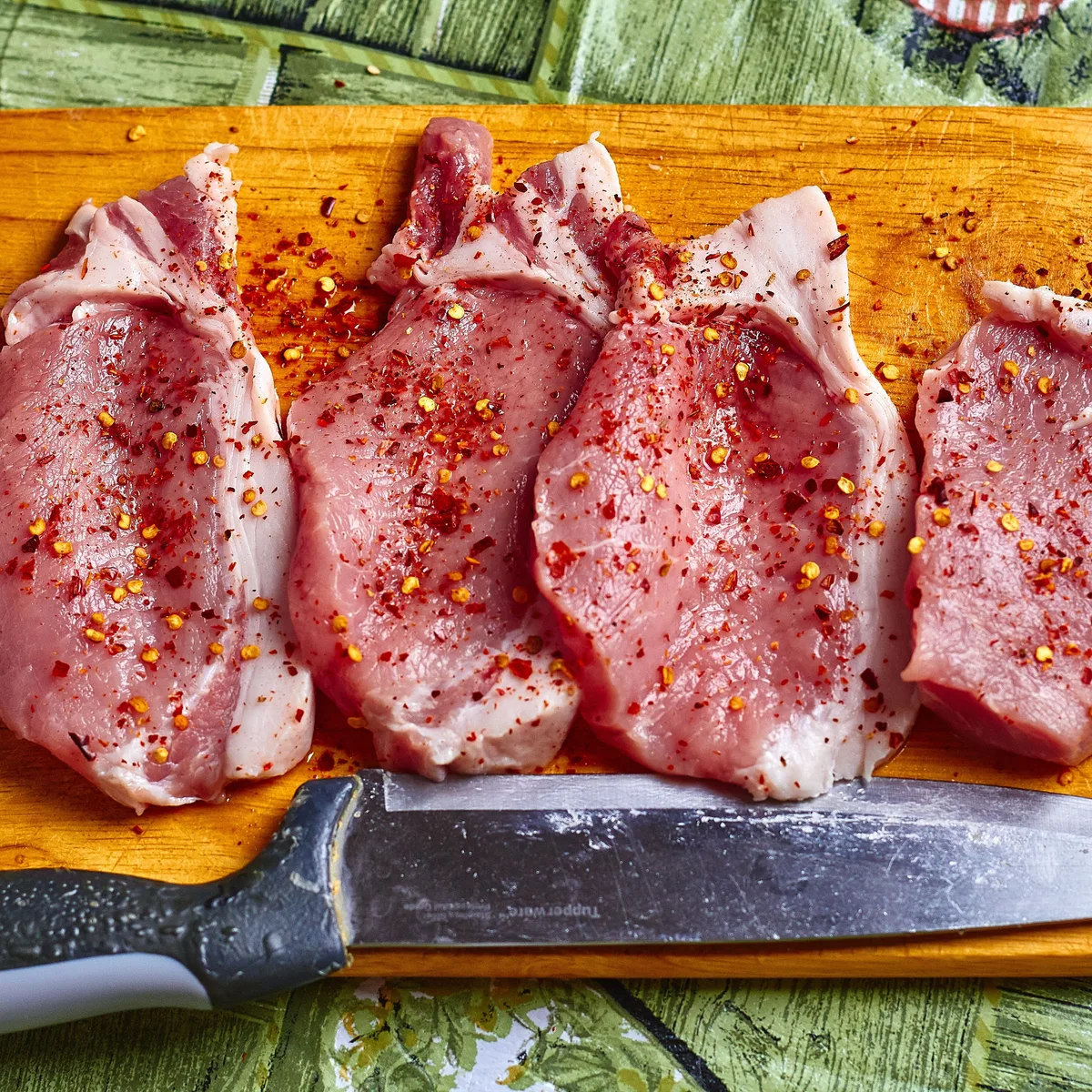
The chops. Boneless center cut, a full inch thick, and thickness is the spec that matters: thin chops close their window between seared and overdone to nearly nothing. The card counts the chop as purchased, lean and its fat together, because that is the honest number for the meat on your fork. The buying guide on our diabetic pork chop recipes page covers the case in full, including the brine that insures thinner chops.
The apples. Two, firm and tart-leaning. A crisp, sharp apple holds its slices and balances the pork; a soft, sweet one collapses into sauce faster and reads dessert-adjacent. Both work, and either way the fruit is counted at its full USDA value, skin on, which is where a chunk of its fiber lives.
The butter and oil. Oil for the hot sear, butter for the gentler apple stage, both counted. The split is deliberate: butter alone scorches at searing heat.
The Method, In Short
The card carries the steps, and the order is the technique. The chops go first into a properly hot pan, dried and seasoned, three to four minutes a side, out at 140F. They rest on a plate for the entire vegetable stage, which is not idle time; the rest is where the juices settle and the carryover lands them at 145F. The onions go into the butter next and their job is archaeological, lifting the fond off the pan floor. Apples last, because they need only enough time to go tender with caught edges, not to stew.
The finish is a one minute reunion: chops back in, resting juices poured over, everything warmed together. Serve the chops under the apples, never beside them, so the pan juices end up on the meat.
Substitutions and Storage
A teaspoon of Dijon stirred into the apples at the end sharpens the pan toward savory; a few thyme sprigs in with the onions lean it toward Sunday. Pears swap for apples in the same weights with a softer result; recount the card. Bone-in chops work with two extra minutes a side and the same numbers rule.
Leftovers hold three days refrigerated. Reheat gently, covered, with a spoonful of water, and slice the chop first so it warms through before it dries. The apples and onions alone reheat perfectly and are worth doubling; they do the same work under chicken thighs later in the week.
Why 145F and a Firm Apple
Pork holds its juice up to a point and then loses it quickly. As the interior climbs past roughly 150F the muscle proteins tighten and squeeze out moisture, so a chop taken to 160F sheds water that a chop pulled at 145F keeps. Pulling at 140F and resting to 145F stops the cook while the center is still blush pink and the juices have time to settle back into the meat. Apple choice is a texture question of pectin: a firm, tart apple has denser flesh and its pectin holds longer, so the slices stay distinct through the full eight minute stage, while a soft, sweet apple breaks down toward sauce as its pectin dissolves faster. Both are counted honestly on the card; the firm apple is the one that keeps its slices, which is why the recipe calls for it.
FAQ
Is the pink center really safe? At 145F with a rest, yes, and it has been the published standard for whole pork cuts for years. The full temperature file, including why ground pork plays by a different rule, lives on the diabetic pork chop recipes page.
Do the apples make this a sweet dish? It reads as savory with a sweet edge, closer to pork with chutney than to anything glazed. The onion and black pepper hold the line, and the fruit’s arithmetic is on the card rather than hidden in a sauce.
Can I use a sugar substitute glaze instead? Not on this site; that is standing policy, explained in our editorial policy. The apples are the sweetener, they are food, and they are counted.
What goes alongside? Charred cabbage wedges from the same stovetop, braised greens, or the celery root puree from our sides bench. The plate wants one green, sturdy thing against the soft fruit.
Where to Go Next
The complete chop technique file is at diabetic pork chop recipes, the sweetness policy in action on desserts at diabetic dessert recipes, and the whole section starts from the diabetic recipes pillar.
Written by Frank Thomson, Skillet & Spoon editorial. Every nutrition figure on this site is calculated ingredient by ingredient from the USDA FoodData Central database, never estimated and never rounded to look better. We do not publish net-carb figures or use non-nutritive sweeteners. How we develop and source recipes is set out in our editorial policy.