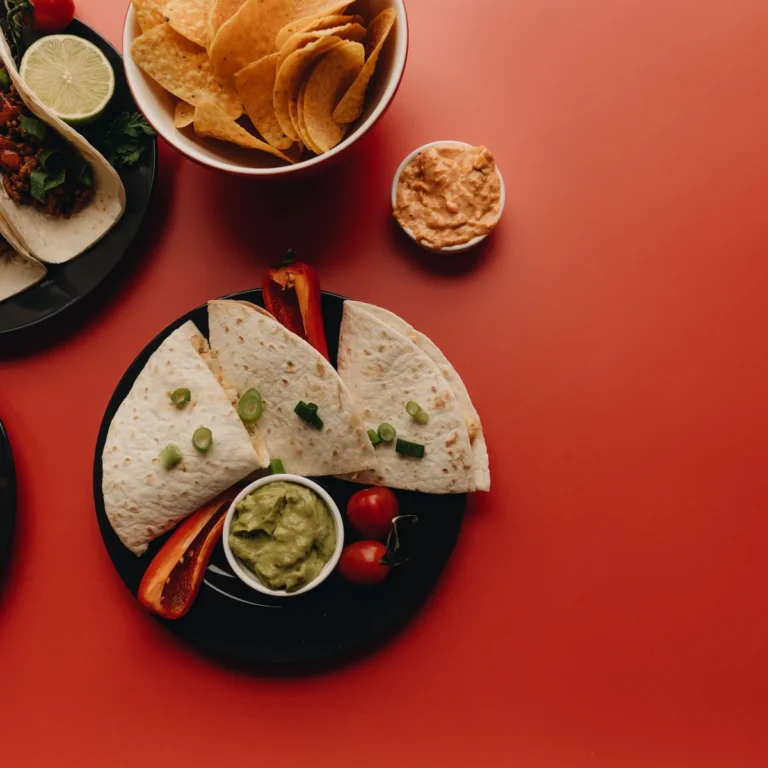
Quesadilla (Crisp Outside, Properly Melted Inside)
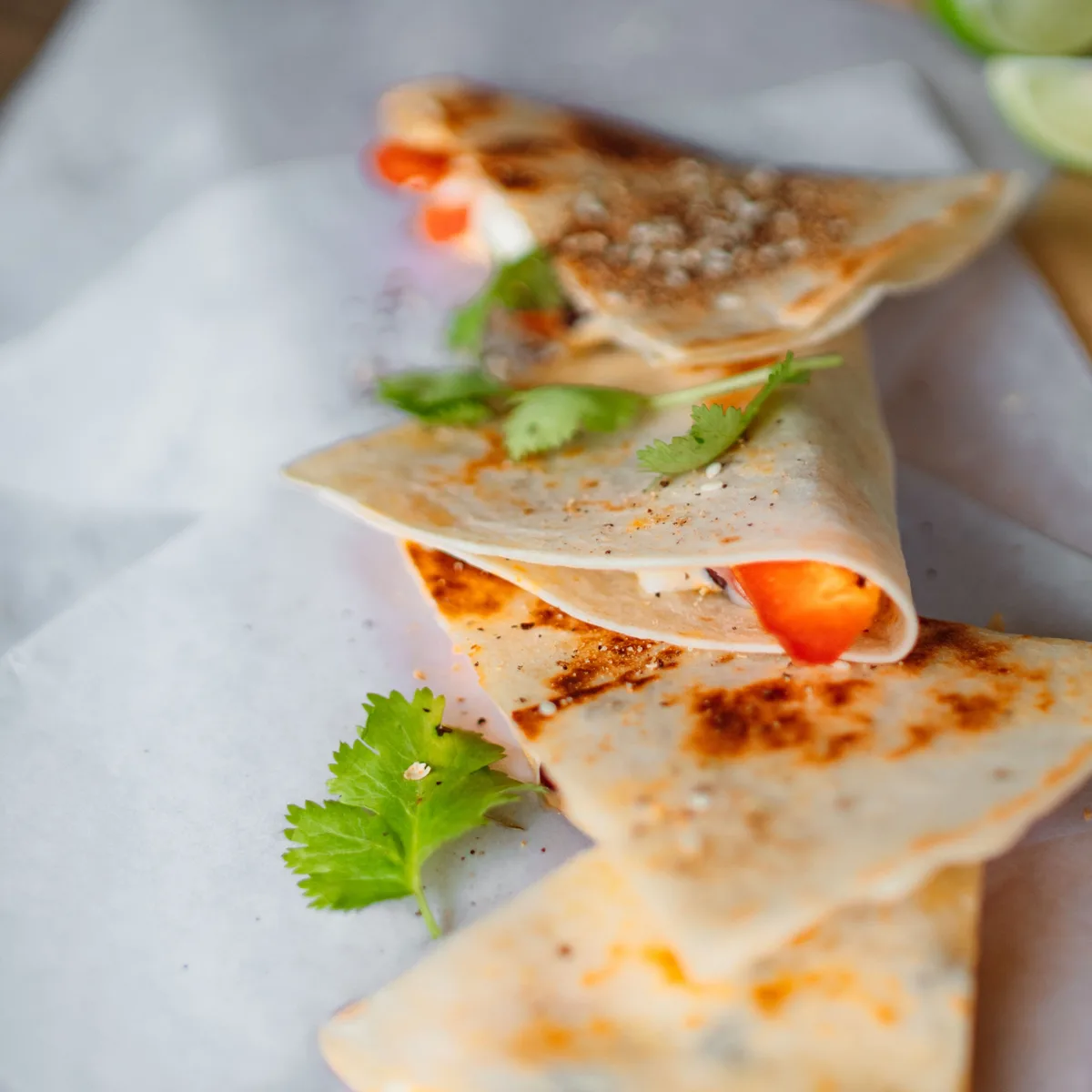
A quesadilla is cheese melted between tortillas in a hot dry pan, and it goes wrong in two predictable ways: the outside burns while the middle is still solid cheese, or the whole thing turns greasy and limp. Both come down to pan temperature and to which cheese you bought. This version adds chicken and poblano to make it a meal. The recipe card carries the full method with USDA-calculated numbers, and this page covers the cheese, the heat and the order things are stacked in.
Ingredients
Method
- Heat the oil in a skillet over medium and cook the onion and poblano 5 to 6 minutes, until soft and no longer releasing steam. Stir in the cumin, salt and the shredded chicken, then take the pan off the heat.
- Wipe the skillet out and set it over medium-low. A quesadilla needs a pan cool enough that the cheese melts before the tortilla colours.
- Lay one tortilla in the dry pan. Scatter a quarter of the cheese over it, keeping a clear half inch at the rim, then a quarter of the filling, then a little more cheese on top.
- Cover with a second tortilla and press it down with a spatula.
- Cook 3 to 4 minutes, until the underside is patched golden brown and the cheese at the edge has started to run.
- Slide the spatula fully underneath, flip in one motion, and cook another 2 to 3 minutes.
- Lift it onto a board and wait 1 minute before cutting. Cut too soon and the molten cheese runs out of the wedges.
- Repeat with the remaining tortillas. Cut each into 4 wedges and serve.
What a Quesadilla Is in Mexico, and What It Became
In Mexico a quesadilla is traditionally made with fresh masa, pressed and folded over the filling and cooked on a comal, and the filling is not always cheese. Squash blossoms, mushrooms, huitlacoche and potato with chorizo are all standard, which is why in Mexico City you may be asked whether you want yours con queso. The folded flour tortilla version cooked flat in a skillet, cut into wedges and served with sour cream is the Tex-Mex and American form, and that is what the card describes. Both are real; this page is honest about which one it is teaching.
Why This Recipe Works
- Medium-low heat is the whole trick, because the cheese is the slowest part. Cheese needs to reach roughly 130F to 150F before it flows, and that heat has to travel through the tortilla and the filling to get there. A hot pan browns the outside of a tortilla in about a minute, long before the centre is warm. Drop the heat and the two finish together.
- The filling goes in already cooked and dry. Raw onion and pepper release water as they heat, and that water turns to steam inside a sealed quesadilla with nowhere to go. It softens the tortilla from the inside and stops the cheese binding the layers. Cooking the vegetables first drives that water off in the open pan, where it can leave.
- Cheese on both faces glues the quesadilla shut. Melted cheese against the tortilla surface sets as it cools and holds the two halves together, which is what keeps the wedges from sliding apart. Filling packed in the middle with cheese only underneath has nothing holding the top tortilla down.
Which Cheese, and Why Some Split
The cheeses that work are young and high in moisture with low acidity: Monterey Jack, Oaxaca, asadero, Chihuahua, mozzarella and mild cheddar. These flow into a smooth sheet when heated. Aged, dry cheeses like parmesan, cotija and long-aged cheddar behave differently, because in a well-aged cheese the protein network has already broken down and the calcium bonds holding it together are fewer. Heated, it separates rather than flows: the fat pools out as oil and the protein tightens into stringy curds. That is the greasy orange puddle in the pan.
Shred from a block rather than buying pre-shredded. Bagged shreds are dusted with starch or cellulose to stop them clumping, and that coating absorbs moisture and gives a slightly grainy melt.
Oaxaca cheese is the traditional choice and is sold as a ball wound like a skein of wool. Pull it apart into strands rather than grating it.
The Method, In Short
Cook the filling and set it aside, wipe the pan, build the quesadilla in the dry pan over medium-low, cook 3 to 4 minutes a side, then rest a minute before cutting. Building it directly in the pan avoids carrying a loaded tortilla across the kitchen.
On the dry pan. The tortilla already contains fat, and that is enough to brown it. Oil in the pan fries the outside before the inside is warm, which is the usual cause of a quesadilla that is dark, greasy and still cold in the middle. If you want a richer crust, brush the outside faces with a trace of butter instead, which browns at a lower temperature than oil and gives colour without frying.
One Tortilla Folded, or Two Stacked
Folding a single tortilla in half gives you a sealed edge and no chance of the top sliding off, and it suits a larger tortilla. Two stacked tortillas hold more filling and cut into neater wedges, which is better for sharing. The heat and timing do not change. What does change is capacity: an overfilled quesadilla of either shape will not seal, and the filling escapes into the pan and burns.
What to Serve With It
Sour cream and salsa on the side, and the cold, sharp things that cut cheese: pico de gallo, guacamole or salsa verde. As a light meal it wants a soup beside it, and chicken tortilla soup is a good match. For feeding a group, cut wedges and set out bowls of toppings; see Mexican party food and Mexican appetizer recipes.
Fillings Worth Trying
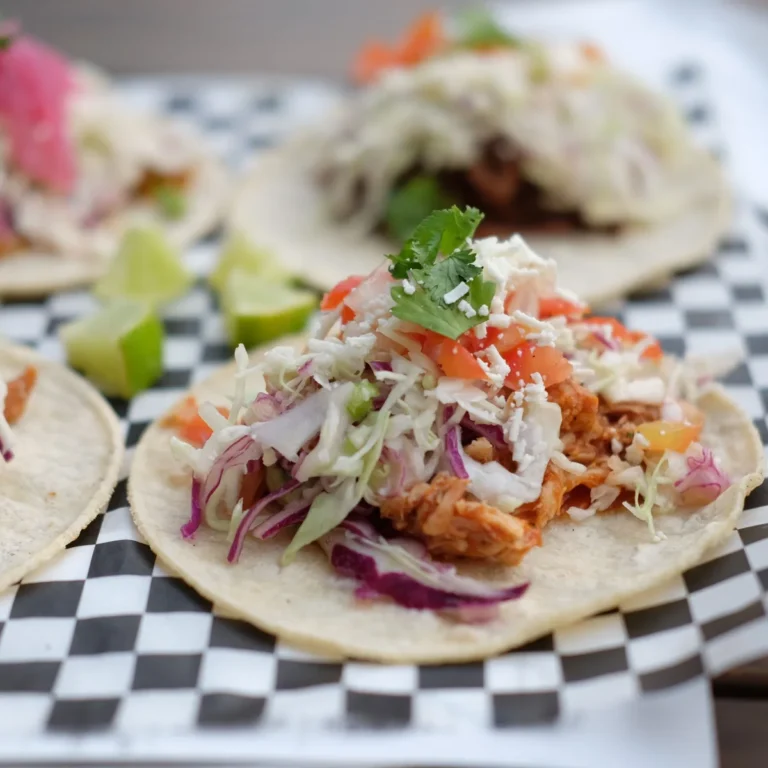
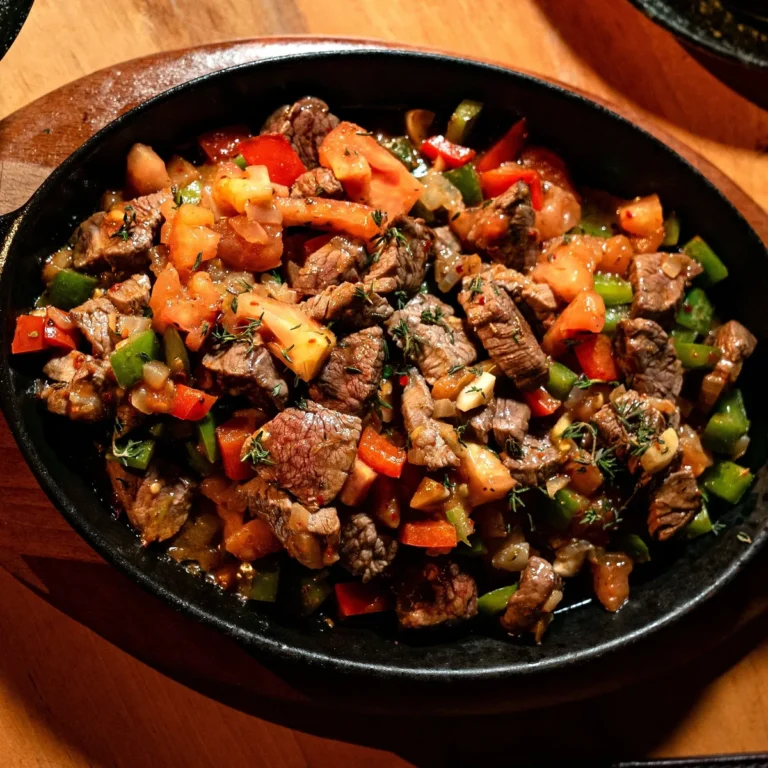
Chicken tinga is one of the best fillings there is, because it is already shredded and its sauce has been cooked down until it clings. Leftover carne asada, chopped small, works the same way. For a vegetable version, sliced mushrooms cooked hard until they stop releasing water, or roasted poblano strips with corn. The rule is the same for all of them: the filling goes in cooked and dry, never wet.
Storage and Reheating
Quesadillas are best eaten within a few minutes of leaving the pan, while the cheese is still flowing and the tortilla is still crisp. Cooked ones keep two days refrigerated and reheat properly only in a dry skillet or an air fryer, which drives off the moisture the fridge put in. A microwave reheats the cheese but leaves the tortilla soft and leathery. You can assemble them ahead, unwrapped, for a few hours in the fridge; any longer and the filling starts moistening the tortilla.
Why the Cheese Runs Out Instead of Staying In
Cheese escaping into the pan is a filling and geometry problem. Cheese that goes right to the rim has a direct route out as soon as it liquefies, which is why the half inch of clear tortilla at the edge matters. Cheese sitting under a heavy layer of filling cannot bond to the top tortilla, so the sandwich lifts and opens as it cooks. And cutting a quesadilla straight from the pan releases everything that is still liquid, because melted cheese needs about a minute of cooling to set enough to hold. Leave the border clear, keep the filling modest, and let it stand before the knife goes in.
FAQ
What is the best cheese for quesadillas? A young, high-moisture, low-acid cheese that flows when melted: Oaxaca, Monterey Jack, asadero, Chihuahua, mozzarella or mild cheddar. Shred it from a block rather than using bagged shreds.
Why is my quesadilla burnt outside and cold inside? The pan was too hot. Cheese needs to reach about 130F to 150F to flow, and that heat has to travel through the tortilla. Cook over medium-low for 3 to 4 minutes a side so both finish together.
Should I use oil or butter in the pan? Neither is necessary, since the tortilla contains enough fat to brown in a dry pan. If you want a richer crust, brush a trace of butter on the outside faces; oil in the pan tends to fry the tortilla before the cheese melts.
Corn or flour tortillas for quesadillas? Both are traditional in different regions. Flour is the usual choice for the flat, wedge-cut version because it is larger and more flexible. Corn is closer to the Mexican original; see corn vs flour tortillas.
Can I make quesadillas in an air fryer? Yes. Build them, press them down so the top tortilla does not lift in the airflow, and cook at about 370F for 5 to 6 minutes, turning once. The crust comes out drier and crisper than in a pan.
How do I stop the filling falling out when I cut it? Keep a clear half inch of tortilla at the rim, put a little cheese above as well as below the filling, and let the quesadilla rest a minute before cutting so the cheese sets.
Where to Go Next
Fill it with chicken tinga, serve it with pico de gallo, or settle the tortilla question at corn vs flour tortillas. The whole library starts at easy Mexican recipes at home.
Label note: most of the carbohydrate in this recipe comes from the flour tortillas, calculated here from USDA’s generic entry. Brands vary, and some contain added sugar, so check the label on the one in your kitchen.
Written by Frank Thomson, Skillet & Spoon editorial. Every nutrition figure on this site is calculated ingredient by ingredient from the USDA FoodData Central database, never estimated and never rounded to look better. We do not publish net-carb figures or use non-nutritive sweeteners. How we develop and source recipes is set out in our editorial policy.