12 Diabetic Cookie Recipes That Actually Bake Right
Diabetic cookie recipes fail, when they fail, for a reason that rarely gets named: cookies are engineering, and sugar is a structural material in them. Take it out and substitute something that behaves differently, and the dough spreads wrong, browns wrong and sets wrong. Our answer, per the policy that runs this whole section, is not substitution but redesign: doughs built from the start around almond flour, oats, peanut butter, banana and dates, ingredients whose behavior we can predict and whose numbers we can verify against the USDA database.
The twelve below are the survivors of that redesign process, and each one bakes like it means it.
The Structural Logic
Three ingredients do sugar’s structural jobs here. Mashed banana and chopped dates bind and sweeten while adding browning sugars of their own, honestly counted. Almond flour brings fat and tenderness, so doughs stay rich without creaming butter and sugar. Eggs and peanut butter set the structure that sugar syrup would otherwise provide. Understand those roles and every cookie below reads as a variation, not a mystery.
The Core Dozen
Flourless peanut butter cookies, 20 minutes. Peanut butter, egg, one measured spoon of honey, fork crosshatch, 350F for ten minutes. The three-ingredient proof that this approach works.
Almond flour chocolate chip, 25 minutes. Almond flour, egg, vanilla, mashed banana, chopped dark chocolate standing where chips would. They brown at the edges like the memory you are comparing them to.
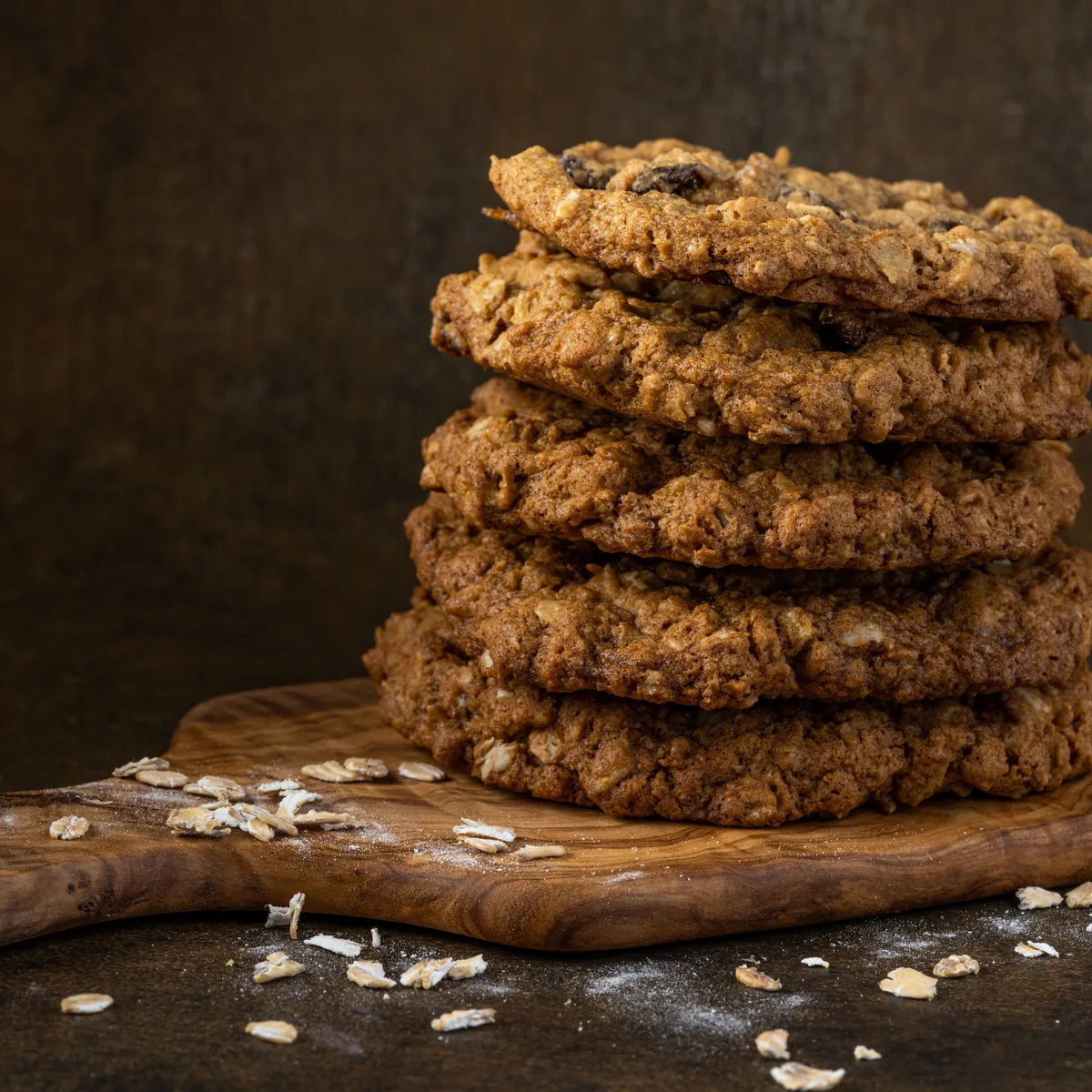
Oatmeal banana breakfast cookies, 25 minutes. Two bananas, two cups of oats, cinnamon, walnuts. Two-ingredient dough, everything else negotiable. They pass as breakfast because they essentially are one.
Date and walnut thumbprints, 30 minutes. Almond flour dough, thumb dent, a paste of blended dates and a drop of vanilla where jam would sit.
Coconut macaroons, lean version, 25 minutes. Egg whites, shredded coconut, a counted spoon of honey. Crisp shell, chewy middle, five ingredients.
Chocolate cocoa cookies, 25 minutes. Almond flour, cocoa, egg, dates blended in. Brownie-adjacent and unapologetic about it.
Peanut butter oat bars, 30 minutes. The cookie for people who refuse to portion dough: press, bake, cool fully, slice.
Cinnamon almond biscotti, 50 minutes. Twice-baked, coffee-ready, and the longest project on this page, worth it for the dunk alone.
Pumpkin spice softies, 25 minutes. Canned pumpkin, oats, almond flour, the pie spices. Cakey by design; do not expect snap.
Lemon ricotta cookies, 25 minutes. Ricotta, egg, almond flour, lemon zest. Soft and bright: the ricotta’s moisture keeps the crumb tender without creamed sugar.
Trail mix cookies, 25 minutes. The oatmeal banana base carrying chopped almonds, seeds and a few dark chocolate shards.
Chia oat refrigerator cookies, no bake. Oats, peanut butter, chia, chopped dates, rolled and chilled. Technically the energy bites from the dessert page wearing a cookie’s name, and nobody objects.
Baking Rules for This Dough Family
These doughs behave differently from sugar doughs in four ways, and knowing them prevents every common failure. They spread less: flatten each cookie to its final shape before baking, because the oven will not do it for you. They brown faster at the edges: pull at the first real color, since almond flour goes from golden to bitter quickly. They set on the sheet: every cookie here is fragile hot and sturdy cool, so the ten minute cooling rest is structural, not optional. And they hold moisture: store airtight and most improve on day two as the fruit sweetness distributes.
One equipment note: parchment always. These doughs run stickier than sugar doughs, and parchment is the difference between cookies and archaeology.
How the Numbers Work
Every card counts its ingredients in full from USDA data, source IDs archived, honey and dates included at their real carbohydrate values, per the editorial policy. No net carb arithmetic, no unverifiable sweetener lines. A cookie here states what it is, in grams, and portions are described as cookies, because that is what they are. What the numbers mean for your week is a conversation for you and your care team, held over honest data and, ideally, a biscotti.
The Cookie Jar Strategy
Cookies serve a different job in a considered eating pattern than in a free-for-all pantry, and the storage strategy should match. One workable approach: bake one batch weekly, portion half into the jar and half into the freezer immediately, before the cooling tray becomes a buffet. The jar holds the week’s deliberate portions; the freezer holds the future at arm’s length, since a frozen cookie demands a decision and two minutes of patience rather than an absent-minded reach. The biscotti earn a permanent slot precisely because their two-week keeping quality and their built-in pause, they want coffee, make them the slowest cookie in the jar to disappear.
For households with children, the oatmeal banana breakfast cookies solve a different problem: they are the lunchbox item that reads as a treat while carrying oats, fruit and walnuts, and their card’s numbers let you decide their role with open eyes. Bake them Sunday alongside whatever the adults claimed, and one oven session covers both audiences.
Gifting and the Holiday Question
Every cookie tray season raises the same question in households cooking from this section: bring the section’s cookies, or bake conventional ones for others? A workable answer: bring the biscotti, the thumbprints and the lemon ricotta, introduced by name rather than by category. These three travel best because their structure is stable at room temperature: the twice-baked biscotti keep for two weeks, and the almond flour in the thumbprints and lemon ricotta holds a soft crumb for days. Good cookies need no preamble, and a tray that everyone at the gathering can share without a second thought is a quiet kindness that no one needs to remark on for it to matter.
Why Shape Is Step One
The flatten-before-baking rule follows from the chemistry, not from a taste test. Sugar doughs spread because melting sugar liquefies them in the oven; this family has no melting sugar, so a cookie holds whatever shape it enters the oven in. A dough left in a ball stays domed, which leaves it pale outside and underbaked at the center on the same timer that bakes a flattened cookie through, because the thicker center never reaches temperature. Shape each cookie to its final form before it goes in and it bakes evenly and browns at the edges. That is why shape is step one in every recipe on this page.
FAQ
Do these taste like regular cookies? They taste like good cookies with their own character: nuttier, fruit-sweetened, less sweet overall, with real browning and real texture. The almond flour chocolate chip gets closest to the classic profile, since its edge browning and chocolate pockets mirror the original; the biscotti and macaroons are built on different textures entirely and stand on their own.
Why chopped dark chocolate instead of chips? Because we can verify dark chocolate’s data cleanly and cannot verify the specialty chips, per the section’s policy. Chopped 70 percent chocolate also melts into larger pockets than uniform chips, so the chocolate reads as distinct molten pools rather than dispersed specks.
Can I freeze the dough? The almond flour doughs freeze rolled and shaped for a month and bake from frozen with two extra minutes. The banana-oat doughs prefer baking first, freezing after.
How long do they keep? Airtight, three to four days at room temperature, and most genuinely improve on day two as the fruit sweetness distributes through the crumb. The biscotti keep two weeks and were designed by history for exactly that job. Baked cookies also freeze for a month in layers separated by parchment, thawing in twenty minutes on a counter or ten seconds in a pocket on the school run.
Which cookie should a skeptic bake first? The flourless peanut butter: twenty minutes, three ingredients, and the crosshatch moment convinces hands before the flavor convinces the rest. Then the almond flour chocolate chip for the full argument.
Where to Go Next
The whole dessert shelf lives at diabetic dessert recipes, the ten-minute wing at easy diabetic dessert recipes, and the section’s foundations at the diabetic recipes pillar.
More recipes to try
Written by Frank Thomson, Skillet & Spoon editorial. Every nutrition figure on this site is calculated ingredient by ingredient from the USDA FoodData Central database, never estimated and never rounded to look better. We do not publish net-carb figures or use non-nutritive sweeteners. How we develop and source recipes is set out in our editorial policy.