Bariatric Poached Cod in Tomato Sauce, Never Dry
Bariatric poached cod in tomato sauce is the most forgiving fish recipe this section publishes, and forgiveness is the whole design. Fish dries out because dry heat gives it nowhere to hide, so this build removes the dry heat entirely: the cod finishes inside a thickened tomato and pepper sauce, half submerged, at a temperature that cannot rush it. Twenty five minutes, one pan, and the card carries USDA-calculated numbers with protein stated per serving. It is the highest protein per serving of any single recipe in this silo.
Ingredients
Method
- Soften the onion and pepper in the oil over medium heat, 8 to 10 minutes, until the pepper genuinely slumps. Crisp peppers read raw no matter how long the sauce simmers afterward.
- Add the garlic and smoked paprika, stirring 30 seconds until the spice smells toasted rather than dusty.
- Pour in the crushed tomatoes and salt, and simmer uncovered 10 minutes until the sauce thickens enough to hold a brief trail behind a spoon.
- Nestle the cod fillets into the sauce, spooning some over each one so they are half submerged.
- Cover, drop the heat to low, and poach 8 to 10 minutes, until the fish flakes at the thickest point under gentle pressure.
- Kill the heat and let it stand 2 minutes before serving straight from the pan.
Why This Recipe Works
- Sauce is a poaching medium, not a topping. Fish surrounded by liquid at low heat approaches doneness slowly and evenly, which converts the usual two minute window into something closer to four.
- The sauce is built before the fish arrives. Ten minutes of softening and ten of simmering mean the sauce needs nothing after the cod goes in, so the fish sets the timeline alone.
- Cod holds its shape at low heat. A firm white fish in a covered pan stays in intact flakes; the same fillet over high heat tightens and splits along its layers.
Ingredient Notes
The cod. Four fillets of similar thickness so they finish together, patted dry before they go in. Frozen is the honest default and often the fresher product; thaw it overnight in the fridge, or flat under cold running water in twenty minutes. Haddock and pollock swap in unchanged; thicker cuts want two extra minutes and thin tail pieces want two fewer.
The tomatoes. A 400 gram tin of crushed tomatoes is the sauce’s body and the majority of this recipe’s carbohydrate, which is why the post carries a label note under the card. Canned tomato products vary by brand more than the produce they came from and a few carry added sugar, so one glance at your tin’s ingredient line keeps the arithmetic yours. Whole peeled tomatoes crushed by hand work identically and run chunkier.
The pepper and onion. Both must genuinely slump before the tomatoes arrive. This is the stage most versions rush, and undercooked pepper in a poaching sauce stays assertive and slightly raw through every minute that follows.
The smoked paprika. Bloomed in the pan fat for thirty seconds with the garlic. Raw paprika stirred into liquid tastes like dust; the same teaspoon toasted first tastes like a different, better spice.
The Method, In Short
The card carries the steps and the sequence is the recipe: build the sauce, thicken the sauce, poach the fish in it. The thickening checkpoint is a spoon dragged through the pan leaving a trail that holds for a beat before closing. Thinner than that and the fillets sit in liquid rather than sauce; much thicker and the pan catches before the fish finishes.
The poaching stretch runs covered on low, eight to ten minutes depending on thickness. Doneness is a fork test rather than a clock: press the thickest point gently and the flesh should separate along its flakes without resistance. If it still holds together firmly, give it two more covered minutes and check again. Cod goes from done to dry more slowly here than in any oven, but it does still go.
The two minute stand at the end lets everything settle and lets the sauce reclaim a little heat from the fish, which makes plating cleaner.
Substitutions and Storage
A handful of spinach wilted into the sauce before the fish is a free upgrade. Chili flakes with the garlic take it toward a Spanish register. Olives and capers belong here for the tables that like them, counted by the spoon per house arithmetic.
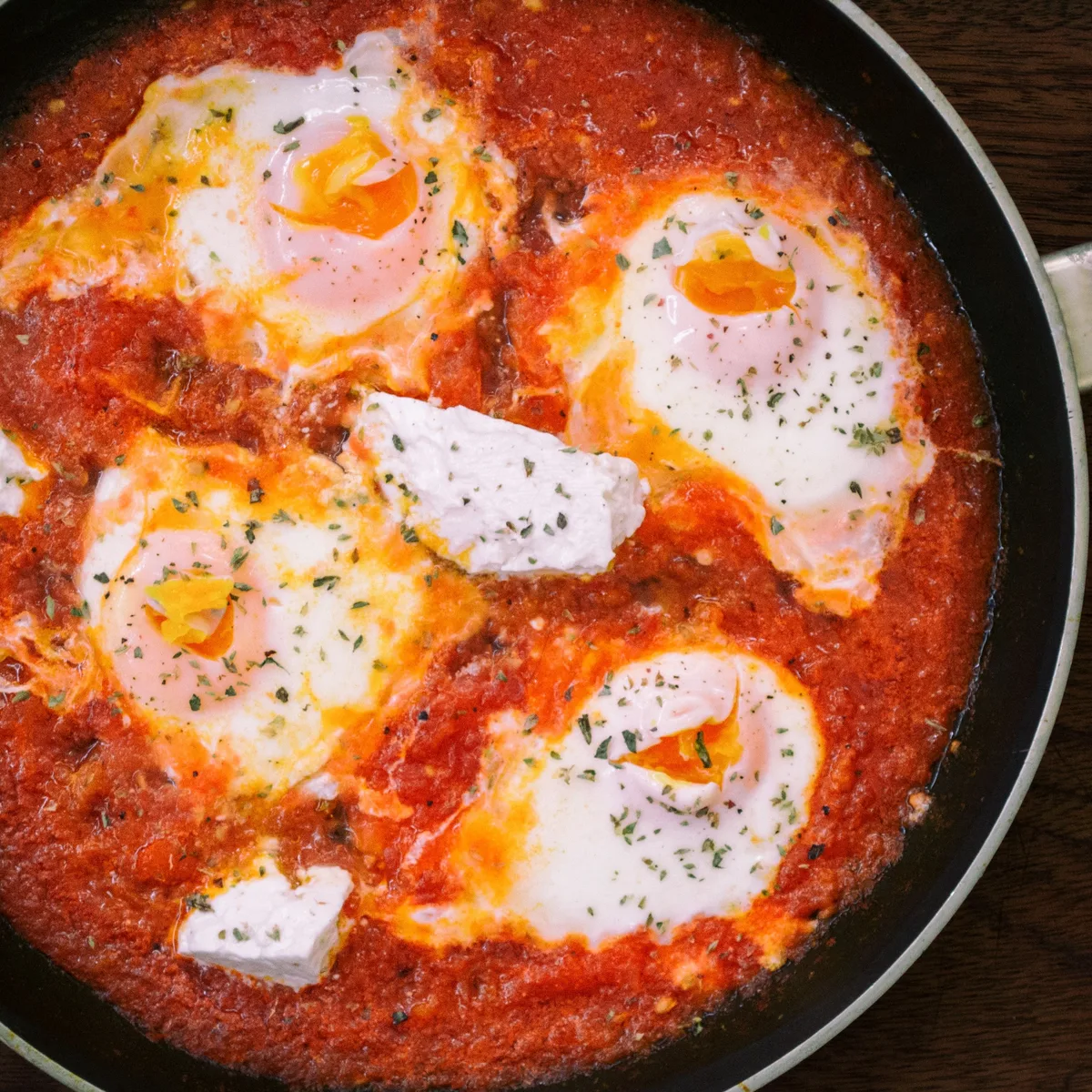
Refrigerated it holds two days, and the sauce protects the fish better than any other storage arrangement in this silo. Reheat covered and gentle, with the fish half submerged as it was originally, and stop the moment it is warm. The sauce alone freezes for three months and is worth doubling on purpose: a jar of it in the freezer turns this dinner into a fifteen minute proposition, which is exactly the banked-sauce trick our shakshuka page runs on.
Why the Sauce Keeps the Fish Moist
Cod dries out when its muscle proteins tighten and squeeze out water, which happens quickly under dry heat because the surface of a baking sheet or a hot pan climbs well above the boiling point. Here the fillet sits half submerged in sauce that cannot exceed the temperature of simmering liquid, so the heat reaching the fish is capped near 200F rather than the 400F of an oven. That ceiling is why a two minute overshoot barely changes a poached fillet while it dries a baked one: the poaching medium holds the fish at a gentle temperature and surrounds it with moisture, so the sauce acts as insurance against an extra minute.
The pepper stage matters for a physical reason too. Peppers and onions hold firm cell walls that soften only with sustained direct heat, and a poaching sauce never gets hot enough afterward to finish that job. Ten minutes of softening breaks those cell walls down before the tomatoes arrive; cut it short and the pieces stay assertive and slightly raw through every minute that follows.
FAQ
Which texture is this? Soft as written: cod poached to flaking sits comfortably in the soft category, and the sauce is smooth around it. Whether soft is your current assignment is your surgical team’s call; the label describes the food and never clears it.
Can I use frozen fish straight from the freezer? Thawed is better and worth the planning, because frozen fillets release water into the sauce and thin it. If you must, add four to five minutes and expect a looser pan.
How do I know it is done without cutting into it? Press the thickest point with the back of a fork. Done cod separates along its flakes under light pressure. Firm resistance means more time; falling apart entirely means it went past, which is hard to do at this heat but not impossible.
Is the tomato carb count reliable? The card uses USDA’s generic crushed tomato entry, and tins genuinely vary, which is exactly why this post carries a label note under the card. Check your own tin once, especially for added sugar.
What do I serve with it? It stands alone as a complete dinner. If the table wants more, the charred cabbage or braised green beans from bariatric diet recipes fit the pan’s logic, and any base joins the arithmetic at the plate as always.
Where to Go Next
The full fish and technique context is at bariatric soft food recipes, the dinner triage at bariatric dinner recipes, and the section starts at the bariatric recipes pillar.
Label note: most of the carbohydrate in this recipe comes from the canned crushed tomatoes, calculated here from USDA’s generic entry. Brands vary, and some contain added sugar, so check the label on the one in your kitchen.
Written by Frank Thomson, Skillet & Spoon editorial. Every nutrition figure on this site is calculated ingredient by ingredient from the USDA FoodData Central database, never estimated and never rounded to look better. We do not publish net-carb figures or use non-nutritive sweeteners. How we develop and source recipes is set out in our editorial policy.