Diabetic Salsa Chicken: The Two Ingredient Slow Cooker Win
Diabetic salsa chicken is the recipe this whole section points to when someone asks where to start, and it has exactly two ingredients doing the work: chicken breasts and a jar of salsa. Five minutes of morning assembly, four hours on low, a two fork shred, and the result feeds taco night, tomorrow’s lunch bowls and a round of lettuce wraps from one pot. The card below carries the full USDA-calculated numbers, and the one piece of technique that matters is a timer.
Ingredients
Method
- Lay the chicken breasts flat in the slow cooker in a single layer.
- Stir the cumin, garlic powder and salt into the salsa, then pour it over the chicken so every piece is coated.
- Cover and cook on low for 4 hours. Do not lift the lid and do not run longer; set a timer.
- Check the thickest breast reads 165F, then shred the chicken directly in the cooker with two forks.
- Stir the shreds back through the liquid and let them stand 10 minutes on warm so the meat drinks the salsa back in.
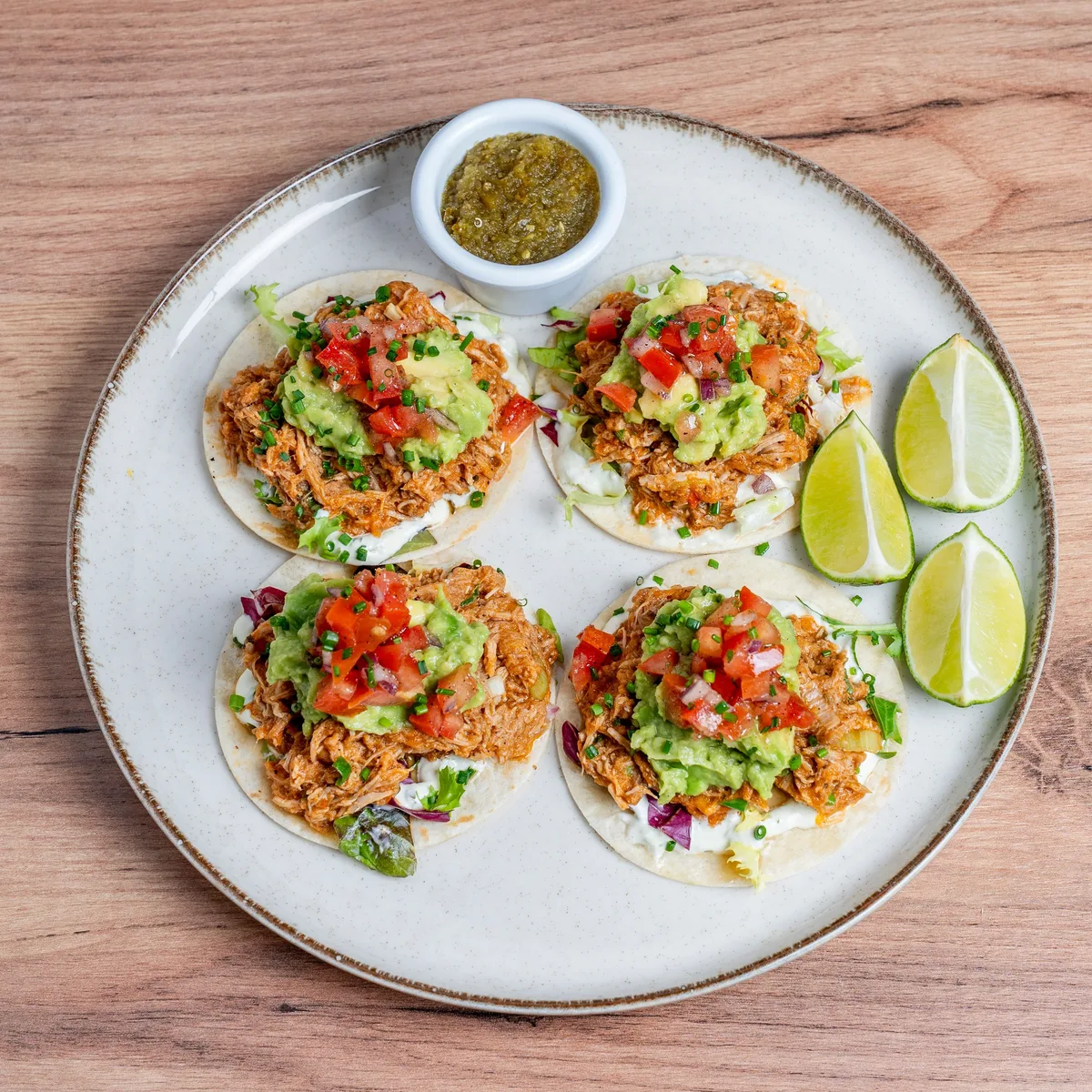
- Serve in lettuce cups, over cauliflower rice, or in warmed corn tortillas, and count whichever base you choose.
Why This Recipe Works
- The salsa is a finished sauce. Tomato, onion, chile, acid and salt are already balanced in the jar, so the chicken poaches in seasoning instead of water and nothing needs building.
- Four hours is the whole secret. Breast meat shreds at silk texture at hour four on low and turns to dry threads by hour six. The timer is not a suggestion; it is the recipe.
- Shredding in the pot reverses the dryness problem. Pulled apart in its own hot liquid, the meat pulls the salsa back into every strand instead of drying on a cutting board.
Ingredient Notes
The chicken. Breasts are the classic here and the leanest option, and the four hour window protects them. Thighs work identically with more forgiveness: they tolerate up to six hours and taste richer, and the card’s numbers shift accordingly, so recount if you swap. Frozen breasts must thaw first; a slow cooker climbs to temperature too slowly to start from frozen safely.
The salsa. This is the recipe’s only real decision, because the jar is the sauce, the seasoning and nearly all of the carbohydrate on the card. Our numbers use USDA’s generic ready-to-serve salsa entry, and real jars swing around that average more than any other ingredient this section uses. Two habits keep the arithmetic honest: read the label once and prefer a salsa whose ingredient list is vegetables, vinegar and salt without added sugar, and note that thick, chunky salsas shred into the meat better than watery ones. Salsa verde works exactly the same way in the same amounts.
The spice line. Cumin, garlic powder and salt round out jar salsas that run flat. Taste your finished pot before adding more salt; jars vary there too.
The Method, In Short
The card carries the steps, and there are barely any. Chicken flat in a single layer, seasoned salsa over, lid on, low heat, four hours, timer set. The single layer matters more than it looks: stacked breasts cook unevenly, with the bottom ones overshooting in liquid while the top ones lag. If your cooker is small, cut the breasts to fit side by side rather than piling them.
At hour four, check the thickest piece reads 165F, shred with two forks right in the cooker, stir the shreds through the liquid and give them ten minutes on warm. That standing time is where the texture is won. The meat goes in dry-looking and comes back glossy, and the pot’s liquid, which looks like too much at first, mostly disappears into the shreds.
Serving and Counting the Base
The chicken itself is the low number on the card; the base decides the rest of the plate’s arithmetic. Lettuce cups add crunch and nearly nothing else. Dry-toasted cauliflower rice, made the way our low carb diabetic chicken recipes page teaches, keeps the bowl vegetable-first. Warmed corn tortillas are the classic and are counted plainly, two per serving being the usual honest portion. The card states the chicken and sauce; whichever base you choose gets counted alongside, which is exactly how every plate on this site works.
Storage, Freezing and the Second Life
Salsa chicken is the best meal prep protein this section publishes. It holds four days refrigerated, stored in its liquid so it never dries, and it freezes flat in bags for three months. Portion it before freezing rather than as one block; a flat bag thaws in minutes under cold water and a block takes a day. The second-life uses are half the point: fold it into eggs for a fast breakfast skillet, pile it over greens with avocado for lunch, or stir it into a pot of soup where it behaves like it was cooked there. If the week ahead looks hostile, double the recipe; the cooker does not care and the freezer does the remembering.
Why Four Hours And Why Chunky Salsa
Lean breast meat holds almost no fat or connective tissue, so once it is cooked through, continued heat only drives moisture out of the fibers. That is the mechanism behind the timer: past the four hour mark on low the silky shreds keep losing water and stiffen into dry threads, and standing in liquid afterward cannot re-wet fibers that have already tightened. Chunky salsa clings to the shreds because its solids physically coat each strand, while a thin, watery salsa has little to grip with and pools at the bottom instead. If your jar pours like juice, spoon some liquid off before shredding so the pot does not turn soupy.
FAQ
Can I cook it on high to save time? We do not recommend it for breasts. High trades the gentle poach for a rolling simmer and tightens the meat before the shred. If time is short, thighs on high for two and a half hours survive the trade better; recount the card if you swap cuts.
My salsa chicken came out watery. What went wrong? Almost always a thin salsa or a lifted lid. Chunky jars shred in; watery jars pool. Spoon off excess before shredding, or simmer the shredded pot uncovered on high for ten minutes to tighten it.
Is the salsa’s carb count reliable? The card uses USDA’s generic salsa entry, and jars genuinely vary, which is exactly why this post carries a label note under the card. Check your own jar once, especially for added sugar, and the arithmetic stays yours.
What else can the shredded chicken become? Taco night, lunch bowls, lettuce wraps, breakfast eggs and soup, all within four days. The crock pot systems page at diabetic crock pot recipes builds a whole week around exactly this pot.
Where to Go Next
This recipe anchors the freezer-pack system at diabetic crock pot recipes, the machine rules live at diabetic slow cooker recipes, and the whole section starts from the diabetic recipes pillar.
Label note: most of the carbohydrate in this recipe comes from the salsa, calculated here from USDA’s generic entry. Brands vary, and some contain added sugar, so check the label on the one in your kitchen.
Written by Frank Thomson, Skillet & Spoon editorial. Every nutrition figure on this site is calculated ingredient by ingredient from the USDA FoodData Central database, never estimated and never rounded to look better. We do not publish net-carb figures or use non-nutritive sweeteners. How we develop and source recipes is set out in our editorial policy.