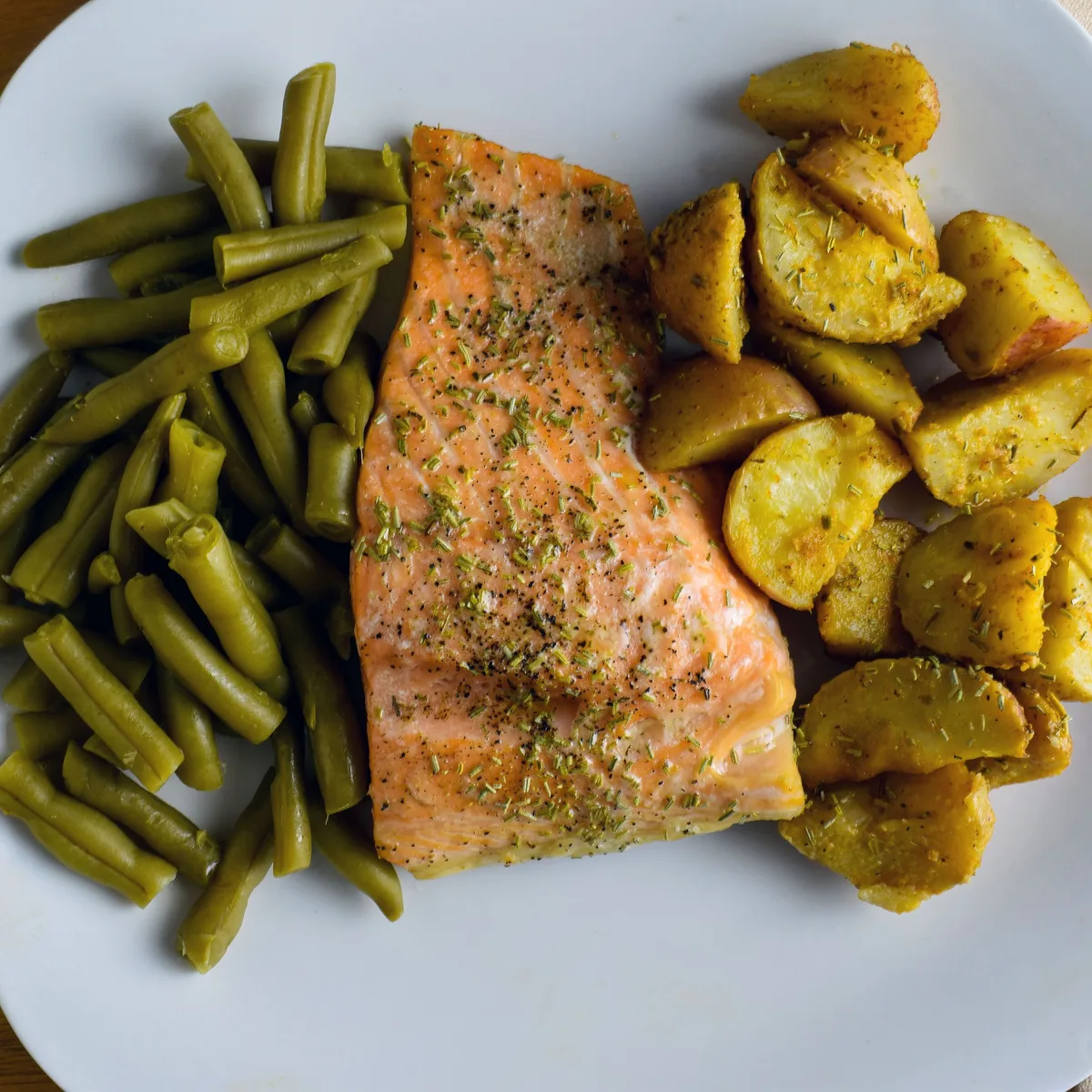
Diabetic Baked Salmon Green Beans Amandine, One Pan
Diabetic baked salmon green beans amandine is one sheet pan doing a dinner party’s work in half an hour. Roasted beans with garlic, salmon baked just to flaking, toasted almonds and lemon over everything: the amandine treatment, an old French bistro move, applied honestly and counted fully on the card below. The recipe has one structural rule, the stagger, and one skill, knowing when salmon is done, and this page teaches both.
Ingredients
Method
- Heat the oven to 425F with the rack in the upper third.
- Toss the green beans with half the oil, the garlic and half the salt on a sheet pan. Roast them alone for 10 minutes; the stagger is the recipe.
- Pat the fillets dry, rub with the remaining oil and salt, and nestle them skin side down among the beans.
- Bake 10 to 12 minutes more, until the salmon flakes at the thickest point under gentle pressure but still looks translucent at its very center, about 125F for medium.
- Meanwhile, toast the sliced almonds in a dry skillet over medium heat, 3 to 4 minutes, tossing often; they go from golden to burnt in under a minute.
- Squeeze the lemon half over the finished pan, scatter the almonds across the beans, and serve with the wedges.
Why This Recipe Works
- The stagger gives each ingredient its own clock. Beans need twenty minutes at 425F to blister; salmon needs ten to twelve. Started together, one of them loses, so the beans roast alone first.
- The almonds toast in a skillet, never on the pan. Sliced almonds burn at roasting temperatures before the fish cooks. Three skillet minutes gives them the deep gold the dish is named for.
- The lemon lands off the heat. The same citrus rule as the shrimp pan and the lentil pot: juice squeezed over the finished pan stays bright, juice baked goes flat.
Ingredient Notes
The salmon. Four fillets, skin on, similar thickness so they finish together. The card counts USDA’s farmed Atlantic entry, the standard grocery fillet; wild salmon runs leaner and cooks a shade faster, so pull it a minute early if that is what the counter had. Skin on matters even if nobody eats it: it shields the underside from the hot pan and lifts off cleanly after baking.
The green beans. A pound, trimmed, and truly dry before oiling; wet beans steam pale instead of blistering. The dish’s carbohydrates live mostly here, as the card shows, which is the honest arithmetic of a vegetable-forward plate.
The almonds. Sliced, not slivered, an ounce and a half doing real texture work and counted in full. Watch the skillet: the difference between toasted and burnt is measured in seconds, and burnt almonds cannot be rescued, only replaced.
The lemon. One, working two shifts: half squeezed over the hot pan, half in wedges for the table.
The Method, In Short
The card carries the steps, and the sequence is the recipe. Beans first, ten minutes alone at 425F, in the upper third of the oven where the browning happens. Fillets nestled in, ten to twelve minutes more. The salmon is done when the thickest fillet flakes under gentle pressure while its very center still looks slightly translucent, about 125F on an instant-read for a medium finish; it finishes setting in its own heat on the plate. Cooked until fully opaque in the oven, it arrives at the table dry, which is the single most common salmon mistake and the easiest to stop making.
The almonds toast on the stovetop while the fish bakes, and everything converges at the pan: lemon squeezed, almonds scattered, dinner done. One pan, one skillet, thirty minutes.
Substitutions and Storage
Trout fillets run the same play a minute faster. Broccoli florets swap for the beans with the same stagger and two extra head-start minutes. A teaspoon of Dijon brushed on the fillets before baking is a quiet upgrade; the mustard clings to the surface and browns into a savory glaze. Count it if you are being exact, it barely registers.
Leftover salmon holds two days refrigerated and is best repurposed cold, flaked over greens with the leftover lemon wedge, because reheated salmon overshoots into dryness in any microwave. The beans reheat fine in a hot pan. If you know a fillet will be tomorrow’s lunch, pull it at the early end of the window today.
Why Carryover Cooking Governs Both
Salmon holds residual heat, so the fillet keeps cooking on the plate after it leaves the oven. Protein pulled while its center still looks slightly translucent firms to just-set as that stored heat works through, while a fillet already fully opaque out of the oven climbs past that point and dries into a chalky texture. The oven’s job ends before the fish looks finished, which is why the window closes early and the fillet comes out at the flake-but-translucent stage.
The almonds run on the opposite clock but the same principle of narrow margins. Sliced almonds are thin and low in moisture, so they cross from golden to burnt in well under a minute at skillet heat, with no warning stage between. That is why the skillet needs a constant toss and an eye on it across the whole three to four minutes.
FAQ
How do I know the salmon is done without a thermometer? Press the thickest point gently with a fork: done salmon flakes along its layers while the deepest center still looks a shade translucent. Full opacity throughout means it has already gone past. The thermometer just says the same thing in numbers, about 125F for medium.
Can I use frozen salmon fillets? Yes, thawed overnight in the fridge and patted very dry. Baking from frozen technically works with added minutes, but the surface weeps and the seasoning slides; the overnight thaw is worth the planning.
Can I use frozen green beans? For this particular dish, fresh is the honest answer: frozen beans carry too much water to blister and the amandine treatment depends on that roasted edge. Save frozen beans for soups and skillets where softness is fine.
What rounds out the plate? It is a complete dinner as built. If the table wants more, a measured scoop of quinoa or the cauliflower rice from our diabetic garlic lime shrimp page joins the plate counted, like every base on this site.
Where to Go Next
The seafood file continues at diabetic shrimp recipes, the sheet pan stagger rule runs through diabetic chicken recipes as well, and the whole section starts from the diabetic recipes pillar.
Written by Frank Thomson, Skillet & Spoon editorial. Every nutrition figure on this site is calculated ingredient by ingredient from the USDA FoodData Central database, never estimated and never rounded to look better. We do not publish net-carb figures or use non-nutritive sweeteners. How we develop and source recipes is set out in our editorial policy.