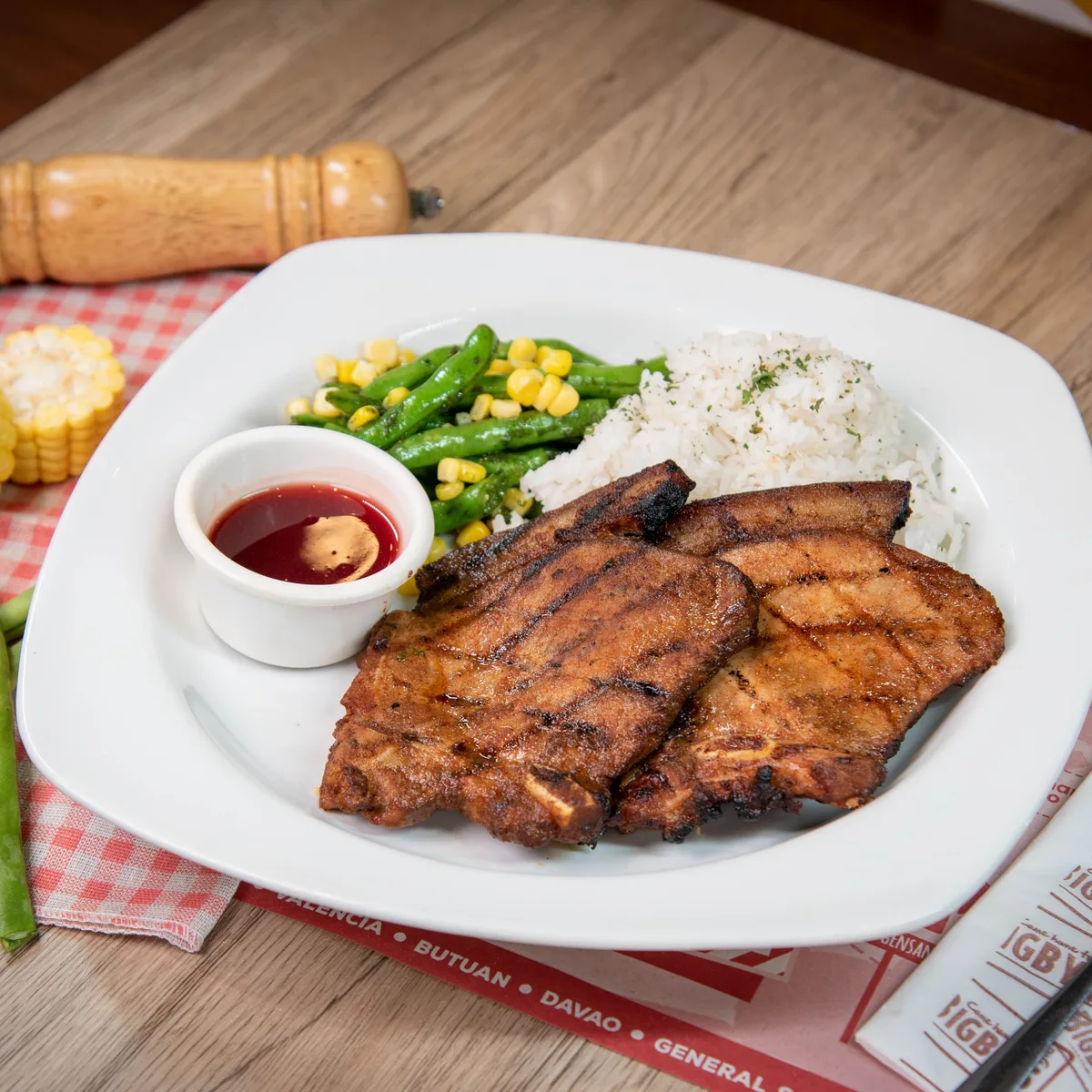
12 Diabetic Pork Chop Recipes That End Dry Chops
Diabetic pork chop recipes inherit a problem older than any eating pattern: most home cooks learned pork from a generation that cooked it gray all the way through. The modern loin chop is bred lean, which makes it a natural fit for this section and an easy cut to wreck by five o’clock habit. The fix is two numbers and one soak, all explained below, followed by twelve chops that come off the pan juicy enough to convert the skeptics at your own table.
Like every page in this section, the vegetables share the pan, the pan sauces are counted by the spoon, and the cards carry USDA-calculated numbers rather than estimates.
The Two Numbers and the Soak
145F, then rest. Pork chops are done at 145F internal with a three minute rest, a standard that leaves the center blush pink and juicy. The gray chop of memory was cooked twenty degrees past this line. Pull at 140F and carryover lands the rest; an instant-read thermometer through the side of the chop is the only reliable referee.
Thickness decides the method. Thin chops, half an inch, belong in a screaming pan for two to three minutes a side and no oven. Thick chops, an inch or more, want a sear plus a gentle finish, oven or covered pan. Cooking a thick chop entirely over high heat chars the surface before the center moves, and cooking a thin one gently just dries it slowly.
The brine. A quarter cup of salt in a quart of water, thirty minutes, rinse and pat truly dry. Lean pork holds noticeably more juice against an overshoot after a brine, and for bone-in chops it seasons the deep meat near the bone that surface salt never reaches. When there is no time, salt the chops the moment groceries land and let them sit while the pan heats; even twenty minutes helps.
Skillet Chops, 20 to 35 Minutes
Garlic butter skillet chops, 20 minutes. Thin brined chops seared hard, finished with garlic and a counted knob of butter spooned over. The whole dinner is the sear; do not move the chop for the first two minutes and the crust pays for the patience.
Smoked paprika chops with charred cabbage, 30 minutes. Thick chops seared and finished covered while cabbage wedges char in a second pan. Cabbage and pork is an old pairing for a reason; the char is what modernizes it.
Mustard cream chops, 30 minutes. Seared chops with a pan sauce of stock, Dijon and a counted pour of cream. Take the pan off the boil once the cream lands; a hard boil breaks the sauce.
Chops with apples and onions, 35 minutes. One sliced apple and one onion, cooked down in the pork’s pan until soft and caught at the edges, chops nestled back in. The apple is fruit doing honest sweetening work, counted in full on the card, per house policy on sweetness.
Lemon oregano chops with zucchini, 25 minutes. Thin chops and zucchini planks off the same hot surface, lemon squeezed over both while they rest. Salt the zucchini ten minutes ahead and blot it, or it steams instead of searing.
Chops al pastor style, 35 minutes plus marinating. Thin chops in a chile, pineapple and vinegar marinade, two to four hours, then seared fast. Labeled honestly: this is a Tex-Mex weeknight adaptation of the taqueria original, and the measured pineapple is counted on the card. Past four hours the acid starts working the surface mealy.
Oven and Sheet Pan
Sheet pan chops with green beans and peppers, 35 minutes. Thick brined chops center-pan at 425F, vegetables at the edges, chops pulled at 140F even if the vegetables want longer. The pan does not get a vote on the meat.
Parmesan crusted baked chops, 40 minutes. Mustard-brushed chops pressed into grated parmesan mixed with chopped almonds, baked at 400F. The crust browns deeply and the card counts every gram of it.
Roasted chops over cauliflower and onion, 45 minutes. Cauliflower florets and onion wedges get a fifteen minute head start at 425F, then the seared chops finish on top of them, dripping into the pan below. The head start is the recipe; vegetables and chops started together means one of them loses.
Smothered and Braised
Smothered chops with mushrooms and onions, 45 minutes. Seared chops braised gently in stock with dry-seared mushrooms and slow onions. Keep the braise below a simmer’s rumble; a boiled chop tightens no matter how right the temperature reads.
Green chile pork chop skillet, 45 minutes. Chops braised with roasted poblanos, tomatillos and cumin. Char and peel the poblanos properly, blistered black then steamed in a covered bowl, or their skins ribbon through the sauce.
Slow cooker chops with cabbage and carrots, 4 hours on low. Thick bone-in chops only; thin chops disintegrate past hour two. Four hours is the window where the meat relaxes and still slices. Our full slow cooker file arrives in the section soon and pork will feature in it.
Reading the Pork Case
The label “pork chop” covers four different dinners, and picking the right one is half the outcome. Rib chops, with the curved bone and a cap of fat, are the most forgiving and the best sear-and-finish candidates on this page. Center cut loin chops, the lean oval with a T of bone or none, are the classic lean choice and the ones the brine protects most. Sirloin chops run cheaper, chewier and more marbled; they belong in the smothered and slow cooker builds where time works for them. Anything labeled “thin cut” is a hot-pan-only cut, whatever its origin.
Two case habits pay every week. First, thickness beats grade: an inch-thick chop of any name cooks better than a premium half-inch one, because thin chops leave no room between seared and overdone. Ask the counter to cut thick if the shelf runs thin. Second, check the ingredient line for “enhanced” pork, which arrives pre-injected with a salt solution. It is not spoiled goods, but it must not be brined again, and its card numbers shift with the added sodium; plain pork plus your own brine keeps both the seasoning and the arithmetic in your hands.
How the Numbers Work
Every card carries nutrition calculated ingredient by ingredient from USDA FoodData Central, source entries archived, per our editorial policy. Total carbohydrates and fiber are stated separately, never as a net figure. The apple build, the parmesan crust and the cream sauce all appear at their true values, because a counted indulgence is information and an uncounted virtue is fiction.
Why the Brine and the Rest Work
A brine is insurance against an overshoot, not just seasoning. Salt in the soak dissolves some of the muscle proteins near the surface, and the loosened proteins hold onto water instead of squeezing it out, so a brined chop that drifts past 145F loses less moisture than an unbrined one at the same temperature. That is why the brine matters most on lean loin chops, which have little fat to mask an overshoot.
Resting matters for the same physical reason on pork as on any roast. Heat drives the juices toward the cooler center and tightens the muscle fibers; slicing straight off the heat lets that liquid run onto the board, while three minutes of rest lets the fibers relax and reabsorb it, so it stays in the slice.
FAQ
Bone-in or boneless? Bone-in cooks more evenly and forgives an extra minute, boneless is faster and easier to find thin-cut. Both appear above; when in doubt, buy bone-in and thick, then use the sear-plus-gentle-finish method.
Is the pink center safe? At 145F with a rest, yes, and it has been the published standard for whole cuts of pork for years. The all-gray chop is a habit, not a requirement. Ground pork is different and needs 160F, same logic as burgers.
Can I skip the brine? Yes, and the recipes still work if your temperature control is exact. The brine exists because weeknights are not laboratories; it is the cheapest margin for error in this collection.
What sides fit these chops? Everything already in the pans above: charred cabbage, roasted cauliflower, green beans, zucchini. For a bigger table, the vegetable-first thinking in low carb diabetic chicken recipes transfers to pork without edits.
Which recipe first? Garlic butter skillet chops. Twenty minutes, four ingredients, and it teaches the sear-and-rest rhythm every other build assumes. Then the apples and onions, which is the page’s best argument that this section eats like food, not like discipline.
Where to Go Next
Beef takes its turn at diabetic ground beef recipes, chicken technique lives at diabetic chicken recipes, and the whole section starts from the diabetic recipes pillar. The worked single with the full USDA card is diabetic pork chops with apples.
Written by Frank Thomson, Skillet & Spoon editorial. Every nutrition figure on this site is calculated ingredient by ingredient from the USDA FoodData Central database, never estimated and never rounded to look better. We do not publish net-carb figures or use non-nutritive sweeteners. How we develop and source recipes is set out in our editorial policy.