10 Diabetic Cake Recipes for Real Celebrations
Diabetic cake recipes carry more emotional weight than any other page in this section, because cake is rarely about cake. It is birthdays, retirements, Sunday visits and the ritual of putting something on a plate that says this day is different. The recipes below take that job seriously, and they take our data policy seriously too: no unverifiable sweetener lines, sweetness from fruit, dates, banana and honestly counted honey or maple syrup, and USDA-calculated numbers on every card.
The engineering truth up front: cakes built this way are denser and moister than sugar-crumb cakes, closer to European almond tortes and tea loaves than to boxed-mix fluff. Lean into that register and these cakes stop being imitations and start being good.
The Loaf Family
Cocoa banana bread, 60 minutes. Three overripe bananas, whole wheat flour, cocoa, eggs, a measured spoon of honey. The riper the bananas, the less anything else has to do, and the freezer bank of spotty bananas is this loaf’s supply chain.
Classic banana walnut loaf, 60 minutes. The cocoa version’s plainer sibling, walnut-heavy, cinnamon-warm.
Pumpkin spice loaf, 55 minutes. Canned pumpkin, whole wheat and almond flours, the pie spices, maple syrup counted in full. Autumn in loaf form, dense and honest.
Zucchini spice loaf, 60 minutes. Grated zucchini salted and squeezed hard, then folded into the pumpkin loaf’s architecture. The salting rule from our Mexican squash pages doing dessert duty.
Apple cinnamon loaf, 60 minutes. Grated apple and applesauce sharing the sweetening, walnuts for structure. Improves for two days wrapped, which makes it the make-ahead of the family.
The Celebration Tier
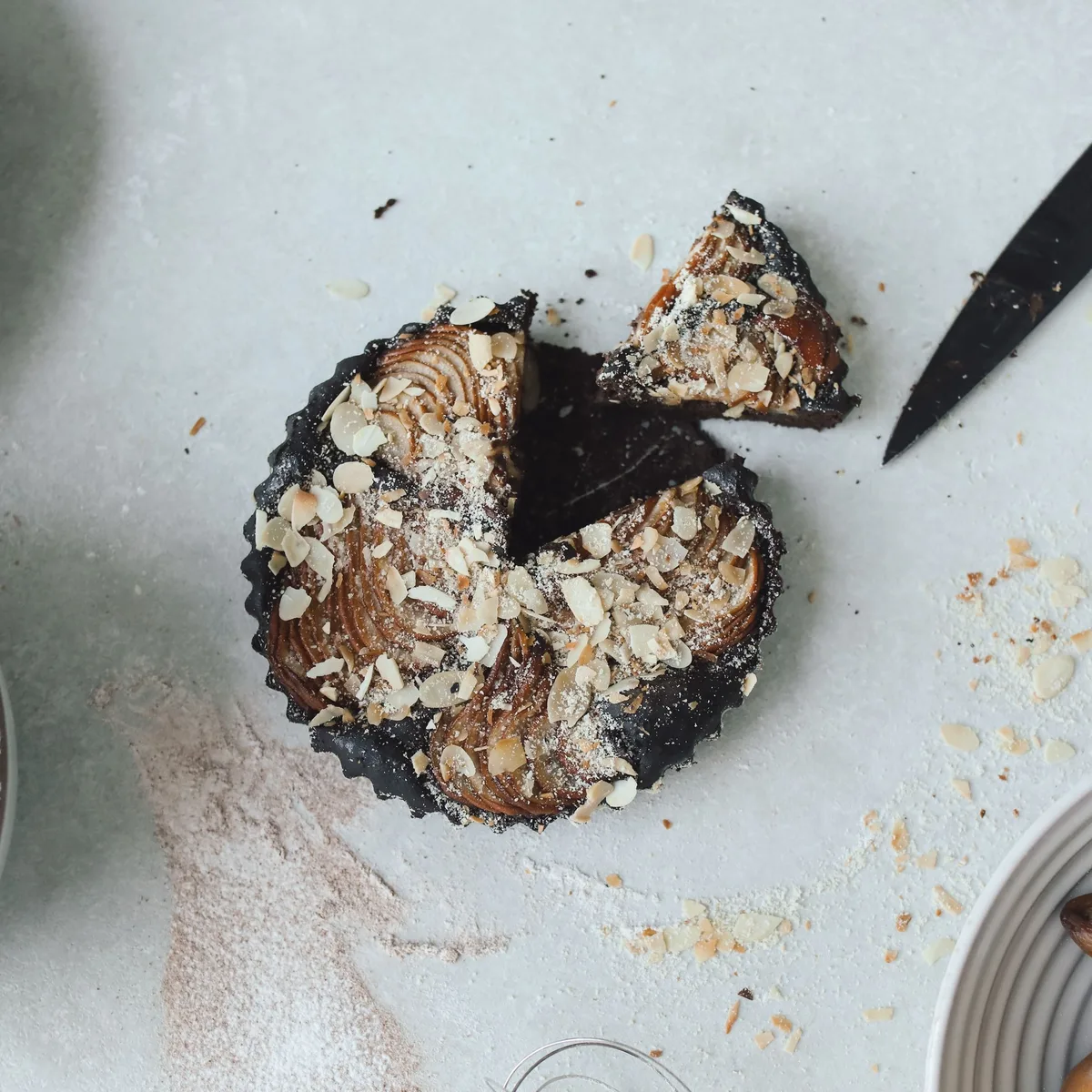
Almond citrus cake, 50 minutes. Almond flour, eggs, whole orange zest and juice, olive oil. Mediterranean lineage, naturally rich, and rich enough to set before guests with no explanation whatsoever.
Flourless chocolate date cake, 45 minutes. Dates blended to paste, cocoa, dark chocolate, eggs. Dense, fudgy, and a genuinely serious dessert; a thin slice does what a thick slice of lesser cake cannot.
Berry yogurt cake, 50 minutes. Greek yogurt batter with berries folded through, lemon zest bright. The summer birthday answer.
Carrot cake, redesigned, 55 minutes. Grated carrot, crushed pineapple in juice, walnuts, whole wheat and almond flours. The frosting question is answered below.
Pumpkin custard cake, 60 minutes. The custard cups from the dessert page scaled into a sliceable water-bath cake. Silky, spoonable at the edges, and the least obviously fruit-sweetened of the group.
The Frosting Question, Answered Honestly
Conventional frosting is structurally sugar, and this section does not fake it. Three finishes do the celebratory job instead. Whipped Greek yogurt cream: thick yogurt whipped with vanilla and a counted teaspoon of honey, spread cold; it holds for a day and reads as cream-cheese frosting’s fresher cousin, the carrot cake’s standing partner. Warm chocolate glaze: dark chocolate melted with a spoon of butter, poured thin; it sets to a shell on the flourless cake. The dusting-and-fruit finish: cocoa dusted through a sieve, berries piled generously; it out-decorates most frostings at a fraction of the sugar and none of the pretense. A celebration cake needs presence, not thickness, and all three finishes photograph like they mean it.
Baking Rules for This Batter Family
Fruit-sweetened batters run wetter and denser than sugar batters, and four adjustments keep them honest. Test with a skewer, not a clock: moisture varies with the fruit, and done is a skewer with moist crumbs, not a timer’s opinion. Line and grease loaf pans both, because fruit sugars caramelize against metal and grip. Cool completely before slicing, a full hour for loaves; warm slices of dense cake read as underbaked even when they are not. And expect day two to be better than day one for every loaf here, as the fruit moisture equalizes; celebration cakes can be baked the day before on purpose, which is a gift to any host.
How the Numbers Work
Every card counts everything, bananas, dates, honey, pineapple and all, from USDA data with source IDs archived, per our editorial policy. No net carbs, no rounded-down flattery. Slices are described by fraction of the pan so the arithmetic stays visible. What a slice means for your day is a decision for you and your care team; our contribution is that the number you are deciding with is real.
The Overripe Banana Economy
Half this page runs on bananas past their prime, so the supply chain deserves a paragraph. The moment a banana turns leopard-spotted, peel it, break it into chunks and freeze it flat in a bag; that bag is simultaneously the ice cream from our dessert fast lane, the sweetener of the loaf family, and the insurance policy against ever baking with an underripe banana, which is this family’s most common quiet failure. Underripe bananas carry starch where ripe ones carry sugar and fragrance, and a pale banana loaf that “needed more sweetness” almost always needed riper fruit, not another spoon of honey. Thaw the chunks twenty minutes on the counter and mash; the slight liquid they release belongs in the batter.
The same economy applies to the date jar: buy medjools when the price dips, and blitz a batch into paste that keeps two weeks refrigerated. Date paste measured by the spoon behaves like a pantry staple instead of a project, and it is the difference between the flourless chocolate cake being a weeknight possibility versus a special occasion only.
Serving Cake in a Considered Week
The pattern worth adopting: cake exists on this page as a planned event, not a standing inventory. Bake for the occasion, serve generously that day, then slice and freeze the remainder immediately, per the cookie jar logic of the whole sweets shelf. A frozen slice thawing on a plate while dinner cooks is a decision made with full information; a loaf sweating on the counter for four days is a negotiation nobody wins. The cards give you the numbers; the freezer gives you the pause; between them, cake keeps its place as celebration rather than becoming furniture.
Why These Cakes Work
A cake built around almond flour, citrus and olive oil is not imitating a sugar sponge, so it should not be judged as a failed one. Sugar sponges rise tall and dry because sugar crystals cut into creamed butter and hold the air that sets as an open crumb. Almond and fruit batters set dense and moist instead, because ground nuts bring fat and fruit purees bring water where crystals would otherwise be. That density is the cake’s character, not its apology: a torte or tea loaf is built to be eaten in thin rich slices, not tall airy ones. Design a cake around what its ingredients actually do, and it stops reading as a substitute for something else.
FAQ
Can these work as birthday cakes? Both the berry yogurt cake and the flourless chocolate date cake take a candle and slice cleanly, which is most of what the job asks. What neither will do is stack. Layered cakes rely on a dry, springy sugar-sponge crumb stiff enough to carry frosting and the tier above it, and a batter built on yogurt or ground nuts is denser and wetter than that by design. Presence and flavor are this page’s game rather than architecture.
Why are these cakes denser than regular cake? Because sugar crystals aerate creamed batters and fruit purees do not. The density is structural and intentional; these are torte-and-tea-loaf cakes, and they are judged fairly on that ground.
Can I freeze them? Every loaf freezes sliced, parchment-separated, for a month. The custard cake and the yogurt-frosted carrot cake are fridge creatures, three days, and prefer not to travel.
What if I need it sweeter? The honest lever is another counted spoon of honey or extra-ripe fruit, both of which the card can absorb and restate truthfully. What this page will not do is add an unverifiable sweetener line, per the section’s standing policy.
Which cake first? The banana walnut loaf: forgiving, familiar, and the best introduction to how this batter family behaves. The almond citrus cake second, for the guests.
Where to Go Next
Smaller-format baking lives at diabetic cookie recipes and diabetic muffin recipes, the full sweets shelf at diabetic dessert recipes, and the section’s foundations at the diabetic recipes pillar.
More recipes to try
Written by Frank Thomson, Skillet & Spoon editorial. Every nutrition figure on this site is calculated ingredient by ingredient from the USDA FoodData Central database, never estimated and never rounded to look better. We do not publish net-carb figures or use non-nutritive sweeteners. How we develop and source recipes is set out in our editorial policy.