Chicken Tinga (Smoky Chipotle Shredded Chicken)
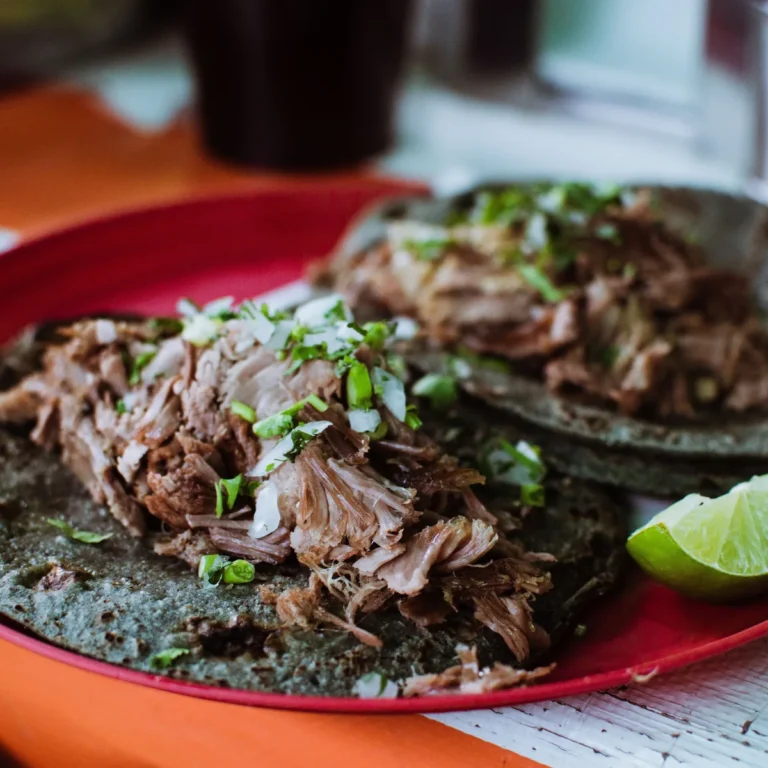
Chicken tinga is shredded chicken cooked down in a smoky chipotle and tomato sauce until the sauce clings to the meat rather than sitting under it. It is the filling for tostadas, tacos and tortas across central Mexico, and it takes about fifty minutes, most of it hands off. One step decides whether it tastes like a taqueria or like chicken in tomato sauce: the blended sauce is fried hard in hot oil before the chicken goes in. The recipe card carries the full method with USDA-calculated numbers, and this page explains the frying step and the shredding.
Ingredients
Method
- Put the chicken thighs in a pot with the broth, the whole half onion, 2 garlic cloves, the bay leaves and 1 teaspoon of the salt. Bring to a bare simmer and poach 18 to 20 minutes, until cooked through.
- Lift the chicken out and let it cool enough to handle. Keep the poaching liquid; strain it and set 1 cup aside.
- While it cools, simmer the tomatoes in water for 8 minutes, until the skins split and loosen, then drain and slip the skins off.
- Blend the peeled tomatoes with the chipotles, their adobo sauce, the remaining 2 garlic cloves and the oregano until smooth.
- Shred the chicken with two forks, along the grain first and then across, into pieces rather than threads.
- Heat the oil in a wide pan over medium-high and cook the sliced onion 5 minutes, until soft at the edges.
- Pour in the blended sauce all at once and let it fry hard for 6 to 8 minutes, stirring, until it darkens, thickens and pulls away from the side of the pan.
- Add the shredded chicken, the reserved cup of poaching liquid and the remaining salt. Simmer 8 to 10 minutes, until the sauce clings to the meat and no loose liquid pools in the pan.
Where Tinga Comes From
Tinga is from Puebla, and tinga de pollo is its most common form. The defining elements are the chipotle, which brings both smoke and heat because it is a ripened jalapeno that has been smoke-dried, and the shredded texture. Beef and pork versions exist and are equally traditional. What is served with it varies by region and household: tostadas are the classic, tacos and tortas are everywhere, and a plate of tinga with rice is a normal weeknight dinner. This version is a traditional-style tinga rather than an adaptation, with one honest note about the chipotle pinning under the card.
Why This Recipe Works
- Frying the blended sauce changes it chemically, and you can see it happen. Poured into hot oil, a raw blended sauce spits, then darkens, then thickens and starts to pull away from the side of the pan. Water is leaving and sugars are browning, which turns a thin, raw-tasting puree into something concentrated and round. This step is called freir la salsa, and skipping it is the most likely reason a homemade tinga tastes flat.
- Poaching keeps the chicken moist, and thighs stay moist longer than breast. Held at a bare simmer rather than a boil, the muscle fibres contract gently and hold their water. Thigh meat also carries more fat and connective tissue than breast, so it tolerates the second cooking in the sauce without drying out.
- Shredding across the grain gives pieces, not threads. Pull the meat apart along the grain first, then break those strips crosswise. Long threads pack into a dense mat that sheds sauce; short pieces trap it. The texture of tinga is part of the dish, not an accident of how tired you were when you shredded it.
Ingredient Notes
The chicken. Boneless thighs, because they stay succulent through both stages. Breast works if that is what you have; poach it for 15 minutes rather than 20 and expect a drier result. A rotisserie chicken, pulled apart, is a legitimate shortcut, and in that case use plain broth in place of the poaching liquid.
The chipotles. Canned chipotles in adobo, which are sold in small tins in most supermarkets. Three gives a medium heat with clear smoke behind it. Start with one if you are cautious, since you can blend another in at the end but cannot take it out. There is no exact USDA entry for chipotles in adobo, so the card calculates them from a canned red chili sauce and discloses that substitution beneath it.
The tomatoes. Roma, simmered briefly and peeled. Peeling matters here because tomato skins do not break down in the blender and end up as tough flecks through the sauce. Canned whole tomatoes, drained, are a straight substitute out of season.
The onion, used twice. Half goes whole into the poaching liquid, where it flavours the broth, and half goes sliced into the pan, where it stays as visible strands in the finished dish. Those strands are characteristic of tinga, so slice rather than dice.
The Method, In Short
Poach and shred the chicken, peel and blend the tomatoes with the chipotles, fry the sauce until it darkens, then return the chicken with a cup of the poaching liquid and simmer until it clings. The only part that needs attention is the frying, and it takes under ten minutes.
How to know the sauce has fried enough. Drag a spoon across the pan. When the sauce holds the line for a moment before flowing back, and a film of red oil separates at the edges, it is ready for the chicken. Before that point it still tastes sharp and raw.
Heat, and How to Control It
Chipotle heat builds slowly, so taste the sauce after it has fried rather than when it is raw; frying concentrates it. The adobo sauce in the tin is milder than the chiles themselves and is a good way to add smoke without much more heat. If the finished pan is too hot, stir a spoon of crema or sour cream into the serving rather than adding water, since capsaicin dissolves in fat and not in water.
What to Serve It On
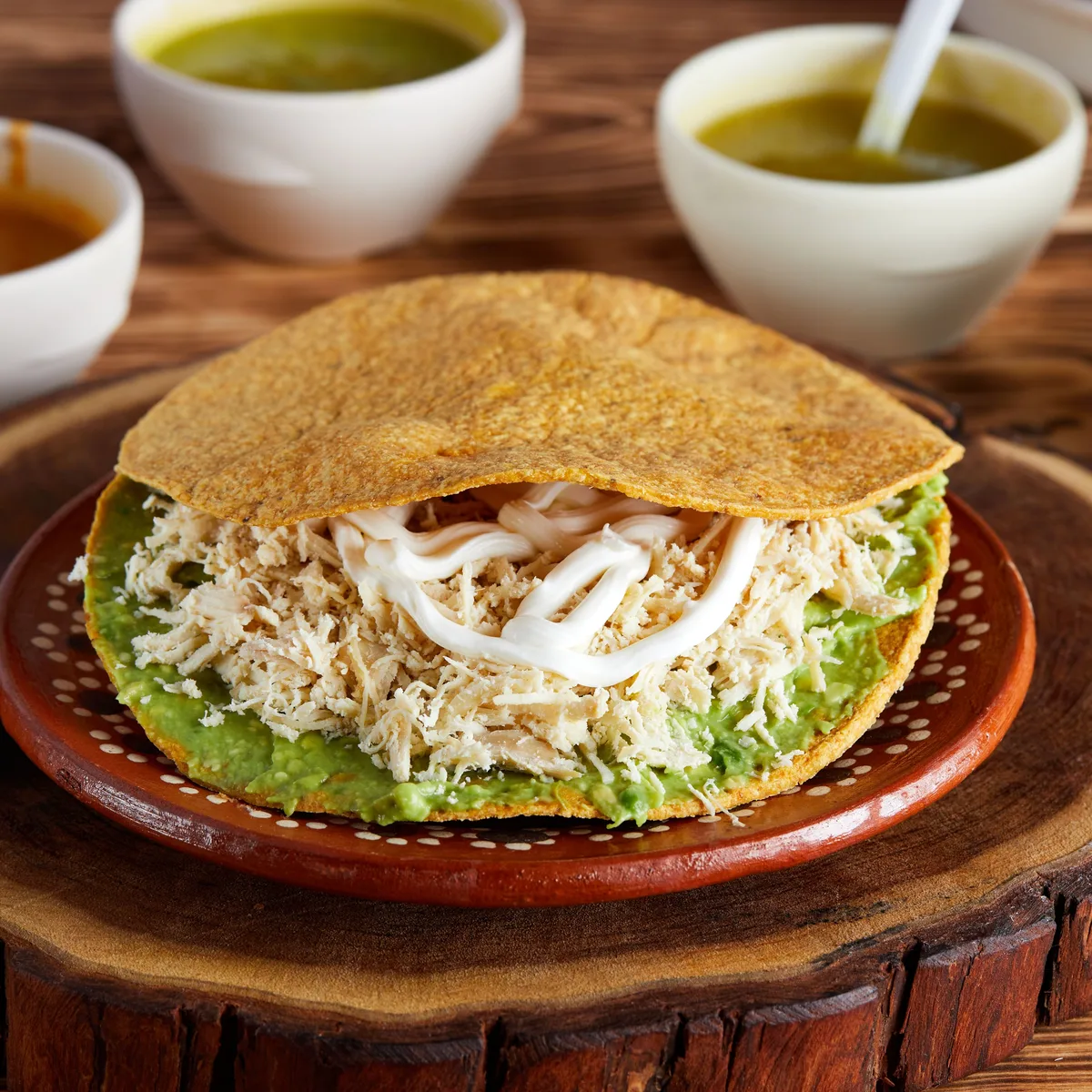
Tostadas are the traditional base: a fried flat tortilla spread with beans, topped with tinga, lettuce, crema and crumbled queso fresco. See tostadas for the build. It also fills tacos, quesadillas and a torta, and goes onto rice bowls with avocado. On the side, refried beans and authentic Mexican rice make it a full plate. For more in this style, see Mexican shredded chicken recipes.
Storage and Make Ahead
Tinga is a good make-ahead filling. It keeps four days refrigerated and freezes for three months, and the flavour deepens overnight as the smoke works through the meat. Reheat it in a pan with a splash of broth rather than in a microwave, which dries the surface of shredded chicken quickly. If you are cooking for the week, poach and shred the chicken and make the sauce separately, then combine only what you need, because the meat keeps a better texture out of the sauce than in it.
Why It Turns Watery, and What Fixes It
A watery tinga comes from adding liquid faster than the pan can drive it off. Three things contribute: sauce that was not fried long enough, so it still holds its original water, too much poaching liquid added at once, and a pan too small to give that liquid surface area to escape from. The fix is the same in each case. Use a wide pan rather than a deep pot, add the reserved liquid a little at a time, and let the last few minutes run uncovered. When it is right, dragging a spoon through the pan leaves a dry track behind it and the shreds hold together on a tostada instead of soaking it.
FAQ
What is chicken tinga? Shredded chicken simmered in a smoky sauce of tomato and chipotle chiles, from Puebla in central Mexico. It is usually served on tostadas, in tacos or in tortas.
Is chicken tinga spicy? It is mildly to moderately spicy, and you set the level with the number of chipotles. Three gives a clear medium heat; one gives smoke with very little burn.
Can I use chicken breast instead of thighs? Yes, but poach it for about 15 minutes rather than 20 and expect a drier result. Thighs carry more fat and connective tissue, so they stay moist through the second cooking in the sauce.
What does frying the sauce actually do? It drives off water and browns the sugars in the tomato and chile, which concentrates the flavour and removes the raw edge. The sauce visibly darkens and thickens, and it is the step that makes the difference.
Can I make tinga in a slow cooker? Yes, though fry the blended sauce in a skillet first, because a slow cooker cannot brown it. Then cook the chicken in the sauce on low for 4 to 5 hours and shred it in the pot.
What is the difference between tinga and barbacoa? Tinga is shredded meat in a chipotle and tomato sauce. Beef barbacoa is meat slow-cooked until it falls apart, seasoned with dried chiles and warm spices, without the smoked-chipotle backbone.
Where to Go Next
Put it on tostadas, fold it into a quesadilla, or compare it with beef barbacoa. The whole library starts at easy Mexican recipes at home.
Nutrition note: values are calculated from USDA FoodData Central. Where USDA has no exact entry, the closest catalog item is used and named here: chipotle peppers in adobo was calculated as “Sauce, peppers, hot, chili, mature red, canned”.
Written by Frank Thomson, Skillet & Spoon editorial. Every nutrition figure on this site is calculated ingredient by ingredient from the USDA FoodData Central database, never estimated and never rounded to look better. We do not publish net-carb figures or use non-nutritive sweeteners. How we develop and source recipes is set out in our editorial policy.