Authentic Mexican Rice (Arroz Rojo)
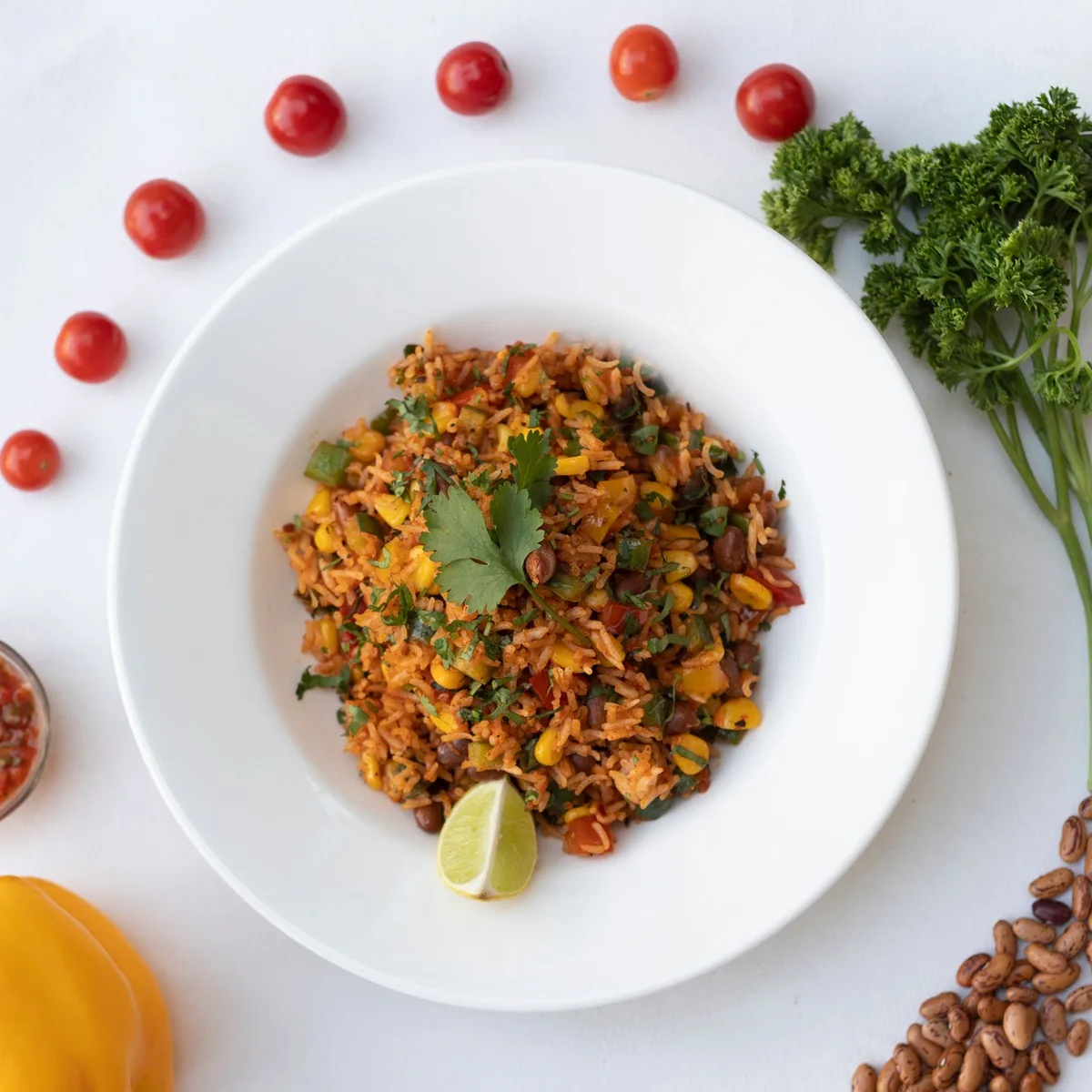
Authentic Mexican rice, the arroz rojo served alongside beans and grilled meat across Mexico, is not a hard dish, but it fails for one predictable reason: too much liquid and too much stirring. Get the toast, the ratio and the rest right, and it comes out tinted, fragrant and separate, every grain standing on its own. The recipe card below carries the full method with USDA-calculated numbers; this page explains the why behind each step.
Ingredients
Method
- Rinse the rice only if you plan to dry it well, then heat the oil in a wide pan with a tight lid over medium heat.
- Add the dry rice and toast it, stirring, for 3 to 4 minutes until it smells nutty and turns chalky-opaque. This seals the grain so it stays separate.
- Add the onion and garlic and cook 1 minute until fragrant.
- Stir in the tomato sauce, broth and salt. The tomato sauce counts as part of the liquid, which is why the broth is held back to 1.25 cups.
- Bring to a simmer, cover, drop the heat to low, and cook 20 minutes without lifting the lid or stirring.
- Off the heat, rest covered 10 minutes, then uncover and fluff with a fork to release the steam.
Why This Recipe Works
- Toasting the dry rice seals each grain. Frying the rice in oil until it turns chalky and smells nutty toasts the surface starch and coats the grain in fat, so it absorbs liquid slowly and stays separate instead of clumping.
- The tomato sauce is counted as liquid. Canned tomato sauce is roughly ninety percent water, so it lives inside the liquid budget rather than on top of it, which is why the broth is held to 1.25 cups.
- Not stirring keeps it fluffy. Agitation rubs amylopectin, the sticky starch, off the grains and into the pot, the same mechanism that makes risotto creamy. Left undisturbed, the rice steams clean.
Ingredient Notes
The rice. Long-grain white rice is the right choice because it carries more amylose than medium or short grain, and amylose sets firm and separate rather than sticky. Jasmine and basmati work but read as a different dish; medium-grain turns the pot gummy.
The tomato base. Plain canned tomato sauce gives the most consistent color and the cleanest liquid math. Blended fresh Roma tomatoes are the more traditional route, but they carry more water and pulp, so cut the broth further and simmer the puree down first if you use them.
The broth and salt. Chicken broth builds the savory backbone, though vegetable broth makes this fully meatless with no other change. The single teaspoon of salt seasons the grain as it cooks; taste and adjust after the rest, not before.
Mexican Rice Compared
The names get used loosely, so here is where the lines actually fall.
| Mexican rice (arroz rojo) | Spanish rice | |
|---|---|---|
| Color source | Tomato and sometimes a little cumin | Saffron or turmeric, more yellow |
| Base liquid | Tomato sauce plus broth | Broth, often with peppers |
| Texture goal | Separate, fluffy grains | Separate, fluffy grains |
| Best grain | Long-grain white | Long-grain white |
Both live or die on the same two rules: toast the grain, and do not drown it. The color and a few aromatics are what set them apart, not the technique.
Tips for Fluffy Rice, Not Mush
The most common failure is a soft, clumped pot, and it traces back to liquid almost every time. If your rice keeps coming out soft, the fix is not a new recipe, it is counting the tomato sauce and holding the broth back to match. Our full troubleshooting guide covers every failure mode at why is my Mexican rice mushy.
Pot choice matters more than it looks. A wide pan with a heavy, tight lid holds steam evenly and cooks the grains at one pace, while a loose lid vents steam and leaves the top raw over a soft bottom. Keep the heat genuinely low once the lid goes on, since a hard simmer scorches the base before the top is done.
Variations
Stir a half cup of frozen peas and diced carrot in with the liquid for the classic restaurant look, adding a couple of minutes to account for the extra moisture they release. A minced serrano or a pinch of cumin bloomed in the oil before the rice deepens the flavor without changing the method. For a tomato-forward version, swap a quarter of the broth for more sauce and cut the total liquid to match.
What to Serve With It
Arroz rojo is a side built to sit beside saucy mains, so it pairs naturally with shredded chicken, carnitas, or a pot of brothy beans. It also works as the base of a rice bowl, which is where the Mexican rice bowl recipes collection picks up. Round out the plate from the Mexican side dish recipes page.
Storage and Reheating
Cooked rice keeps four days refrigerated in a sealed container, and it firms as it cools because the starch retrogrades. To bring it back, sprinkle a tablespoon of water over a bowl of it, cover, and steam it gently in the microwave or a covered pan, which re-softens the grains without turning them to paste. It also freezes well for up to three months, thawed and steamed the same way.
FAQ
What makes Mexican rice authentic? The tinted, separate-grain result from toasting long-grain rice in oil and cooking it in a tomato-and-broth liquid. The color comes from tomato, not from packet seasoning, and the grains stay distinct because the rice is toasted and never stirred.
Why do you toast the rice first? Toasting sets the surface starch and coats each grain in fat, so it absorbs liquid slowly and stays separate. Skipping it lets raw surface starch swell and clump the moment liquid hits the pan.
Can I make authentic Mexican rice without tomato sauce? Yes, blended fresh Roma tomatoes are the traditional alternative, but they add more water, so reduce the broth and simmer the puree down first to keep the liquid budget honest.
Why is my rice mushy or crunchy? Mushy is almost always too much total liquid, including the tomato sauce; crunchy is too little liquid or a lid that vented steam. The full diagnosis is at why is my Mexican rice mushy.
The Short Version
Authentic Mexican rice rewards three habits and punishes their absence: toast the grain, count the tomato sauce as liquid, and leave the pot alone until it rests. Do that and arroz rojo comes out the way it does in a good taqueria, fluffy and tinted and separate. Browse the rest of the easy Mexican recipes at home collection for what to serve alongside.
Written by Frank Thomson, Skillet & Spoon editorial. Every nutrition figure on this site is calculated ingredient by ingredient from the USDA FoodData Central database, never estimated and never rounded to look better. We do not publish net-carb figures or use non-nutritive sweeteners. How we develop and source recipes is set out in our editorial policy.