Fish Tacos (Seared Cod, Cabbage Slaw)
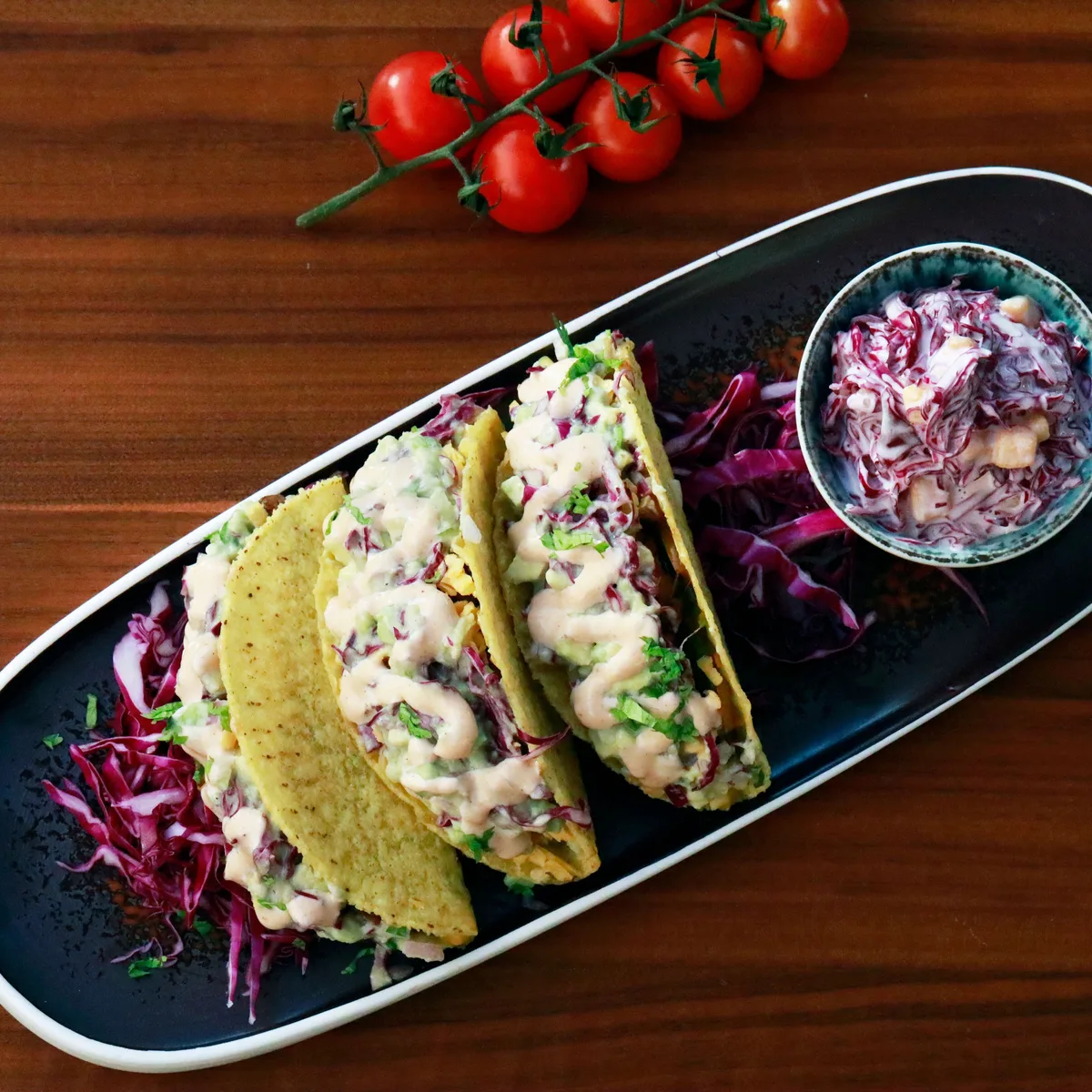
Fish tacos are warm corn tortillas filled with seared white fish, a crisp cabbage slaw and a cool lime crema, and they take about half an hour. Two things decide whether they hold together on the plate: which fish you buy, and when you dress the slaw. The recipe card carries the full method with USDA-calculated numbers; this page covers both, plus how to tell the fish is done without cutting into it.
Ingredients
Method
- Stir the sour cream, mayonnaise and 1 tablespoon of the lime juice together with a pinch of the salt. Refrigerate until serving.
- Toss the shredded cabbage with the cilantro and the remaining 2 tablespoons of lime juice no more than 15 minutes before you eat, so it stays crisp.
- Pat the fish completely dry on both sides, then season it with the chili powder, cumin and remaining salt.
- Heat the oil in a heavy skillet over medium-high until it shimmers. Lay the fish in and leave it undisturbed for 3 to 4 minutes, until the underside is browned and releases from the pan on its own.
- Turn once and cook 2 to 3 minutes more, until the flesh is opaque and flakes when pressed with a fork. Do not stir or break it up.
- Warm the tortillas on a dry pan for about 20 seconds a side, until soft and flexible.
- {‘Break the fish into large pieces and build each taco’: ‘fish first, slaw on top, then a drizzle of the crema. Serve with extra lime.’}
Where These Come From
Fish tacos belong to Baja California, where the classic version is battered and deep fried, served on corn tortillas with shredded cabbage, crema and lime. The seared version here is the weeknight adaptation of that idea: the same build, without a pot of frying oil. It is labelled as an adaptation rather than as the Baja original, and if you want the fried one, the batter section below covers the difference.
Why This Recipe Works
- Firm, low-fat white fish holds together; delicate fish does not. Cod, halibut, mahi mahi and snapper have dense, large-flaked flesh that survives being turned once and broken into pieces. Tilapia and sole are thin and fragile and fall apart into shreds in the pan. The fish is the structural element of the taco, so this choice matters more than any seasoning.
- A dry surface is what lets it brown and release. Fish is wet, and a wet surface steams rather than sears. Patted dry, the surface browns, and browned protein releases from hot metal by itself. That is why the fish should not be moved: when it is ready to turn it stops sticking. Poking at it early tears it.
- The slaw is dressed at the last minute. Lime juice and salt pull water out of shredded cabbage through osmosis. Dressed fifteen minutes ahead the slaw stays crunchy; dressed an hour ahead it wilts into a wet pile that soaks the tortilla from the inside.
Ingredient Notes
The fish. Cod is the card’s choice: firm, mild and widely available fresh or frozen. Frozen fillets are fine and often fresher than the “fresh” counter; thaw them overnight in the fridge and pat them very dry, since thawed fish carries extra water.
The cabbage. Green cabbage shredded thin. It is not a garnish, it is the crunch that replaces the fried batter in this version, so cut it finer than you think and use plenty. Red cabbage works and looks better, though it bleeds colour into the crema.
The crema. Sour cream loosened with mayonnaise and lime. The mayonnaise is there for body and because its emulsified oil keeps the sauce from breaking into water on a hot taco. A chipotle in adobo, minced into it, makes the smoky version common in taquerias.
The tortillas. Corn, warmed on a dry pan until flexible. Two stacked together is the standard taqueria move for anything wet, and it is worth doing here; the second tortilla catches what soaks through the first.
The Method, In Short
Mix the crema, shred the cabbage, dress it late, dry and season the fish, sear it undisturbed, warm the tortillas, and build. Everything except the searing can be done before anyone sits down.
How to tell the fish is done. Press the thickest part with a fork: cooked fish separates into large flakes and looks opaque all the way through, while underdone fish still resists and looks glassy in the centre. This is more reliable than timing, because fillet thickness varies more than anything else in the recipe.
The Fried Baja Version
If you want the original, the fish is cut into strips, dipped in a thin batter of flour, cornstarch and cold beer or soda water, and fried at 360F to 375F until golden, about 3 to 4 minutes. The cornstarch is what keeps the crust crisp rather than bready, because it has no gluten to develop. Everything else on the taco stays the same. It is a different dish in texture and in the numbers, so the card here counts the seared version only.
What to Serve With Them
Lime wedges, always, and a hot sauce or salsa verde for anyone who wants heat. Diced avocado or a spoon of guacamole adds richness, and pickled red onion is the classic sharp note. On the side, authentic Mexican rice or black beans make it a full plate. More seafood in this cuisine is at Mexican shrimp recipes.
Storage
Fish tacos are an assemble-and-eat dish. Cooked fish keeps two days refrigerated but loses its texture on reheating, so treat leftovers as a different meal: flake the cold fish into a salad or warm it gently and fold it into a quesadilla. The undressed slaw keeps three days and the crema keeps a week. Do not freeze any of it; cooked white fish turns watery and the slaw collapses.
Why the Tortilla Goes Soggy From the Inside
A fish taco usually fails from underneath, not from the top, and the reason is the order things are stacked in. Hot fish sitting directly on a tortilla releases steam downward, and steam condenses on the cool tortilla surface into liquid water. Add a wet slaw on top and the tortilla is taking moisture from both directions. The fixes follow from that: dress the slaw late so it is not already weeping, let the seared fish sit on a plate for a minute so the first burst of steam escapes into the air rather than into the tortilla, and use two tortillas so the lower one takes the damage. You can see it happen: a taco built straight from the pan onto a single tortilla goes limp within a couple of minutes, and the same taco built a minute later on a doubled tortilla stays intact.
FAQ
What is the best fish for fish tacos? A firm white fish that holds together: cod, halibut, mahi mahi or snapper. Avoid thin, delicate fillets like tilapia or sole, which break into shreds when turned.
Can I use frozen fish? Yes, and it is often the better buy. Thaw it overnight in the fridge and pat it very dry, because thawed fish releases extra water that will steam instead of searing.
Grilled, fried or seared? All three are traditional somewhere. Baja style is battered and fried; grilling suits thicker fillets; searing in a skillet is the fastest weeknight route and is what the card counts.
How do I know when the fish is cooked? It turns opaque all the way through and separates into large flakes under gentle pressure from a fork. Judge by that rather than by time, since fillet thickness varies.
What sauce goes on fish tacos? A lime crema, made from sour cream loosened with mayonnaise and lime juice. Mincing a chipotle in adobo into it gives the smoky version common in taquerias.
How do I stop the tortillas going soggy? Dress the slaw no more than fifteen minutes ahead, let the cooked fish rest a minute before building, and double up the tortillas so the lower one absorbs the moisture.
Where to Go Next
More from the sea is at Mexican shrimp recipes, the green sauce is salsa verde, and the whole library starts at easy Mexican recipes at home.
Label note: most of the carbohydrate in this recipe comes from the corn tortillas, calculated here from USDA’s generic entry. Brands vary, and some contain added sugar, so check the label on the one in your kitchen.
Written by Frank Thomson, Skillet & Spoon editorial. Every nutrition figure on this site is calculated ingredient by ingredient from the USDA FoodData Central database, never estimated and never rounded to look better. We do not publish net-carb figures or use non-nutritive sweeteners. How we develop and source recipes is set out in our editorial policy.