Queso (Real Cheese Dip That Does Not Break)
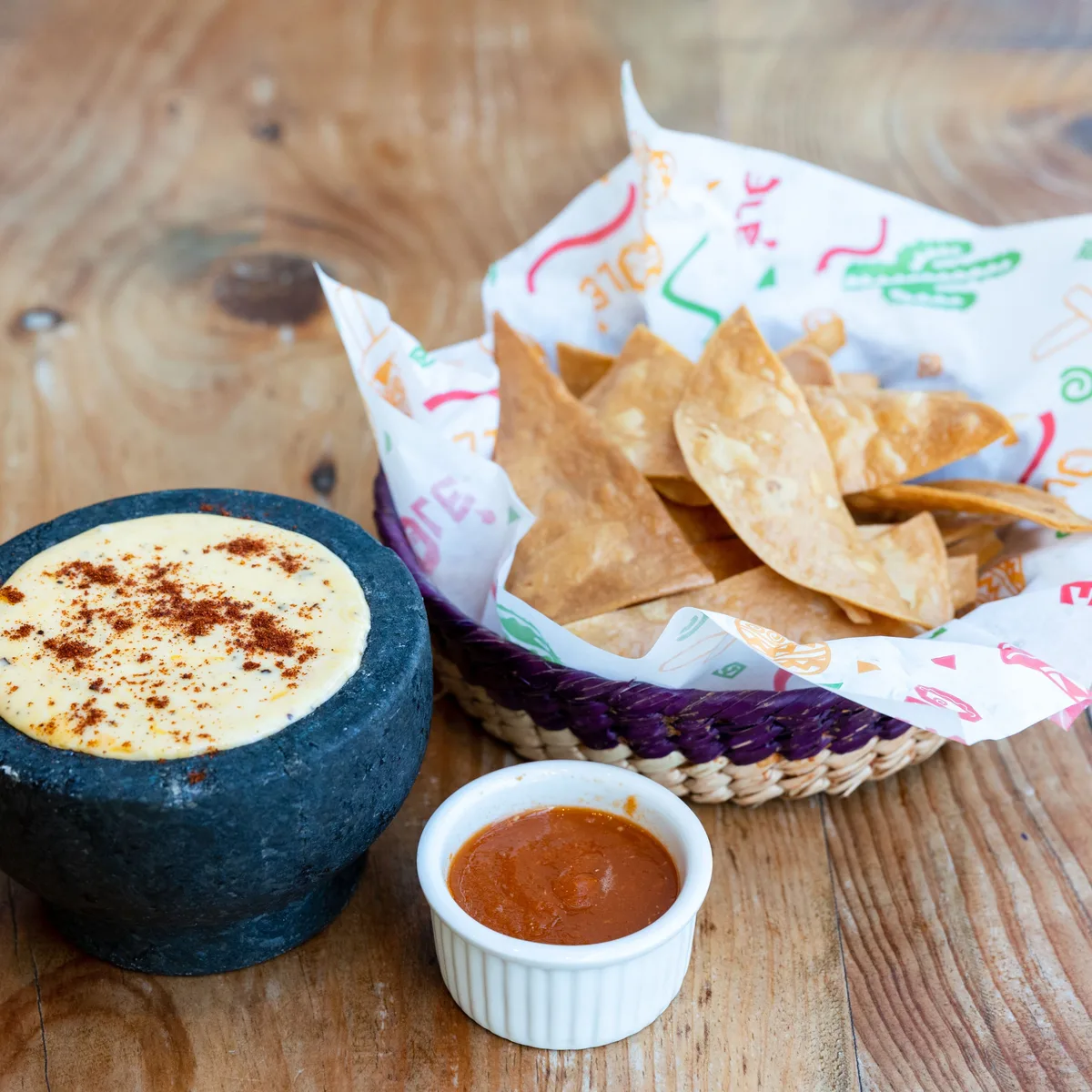
Queso is melted cheese for dipping, and the homemade version has a reputation for going wrong: grainy, stringy, or a pool of orange oil with rubbery curds in it. Processed cheese is the usual way around that, and you do not need it. Real cheese makes a smooth queso as long as two things are handled, a starch coating and a pan that never boils, and both are explained below. The recipe card carries the full method with USDA-calculated numbers.
Ingredients
Method
- Blister the poblano and jalapeno directly over a flame or under a hot broiler, turning, until the skins are blackened in patches. Put them in a covered bowl for 10 minutes, then rub off the skins and dice the flesh.
- Shred both cheeses from the block and toss them in a bowl with the cornstarch until every strand is dusted.
- Cook the onion in the oil over medium heat for 5 minutes, until soft. Add the cumin and the diced chiles and cook 1 minute more.
- Pour in the evaporated milk and the whole milk and heat until it steams and small bubbles appear at the edge. Do not let it boil.
- Turn the heat to low. Add the cheese a handful at a time, stirring until each addition has disappeared before adding the next.
- Keep the pan below a simmer throughout. If it looks like bubbling, lift it off the heat and keep stirring.
- Season with the salt, stir in the cilantro, and serve warm. It thickens as it cools.
Chile con Queso, and What Queso Means
In Mexico, queso simply means cheese, and the dish here is chile con queso: melted cheese with roasted chiles, from the north of the country, served warm with tortillas or chips. In the United States queso has come to mean the dip itself, usually smoother and milder, and often made with processed cheese. Both belong on a table. This version sits closer to the northern Mexican original, with roasted poblano and jalapeno through it, and it is made entirely with cheese you would recognise on a cheeseboard.
Why This Recipe Works
- Starch stops the emulsion breaking. Melted cheese is fat suspended in a protein network. Heated too far, the proteins contract and squeeze the fat out, which is the oily puddle. Cornstarch tossed through the shreds disperses between them and physically keeps the fat droplets separated as they melt, so the sauce stays one substance. This is the home cook’s version of the emulsifying salts that make processed cheese melt so obediently.
- Evaporated milk is more stable than fresh milk. It has been heated during canning, so its proteins are already partly denatured and no longer curdle readily when they meet heat and acid. That makes it far more reliable in a cheese sauce than an equal amount of fresh milk, which can turn grainy.
- The pan must stay below a simmer. Casein, the main protein in cheese, tightens sharply as the temperature climbs past a gentle steam. Once it has tightened it will not relax again, which is why a broken queso cannot be rescued by stirring. Adding the cheese off high heat and in handfuls keeps every stage below that point.
Ingredient Notes
The cheese. Monterey Jack as the base, because it is mild, young and high in moisture, so it flows rather than splits. A cup of mild cheddar adds flavour and colour. Asadero, Chihuahua and Oaxaca are the traditional Mexican melting cheeses and all work here. What does not work is anything aged and dry, since in an aged cheese the protein network has already broken down and heat separates it into oil and curds.
Shred it yourself. Bagged shreds are coated with starch or cellulose to stop them clumping, which sounds helpful here but is not: that coating is inconsistent and can leave the finished dip slightly gritty. Shred from a block and add your own measured cornstarch.
The chiles. Roasted poblano for green chile flavour and jalapeno for heat. Roasting and peeling matters because chile skins do not soften and end up as papery flecks. Canned green chiles are a straight substitute if you are short of time.
The liquid. Evaporated milk and a little whole milk. The pair gives a dip that stays pourable at the table rather than setting into a block.
The Method, In Short
Roast and peel the chiles, toss the cheese with cornstarch, soften the onion, bring the milks to a steam, then melt the cheese in on low heat a handful at a time. From the moment the cheese starts going in, the whole thing takes about five minutes.
Reading the pan. You want steam and a few bubbles at the very edge, never a rolling surface. If you see bubbles across the middle, take the pan off the heat entirely and keep stirring; the residual heat is enough to finish melting the cheese.
Keeping It Smooth at the Table
Queso thickens as it cools, because the starch gels and the cheese fat solidifies. That is normal, not a fault. To hold it for a party, keep it in a small slow cooker on the warm setting, stirring occasionally, and add a splash of milk whenever it tightens. On the stove, reheat it gently over low heat with a tablespoon of milk per cup of dip, stirring constantly. Do not reheat queso in a microwave at full power, which superheats it in patches and breaks exactly the emulsion you built.
Additions Worth Making
Chorizo, cooked and drained, turns this into queso fundido territory. Pico de gallo stirred through at the end adds acidity and texture; see pico de gallo. Diced tomato, charred corn, or black beans all work. Keep additions dry, because watery ingredients thin the dip and drive you to add more cheese, which makes it heavier rather than better. For a green version, stir in a few spoonfuls of salsa verde after the cheese has melted, off the heat, since acid added during melting encourages curdling.
What to Serve It With
Tortilla chips first, warm corn tortillas second, which is the traditional pairing in northern Mexico. It is also a sauce: over chicken fajitas, on tostadas, or spooned across a plate of nachos. As part of a spread, see Mexican dip recipes and Mexican party food.
Storage
Queso keeps three days refrigerated and sets firm when cold, which is expected. Reheat it slowly with extra milk, over low heat or in short microwave bursts at half power with a stir between each one. It does not freeze well: freezing forces the water in the sauce into ice crystals, which tear the protein network apart, and the thawed dip is grainy no matter how gently you warm it. Make the amount you will eat, and halve the recipe if you are cooking for two or three.
Why Queso Turns Grainy or Oily
These are two different failures with two different causes, and telling them apart tells you what to change. Oily, with visible fat pooling and stringy clumps, means the pan got too hot and the casein contracted and expelled its fat. Grainy or sandy, with a slightly rough texture but no oil slick, usually means the milk proteins curdled, which happens when fresh milk is heated too fast or when something acidic goes in while the sauce is hot. The first is fixed by lower heat and adding cheese in handfuls, the second by using evaporated milk and holding acidic additions until the pan is off the heat. Both are prevented by the same habit: treat a cheese sauce as something you warm, not something you cook.
FAQ
How do I make queso without Velveeta? Toss shredded real cheese with cornstarch, warm evaporated milk in a pan, then melt the cheese in over low heat a handful at a time. The starch and the evaporated milk do the stabilising that processed cheese does with emulsifying salts.
What cheese is best for queso? Young, high-moisture melting cheeses: Monterey Jack, asadero, Chihuahua, Oaxaca, or mild cheddar. Avoid aged, dry cheeses, which separate into oil and curds when heated.
Why did my queso go oily and stringy? The pan was too hot. Above a gentle steam the cheese proteins contract and force the fat out, and that cannot be stirred back in. Keep it below a simmer and add the cheese off high heat.
How do I keep queso from hardening at a party? Hold it in a small slow cooker on warm and stir in a splash of milk whenever it thickens. It stiffens as it cools because the starch gels and the fat solidifies.
Can I freeze queso? It is not worth it. Freezing tears the protein network and the thawed dip is grainy. It keeps three days in the fridge and reheats gently with extra milk.
Is chile con queso the same as queso fundido? They are close relatives. Queso fundido is baked or broiled melted cheese, often with chorizo, served bubbling in the dish and scooped with tortillas. Chile con queso is a pourable dip with chiles through it.
Where to Go Next
Stir in pico de gallo, pour it over chicken fajitas, or build a spread from Mexican dip recipes. The whole library starts at easy Mexican recipes at home.
Written by Frank Thomson, Skillet & Spoon editorial. Every nutrition figure on this site is calculated ingredient by ingredient from the USDA FoodData Central database, never estimated and never rounded to look better. We do not publish net-carb figures or use non-nutritive sweeteners. How we develop and source recipes is set out in our editorial policy.