Sopes (Masa Cakes With a Pinched Rim)
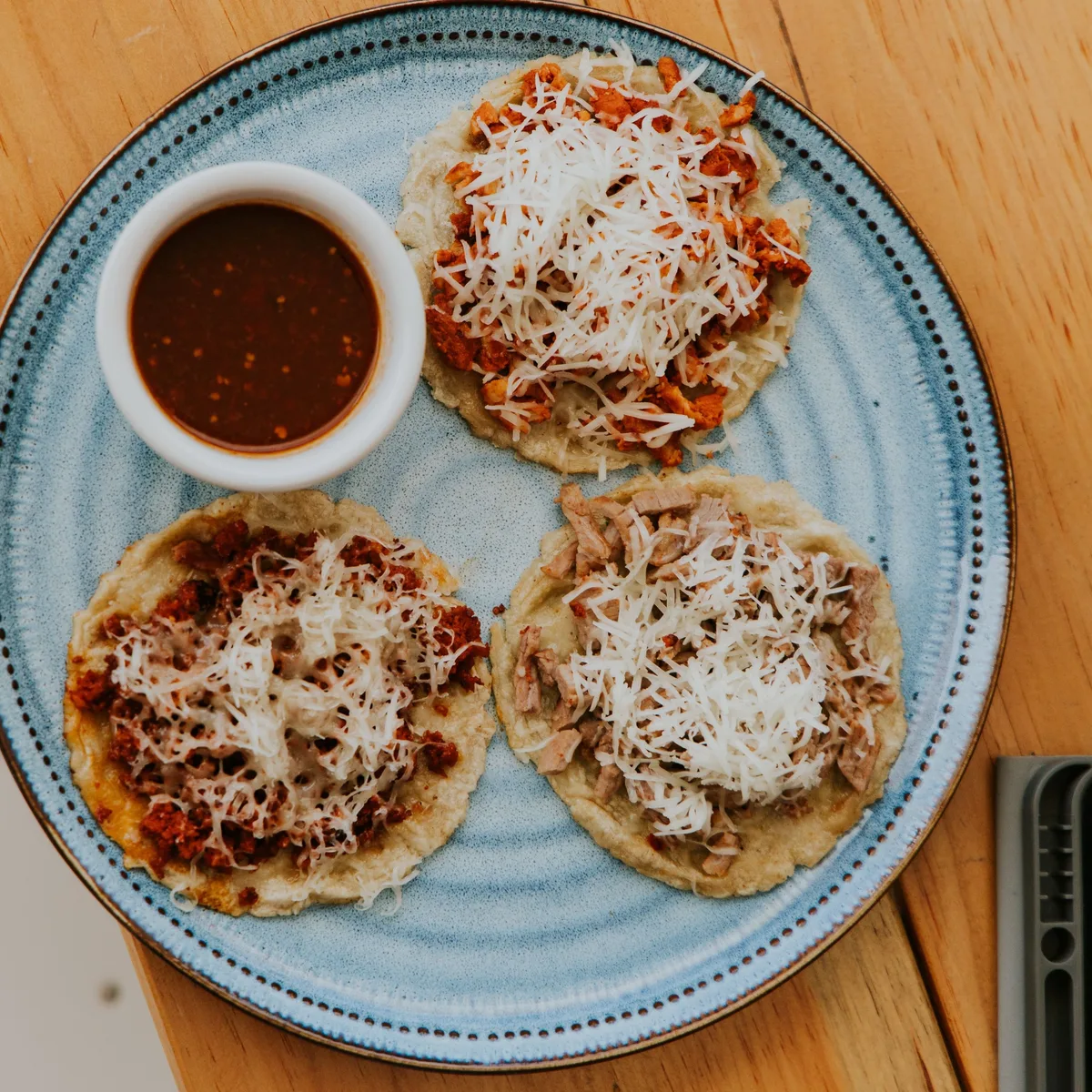
Sopes are thick masa cakes with a pinched rim that holds a pile of toppings, somewhere between a tortilla and a small edible plate. They are street food across Mexico, and they are better made at home than carried home, because a sope goes soft within about ten minutes of being filled. The whole technique turns on one detail of timing: the rim gets pinched while the masa is still hot. The recipe card carries the full method with USDA-calculated numbers, and this page explains the dough, the pinch and the fry.
Ingredients
Method
- Mix the masa harina with 1 teaspoon of the salt, then work in the warm water until you have a soft dough that holds together without cracking when you press it flat between your palms.
- Let the dough rest 10 minutes, covered with a damp cloth, so the flour hydrates fully. Add water a tablespoon at a time if it still feels dry.
- Divide into 8 balls and press each into a disc about 3.5 inches wide and a quarter inch thick, using a tortilla press lined with plastic or the flat bottom of a dish.
- Cook the discs on a dry comal or heavy skillet over medium heat, 2 minutes a side, until the surface looks matt and set but has taken no colour.
- Take one off the heat and, while it is still too hot to hold comfortably, pinch a rim around the edge with your fingertips, protecting them with a cloth. The masa is pliable now and will crack once it cools.
- Repeat with the rest. Warm the mashed beans in a pan with the remaining salt and a splash of water until spreadable.
- Heat the oil in a skillet over medium-high and fry the sopes base down, 1 to 2 minutes, until the bottom is golden and firm. Do not submerge the rim.
- {‘Drain on a rack, then fill’: ‘beans first, then lettuce, salsa, sour cream and queso fresco. Serve at once.’}
What Sopes Are
A sope is made from nixtamalised corn dough, the same masa used for tortillas, pressed thicker and cooked on a comal, then pinched at the edge into a shallow wall. The base is usually fried or griddled until crisp underneath, and the toppings are stacked inside the wall: beans, a meat, shredded lettuce or cabbage, salsa, crema and crumbled cheese. They are called by other names in places, including picaditas in Veracruz, and they belong to the same family as huaraches, which are larger and shaped like a sandal, and gorditas, which are split open and stuffed rather than topped. The version here uses masa harina, which is the dehydrated form of that dough and the only practical route outside Mexico.
Why This Recipe Works
- The rim is pinched hot because masa is plastic when hot and brittle when cool. Starch that has just gelatinised in a warm, moist dough will bend and hold a new shape. As it cools it sets, and the same edge splits along the fold instead. This is why the sequence is cook briefly, pinch immediately, then finish; trying to form the rim on raw dough gives you a wall that slumps, and on a cold cake it gives you cracks.
- The dough rests so the flour can absorb the water. Masa harina is dry corn flour and it hydrates unevenly at first. Ten minutes under a damp cloth lets the water reach the centre of every particle, which is the difference between a dough that presses out smooth and one whose edges crack as you flatten it.
- Frying the base only, not the whole sope, keeps the structure. The bottom crisps into a firm plate that resists the moisture of the toppings, while the rim and interior stay soft and tender. A fully submerged sope turns hard all through and its wall browns before the base has set.
Ingredient Notes
Masa harina. Corn flour treated with lime, sold as masa harina and labelled for tortillas or tamales. It is not the same as cornmeal, cornflour or polenta, and none of those will work here, because they have not been nixtamalised and will not form a cohesive dough. If you can buy fresh masa from a tortilleria, use it and skip the water.
The water. Warm, not hot, and added gradually. The exact amount varies with the brand and with how dry your kitchen is, which is why the recipe gives a starting quantity and a test rather than an absolute. The dough should feel like soft modelling clay and should not crack at the edge when you press a ball flat.
The beans. Mashed pinto beans, warmed to spreading consistency, are the traditional first layer and they also seal the base against everything wetter that follows. Refried beans are the fuller version if you have time.
What the card counts. The oil is counted in full, but most of a shallow-frying panful stays in the pan rather than on the food. USDA has no entry for what a fried piece actually absorbs, and putting a figure on it would mean estimating, which this site does not do. So read the fat and calorie numbers as the ceiling rather than the plate.
The Method, In Short
Mix and rest the dough, press eight discs, cook them briefly on a dry pan, pinch the rims while hot, fry the bases, then top and serve. The pinching is the only part that needs practice, and by the third one your fingers will have worked it out.
Pinching without burning yourself. Hold the hot disc in a folded kitchen cloth in one hand and pinch with the other, working round the edge and pushing up a wall about a quarter inch high. If the masa cracks, it has cooled too much; put it back on the pan for twenty seconds and try again.
Toppings, and the Order They Go In
The order is structural, not decorative. Beans go directly onto the crisp base, because they are thick and act as a barrier. Meat goes next, then the cold, wet items, then cream and cheese on top where they will not soak anything. Chicken tinga is a natural choice, as is beef barbacoa or chorizo with potato. Shredded lettuce or finely sliced cabbage, salsa verde or pico de gallo, crema and queso fresco finish it. Assemble sopes at the last moment and serve them immediately, because the clock on a crisp base starts as soon as the beans land.
Sopes, Huaraches, Gorditas and Tlacoyos
All four start from the same masa and differ in shape and construction. A sope is round, small and topped inside a pinched rim. A huarache is long and oval, much larger, with a similar flat topped surface. A gordita is thicker and cooked through, then split along the side like a pocket and filled. A tlacoyo is an oval stuffed with beans or fava paste before cooking, so the filling is inside the dough. Knowing which one you want tells you how thick to press the masa: thin and pinched for sopes, thick and unpinched for gorditas.
Make Ahead and Storage
The bases are the part worth preparing in advance. Cooked and pinched but unfried, they keep two days refrigerated in a sealed container or three months frozen, and they fry from cold without any loss. That makes sopes a realistic dish for a party: do the pressing and pinching the day before, then fry and top to order. Assembled sopes do not keep at all, so put the toppings in bowls and let people build their own. Fried bases left plain can be re-crisped in a dry pan for a minute.
Why the Dough Cracks at the Edges
Cracking is usually dryness, and it shows up in three places for the same reason. A ball that cracks when you press it flat is short of water. Edges that fray as the disc gets thinner mean the outside of the dough dried while you were working on the previous one, so keep the bowl covered with a damp cloth the whole time. And a rim that splits during the pinch means the disc has cooled below the temperature where masa stays plastic. In each case add a little water, cover the dough, and work faster rather than harder; masa does not have gluten to develop, so there is nothing to be gained by kneading it more.
FAQ
What are sopes made of? Masa, the nixtamalised corn dough used for tortillas, either fresh from a tortilleria or reconstituted from masa harina with warm water and salt.
Why do I pinch the rim while it is hot? Warm masa is flexible and holds a new shape, while cooled masa is brittle and cracks along the fold. Pinch each sope as soon as it comes off the pan, protecting your fingers with a cloth.
Can I make sopes without frying them? Yes. Finish them on a dry comal or in a hot oven with the base brushed with oil. The base will be firm and toasted rather than crisp, and it softens faster once topped.
What is the difference between sopes and gorditas? A sope is thinner, has a pinched rim and is topped on the surface. A gordita is thicker, cooked through, then split open at the side and filled like a pocket.
Can I use cornmeal or regular flour? No. Masa harina is treated with lime, which changes how the starch and protein behave and is what lets the dough hold together. Cornmeal and polenta will crumble.
How far ahead can I make them? Cook and pinch the bases up to two days ahead, or freeze them for three months, then fry and top just before serving. Do not assemble sopes in advance.
Where to Go Next
Top them with chicken tinga, spread refried beans underneath, and spoon over salsa verde. The whole library starts at easy Mexican recipes at home.
Written by Frank Thomson, Skillet & Spoon editorial. Every nutrition figure on this site is calculated ingredient by ingredient from the USDA FoodData Central database, never estimated and never rounded to look better. We do not publish net-carb figures or use non-nutritive sweeteners. How we develop and source recipes is set out in our editorial policy.