Pozole Rojo (Pork and Hominy Stew)
Pozole is a stew of pork and hominy in a chile broth, finished at the table with a plate of raw garnishes that each person adds themselves. The red version, pozole rojo, is built on dried guajillo and ancho chiles. Two steps separate a clean, deep bowl from a gritty, muddy one, and both are about what you take out rather than what you put in. The recipe card carries the full method with USDA-calculated numbers; this page explains them.
Ingredients
Method
- Put the pork, half the onion, 3 of the garlic cloves, the bay leaves and 1 teaspoon of the salt in a large pot with the water. Bring to a bare simmer, skimming off the grey foam that rises in the first ten minutes.
- Cover partly and simmer gently for about 2 hours, until the pork is tender enough to pull apart with a fork. Keep it at a lazy bubble, never a rolling boil.
- While it cooks, toast the stemmed, seeded chiles in a dry pan for 5 to 10 seconds a side, just until fragrant. Cover them with hot water from the pot and soak 20 minutes until soft.
- Blend the soaked chiles with the remaining onion and garlic and a cup of the cooking broth until completely smooth.
- Strain the chile puree through a fine sieve directly into the pot, pressing the solids and discarding the skins left behind. This step is what makes the broth smooth rather than gritty.
- Add the hominy, the oregano crushed between your palms, and the remaining salt. Simmer uncovered 30 minutes more so the flavours marry and the hominy takes on the broth.
- Lift out the pork, shred it, return it to the pot, and taste for salt. Serve with the garnishes alongside.
What Pozole Is
Pozole is a genuinely old Mexican dish built around nixtamalised corn, the same process that makes masa: dried field corn simmered with lime, which loosens the hulls and makes the kernels puff into the chewy pieces called hominy. It is a celebration dish, cooked in large pots for holidays and Sundays. There are three main versions: rojo with red chiles, verde with tomatillos and pumpkin seeds, and blanco with no chile in the broth at all. This page makes rojo with pork. The garnishes are not optional decoration; they are half the dish.
Why This Recipe Works
- Skimming early gives a clean broth. In the first ten minutes of simmering, proteins from the meat coagulate and rise as grey foam. Lifted off, the broth stays clear and tastes clean. Stirred back in, they cloud it and give a slightly muddy flavour that no amount of later simmering removes.
- Straining the chile puree is the difference between smooth and gritty. Dried chile skins are tough and do not break down completely, even in a good blender. Pushing the puree through a sieve leaves those fragments behind. This is the same step the site’s enchilada sauce uses, and it matters more here because the broth is thin and every fleck is noticeable.
- A bare simmer keeps the pork moist. Collagen in pork shoulder converts to gelatin over hours of gentle heat, which is what makes the meat shred and gives the broth body. A hard boil tightens the muscle fibres so they squeeze out moisture, and the meat ends up both falling apart and dry.
Ingredient Notes
The pork. Shoulder, also sold as butt or Boston butt, cut into large chunks. It has the fat and connective tissue this long simmer needs. Loin is too lean and turns to string. Some cooks add a few pork bones or trotters for extra body in the broth.
The hominy. Canned hominy is the practical choice and what the card counts; drain and rinse it. Dried hominy gives a better texture and a cleaner corn flavour but needs its own long soak and simmer before it joins the pot. Because canned goods vary by brand, the note under the card says to check your own can.
The chiles. Guajillo for colour and brightness, ancho for depth and sweetness. Both are mild, so this is not a hot stew by default; the heat arrives with the garnishes and the hot sauce at the table.
The oregano. Mexican oregano if you have it, crushed between your palms as it goes in so the leaves break and release their oils.
The Garnishes, Which Are the Point
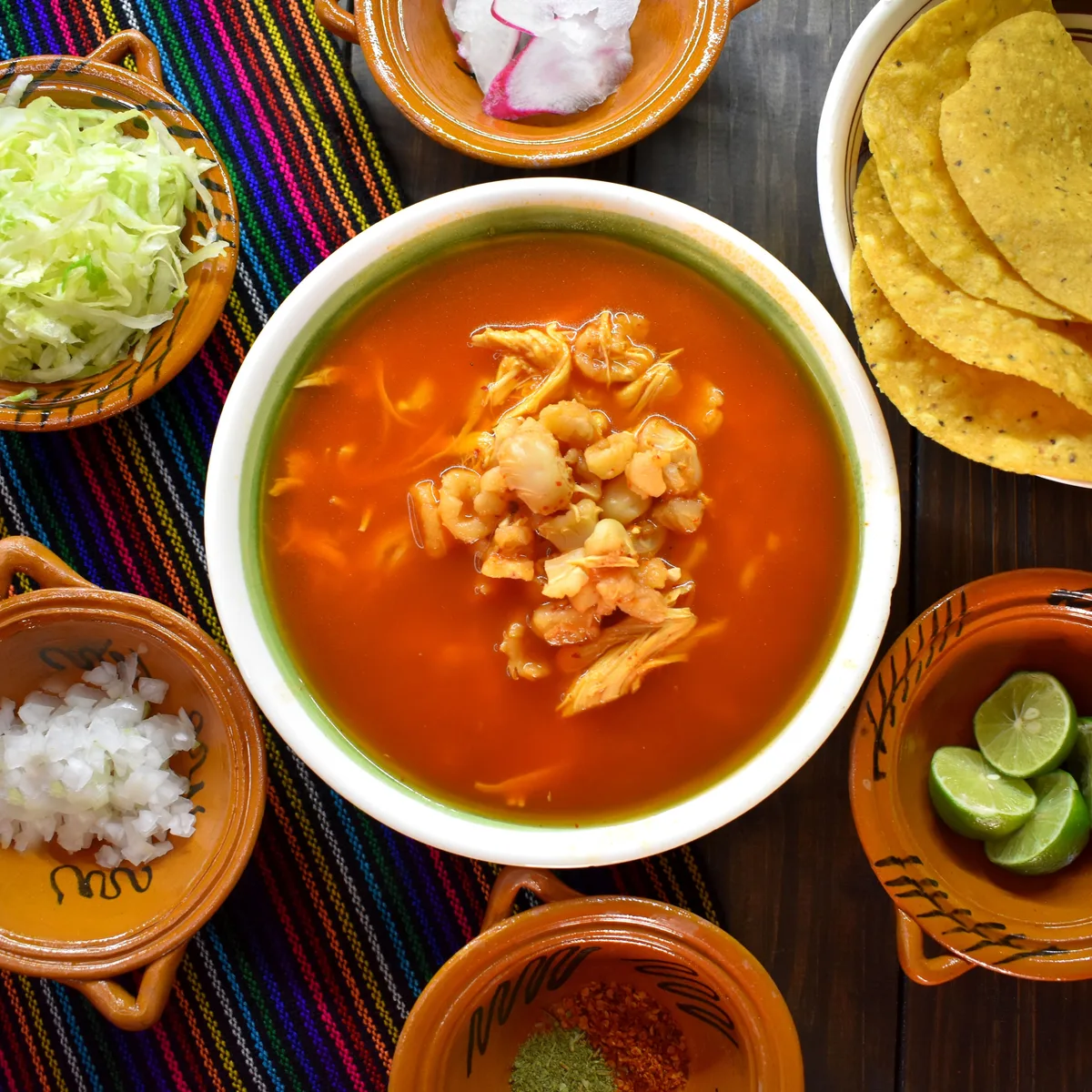
Pozole is served plain in the bowl and finished by the person eating it, from a spread on the table: finely shredded cabbage or lettuce, thinly sliced radish, diced white onion, dried oregano, chile flakes, lime wedges, and tostadas or tortilla chips on the side. The reason is structural, not decorative. The stew itself is soft, rich and warm, and every garnish is the opposite: cold, crunchy, sharp or acidic. The contrast is what keeps a heavy bowl interesting to the last spoonful.
The card counts the stew only. Garnishes vary too much from table to table to fold into one number, so add them to your own count if you are tracking.
The Method, In Short
Simmer the pork gently with aromatics for about two hours, skimming at the start. Toast and soak the chiles, blend them smooth, strain them into the pot, add the hominy, and give it another half hour. Shred the pork back in and serve with the garnish plate.
Storage and Reheating
Pozole is better the next day, once the hominy has spent a night absorbing the chile broth. It keeps four days refrigerated and freezes for three months. The fat sets on top in the fridge and lifts off easily if you want a leaner bowl, though most of the flavour that carries the chile is in it. Reheat gently on the stove and always cut the garnishes fresh; a reheated bowl with day-old cabbage on it is a different and much worse dish.
Why the Hominy Goes in Late
Hominy is already cooked, whether canned or simmered from dried, so it needs nothing more than warming through. Adding it at the start of a two hour simmer does not improve it; the kernels keep absorbing liquid and eventually burst and go mushy, and the starch they shed clouds the broth you skimmed so carefully. Half an hour in the finished broth is enough for the kernels to take on the chile flavour while keeping their chew. It is checkable in the pot: taste a kernel when it goes in and again half an hour later, and the second one tastes of the broth all the way through while still holding its shape.
FAQ
What is hominy? Dried field corn treated with an alkaline solution, traditionally lime, which loosens the hull and makes the kernel puff. It is the same nixtamalisation process used to make masa for tortillas, and it gives hominy its chewy texture and distinct corn flavour.
Can I use canned hominy? Yes. Drain and rinse it, then add it in the last half hour. Dried hominy has better texture but needs soaking and its own long simmer first.
What is the difference between pozole rojo, verde and blanco? Rojo is built on dried red chiles, verde on tomatillos and often pumpkin seeds, and blanco has no chile in the broth, letting the pork and corn carry it. The garnishes are the same for all three.
Why is my pozole broth gritty? The chile puree was not strained. Dried chile skins do not fully break down in a blender, so push the blended puree through a fine sieve into the pot and discard what stays behind.
Can I make it with chicken? Yes. Chicken pozole is common and much faster: simmer bone-in thighs for about 45 minutes instead of pork for two hours. The chile base and the garnishes stay the same.
Is pozole spicy? Not as written, since guajillo and ancho are both mild. Heat is added at the table with chile flakes or hot sauce, which is the traditional way to serve it.
Where to Go Next
The other great chile braise on the site is birria tacos, the red chile base is shared with enchilada sauce, more brothy bowls sit at Mexican soup recipes, and the drink to serve beside it is horchata.
Nutrition note: values are calculated from USDA FoodData Central. Where USDA has no exact entry, the closest catalog item is used and named here: dried guajillo chile was calculated as “Peppers, ancho, dried”.
Written by Frank Thomson, Skillet & Spoon editorial. Every nutrition figure on this site is calculated ingredient by ingredient from the USDA FoodData Central database, never estimated and never rounded to look better. We do not publish net-carb figures or use non-nutritive sweeteners. How we develop and source recipes is set out in our editorial policy.