Mole Sauce (Dried Chiles, Nuts, Chocolate)
Mole sauce is dried chiles, nuts, seeds, fruit and a little chocolate, toasted, blended, strained and simmered into something dark and savoury that is not remotely a chocolate sauce. Traditional versions run to thirty ingredients and a whole day; this one is built for a home kitchen and keeps the techniques that matter. The step that decides everything happens in the first five minutes, at the dry pan, where a few seconds too long turns the whole batch bitter. The recipe card carries the full method with USDA-calculated numbers.
Ingredients
Method
- Toast the stemmed, seeded chiles in a dry pan over medium heat, 20 to 30 seconds a side, pressing them flat. Stop the moment they smell sweet and turn pliable. A chile that darkens or smokes has gone bitter and must be discarded.
- Cover the toasted chiles with hot water and soak 20 to 30 minutes, until completely soft.
- In the same dry pan, toast the almonds and sesame seeds separately until golden, about 3 minutes each, then set aside. Toast the torn tortilla until dry and lightly browned.
- Char the tomatoes, onion and unpeeled garlic in the pan until blackened in patches, about 8 minutes. Peel the garlic.
- Blend the drained chiles with the tomatoes, onion, garlic, almonds, sesame seeds, raisins, tortilla, cocoa, cinnamon, cloves and 2 cups of the broth until completely smooth. Work in batches and blend longer than feels necessary.
- Press the puree through a sieve, pushing with a ladle and discarding the solids left behind. This is what makes mole velvety rather than gritty.
- Heat the lard in a heavy pot until shimmering, then pour in the strained puree all at once. It will spit. Fry it, stirring, for 10 minutes, until it darkens and thickens.
- Add the remaining broth and the salt, and simmer gently, partly covered, 40 minutes, stirring often, until it coats a spoon.
- Taste and adjust salt. Serve over poached chicken or turkey, scattered with sesame seeds.
What Mole Is
Mole, from the Nahuatl molli, means sauce, and it names a whole family rather than one recipe. Mole poblano from Puebla is the dark, chocolate-containing version usually meant by mole in English; mole negro from Oaxaca is darker and more complex; mole verde, amarillo, coloradito and others use different chiles and no chocolate at all. What they share is the method: toast, soak, blend, strain, fry, simmer. This is a home-scale mole poblano in that tradition, with a shorter ingredient list than a festival version, and it is labelled that way rather than as the definitive article.
Why This Recipe Works
- Toasting dried chiles is a narrow window with a bitter failure mode. Heat drives off moisture and develops aroma, but the sugars and compounds in the skin scorch quickly, and scorched chile is acrid in a way nothing later in the recipe can cover. Twenty to thirty seconds a side, pressed flat, until the chile smells sweet and goes flexible. If it smokes or darkens, throw it out and start that chile again; one burnt chile taints the pot.
- Straining is what makes mole velvety. Chile skins, nut fragments and seed hulls do not break down completely even in a strong blender, and they are what makes a homemade mole feel gritty. Pushing the puree through a sieve removes them. It is tedious and it is the difference between a sauce that coats and one that feels like it has sand in it.
- Frying the puree concentrates it. Poured into hot fat, the blended sauce spits, darkens and thickens as water leaves and sugars brown. This is the same freir la salsa step that chicken tinga and enchilada sauce depend on, and in mole it is what turns a raw-tasting puree into something with depth.
Ingredient Notes
The chiles. Ancho for sweetness and body, pasilla for a darker, almost raisin-like depth, guajillo for brightness and colour. The three together are the backbone. USDA has no separate entry for guajillo, so the card calculates it as ancho and discloses that under the card.
The chocolate. Unsweetened cocoa powder here, which is reliable and easy to measure. Traditional recipes use Mexican drinking chocolate, which contains sugar and cinnamon, so if you use a tablet, cut back the cinnamon and expect a sweeter sauce. Either way the chocolate is a background note: mole should taste of chile first.
The thickener. A torn corn tortilla, toasted and blended in, is the traditional thickener alongside the nuts and seeds. Stale bread is used in some versions. Neither is optional in the sense that without one the sauce stays thin.
What the card counts. USDA reports no sugar value for dried ancho or pasilla chiles, so they contribute nothing to the sugar line even though they do contain sugars. Total carbohydrate is unaffected, because it is measured by difference and already includes them. Read the sugar figure as covering everything in the sauce except the chiles.
The Method, In Short
Toast the chiles, soak them, toast the nuts and seeds and tortilla, char the vegetables, blend, strain, fry the puree, simmer 40 minutes. The toasting and straining are the two stages worth doing carefully; the rest is patience.
Consistency. Finished mole should coat the back of a spoon and fall from it in a thick ribbon. If it is thin, simmer longer uncovered; if it tightens too far, loosen it with broth rather than water, which would dilute everything you built.
What to Serve It On
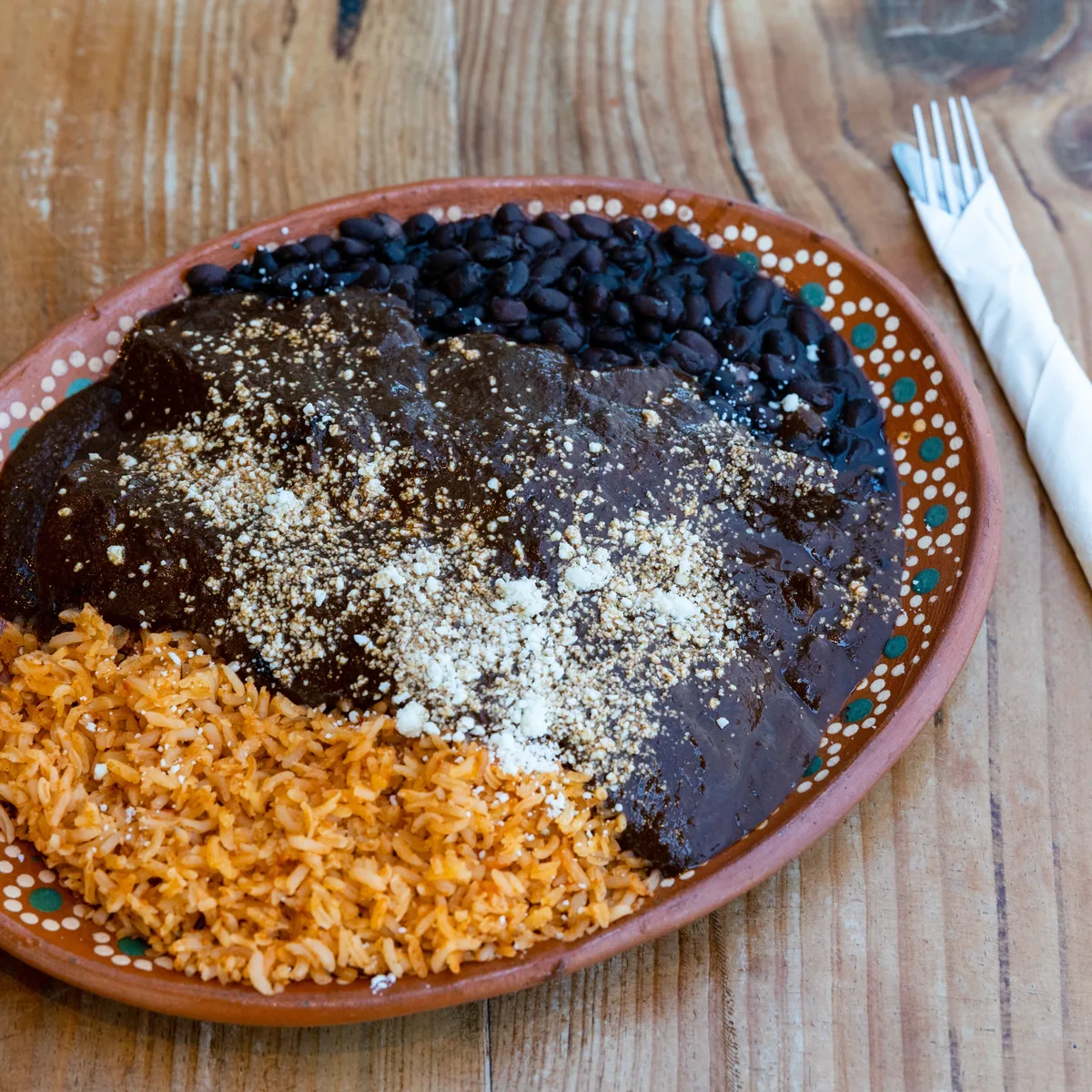
Mole poblano is classically served over poached turkey or chicken, with white rice and warm tortillas, and sesame seeds scattered on top. Enmoladas are tortillas dipped in mole and folded, the mole cousin of chicken enchiladas. It also goes over eggs, roasted vegetables or pork. For more in this register, see Mexican chicken recipes and Mexican dinner recipes.
Storage and Make Ahead
Mole is better on the second day and the third, because the toasted, fried and simmered elements keep merging as it rests. It keeps a week refrigerated and six months frozen, and it freezes exceptionally well, which is what makes a large batch worth the afternoon. It also freezes as a concentrated paste before the final broth goes in, which takes less space: thaw, add broth, simmer. Reheat gently and stir, since a thick sauce with this much nut and seed content catches on a hot pan quickly.
Why Mole Turns Bitter
Bitterness in mole usually traces to the toasting stage, and knowing which element did it tells you what to change. A chile taken past pliable into dark and smoking is the usual culprit, and it is why the seeds and stems are removed first: they scorch faster than the flesh. Nuts and sesame seeds taken past golden do the same. The cocoa contributes bitterness of its own if the measure creeps up, which is why it sits at three tablespoons for ten servings rather than more. The test is simple and worth doing: taste the soaking water from the chiles. If it is pleasantly sweet and fruity, the toast was right; if it is sharp and acrid, the chiles were burnt and the batch will not recover.
FAQ
Does mole taste like chocolate? No. The chocolate is a background note that adds depth and a little bitterness. Mole tastes primarily of toasted dried chiles, with nuts, seeds and spice behind them.
How many chiles do I need, and which? This version uses ancho, pasilla and guajillo together: ancho for sweetness, pasilla for depth, guajillo for brightness. Those three cover the backbone of a mole poblano.
Why did my mole turn bitter? A chile, nut or seed was toasted too far. Dried chiles need only 20 to 30 seconds a side and must not darken or smoke. Taste the chile soaking water to check before going further.
Do I have to strain it? If you want the texture mole is known for, yes. Skins and seed hulls survive blending and make the sauce gritty, and a sieve is the only way to remove them.
Can I freeze mole? Yes, for six months, and it is one of the best freezer sauces there is. Freeze it as a thick paste before the final broth, then thaw, loosen and simmer.
What do you serve mole with? Classically poached turkey or chicken with rice and tortillas. It also goes on enmoladas, eggs, pork or roasted vegetables.
Where to Go Next
The simpler red sauce is enchilada sauce, the same frying step appears in chicken tinga, and more mains are at Mexican chicken recipes. The whole library starts at easy Mexican recipes at home.
Nutrition note: values are calculated from USDA FoodData Central. Where USDA has no exact entry, the closest catalog item is used and named here: dried guajillo chile was calculated as “Peppers, ancho, dried”.
Written by Frank Thomson, Skillet & Spoon editorial. Every nutrition figure on this site is calculated ingredient by ingredient from the USDA FoodData Central database, never estimated and never rounded to look better. We do not publish net-carb figures or use non-nutritive sweeteners. How we develop and source recipes is set out in our editorial policy.