Carne Guisada (Beef Stewed in Its Own Gravy)
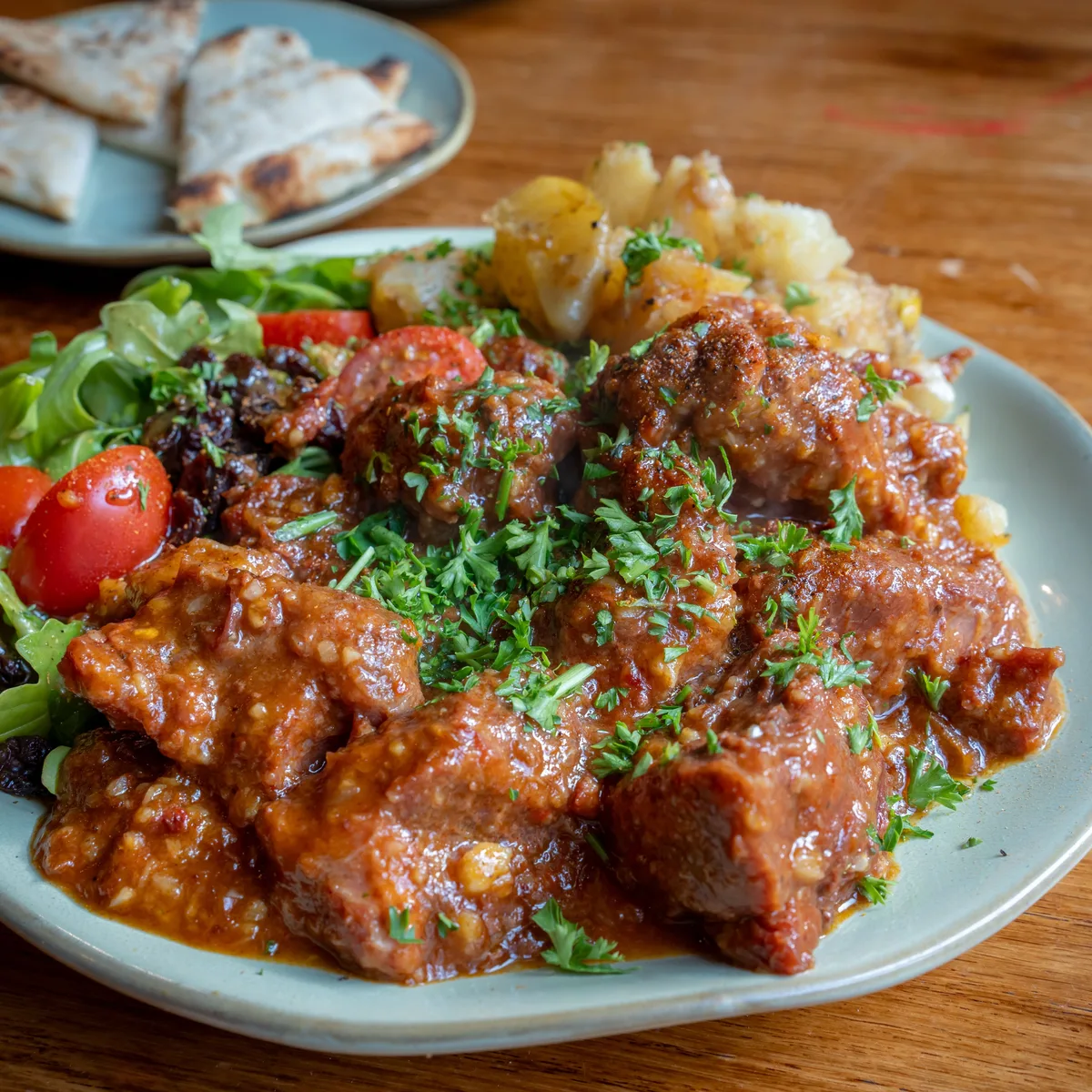
Carne guisada is beef stewed slowly in a thick, dark gravy made from the pot itself, eaten with flour tortillas or over rice. It is everyday cooking in northern Mexico and south Texas, and there is nothing elaborate in it: the flavour comes entirely from how hard you brown the meat and how gently you cook it afterwards. The recipe card carries the full method with USDA-calculated numbers, and this page covers the cut, the flour and the temperature that decides whether the beef turns tender or tough.
Ingredients
Method
- Pat the beef cubes completely dry and toss them with the salt and pepper.
- Heat the oil in a heavy pot over medium-high. Brown the beef in two or three batches, leaving space between the cubes, about 4 minutes a side. Set each batch aside.
- Lower the heat to medium. Cook the onion and bell pepper in the fat left in the pot, 6 minutes, scraping up the browned bits from the bottom.
- Add the garlic, cumin and oregano and cook 30 seconds, then sprinkle in the flour and stir constantly for 2 minutes, until it smells toasted and coats the vegetables.
- Add the tomatoes and cook 3 minutes, then pour in the broth gradually while stirring, so the flour disperses without lumps.
- Return the beef and any juices. Bring to a bare simmer, where only a few bubbles break the surface, then cover partly.
- Cook 1.5 hours at that bare simmer, stirring occasionally, until the beef is nearly tender.
- Add the potato and cook 25 to 30 minutes more, uncovered, until the potato is soft and the gravy coats a spoon. Taste for salt and serve with warm tortillas.
What Carne Guisada Is
Guisada means stewed, and carne guisada is simply stewed beef, which is why it varies so much between kitchens. The northern Mexican and Tex-Mex versions share a flour-thickened gravy, cumin, and service with flour tortillas, which is the version on the card. Puerto Rican carne guisada uses sofrito, olives and often potatoes and squash, and is a genuinely different dish with the same name. This page builds the northern Mexican and Tex-Mex one and labels it so.
Why This Recipe Works
- Browning is where the gravy’s colour and depth come from. Dry meat in a hot pan browns rather than steams, and the browned residue stuck to the bottom of the pot, the fond, dissolves into the liquid later. A pot of beef simmered without browning produces a pale, thin gravy no amount of time fixes.
- The flour is cooked before the liquid arrives. Stirring flour into the hot fat for two minutes toasts it and coats each grain in fat, which does two things: it removes the raw pasty taste, and it keeps the starch granules separate so they do not clump when the broth hits them. Flour thrown into liquid lumps immediately.
- A bare simmer is non-negotiable for tough cuts. Collagen in chuck converts to gelatin slowly at around a simmer, which is what makes the meat tender and gives the gravy body. A rolling boil does the opposite: it makes the muscle fibres contract hard and squeeze out moisture, so the beef comes out dry and stringy even after two hours. Few bubbles, partly covered.
Ingredient Notes
The beef. Chuck, cut into one inch cubes. It is a worked muscle with plenty of connective tissue, which is exactly what you want for a long braise. Round and sirloin are leaner and turn dry and stringy here no matter how long they cook, because they have little collagen to convert. Buy a whole roast and cube it yourself rather than buying pre-cut stew meat, which is often a mix of trimmings from different muscles that cook at different rates.
The flour. Three tablespoons thickens three cups of broth to a gravy that coats. For a gluten-free version, skip the flour and let the potato starch and reduction do the work; the result is thinner but honest.
The potato. Added late, because an hour and a half at a simmer turns potato into mush that clouds the gravy. Half an hour is enough.
The peppers. Bell pepper for sweetness and body. A diced jalapeno or serrano added with it brings heat without changing the character of the dish.
The Method, In Short
Brown the beef in batches, soften the vegetables, toast the flour, build the gravy, simmer an hour and a half, add potato, finish uncovered. Almost all of it is unattended.
Why batches matter. Crowding the pot drops the temperature below the point where browning happens, and the meat releases water and stews in it. Two or three batches with space between the cubes takes an extra ten minutes and is the difference between a brown gravy and a grey one.
How to Tell It Is Done
Press a cube against the side of the pot with a spoon. Done beef gives way and the fibres separate; beef that still springs back needs more time at the same low temperature, not more heat. If the gravy has thickened too far before the meat is ready, add broth; if the meat is ready and the gravy is thin, lift the lid and simmer harder for ten minutes.
What to Serve With It
Warm flour tortillas, which is the standard in northern Mexico and Texas, for making tacos directly from the pot. Otherwise over authentic Mexican rice, with refried beans alongside. A sharp salsa cuts the richness: pico de gallo or salsa verde. For breakfast, carne guisada with eggs and tortillas is a classic; see Mexican breakfast recipes. More beef cooking is at Mexican beef recipes.
Storage and Reheating
Carne guisada is better the next day, as the gelatin and gravy keep mingling and the cumin settles. It keeps four days refrigerated and three months frozen, though the potato softens through freezing, so leave it out if you are cooking for the freezer and add it fresh on reheating. Reheat gently on the stove; the gravy will have set firm in the fridge, which is a sign the collagen converted properly, and it loosens as it warms. Add broth rather than water if it needs thinning.
Why the Beef Comes Out Tough
Tough beef after two hours means one of two things, and they pull in opposite directions. The common one is heat: the pot was boiling rather than simmering, so the muscle fibres tightened and expelled their moisture faster than the collagen could convert. The fix is a lower flame, not a longer cook. The other is the cut: a lean cut like round has almost no collagen to turn into gelatin, so there is nothing to make it tender, and extra time only dries it further. You can tell them apart by the gravy. Tough beef in a rich, slightly sticky gravy means the collagen converted and the heat was too high; tough beef in a thin, watery gravy means there was never much collagen there to begin with.
FAQ
What cut of beef is best for carne guisada? Chuck, cut into one inch cubes. Its connective tissue turns to gelatin over a long, low simmer, which makes the meat tender and thickens the gravy. Avoid lean cuts like round.
Is carne guisada Mexican or Puerto Rican? Both, and they are different dishes with the same name. The northern Mexican and Tex-Mex version has a flour-thickened cumin gravy; the Puerto Rican version is built on sofrito with olives.
How do I thicken the gravy? Toast flour in the fat before adding liquid, and add the broth gradually while stirring. If it is still thin at the end, finish uncovered so it reduces.
Why is my beef tough after two hours? Usually the pot was boiling rather than simmering, which tightens the muscle fibres and squeezes out moisture. Keep it at a bare simmer. A lean cut will also stay tough regardless of time.
Can I make it in a slow cooker or pressure cooker? Yes. Brown the beef and toast the flour in a skillet first, because neither appliance browns. Slow cooker: 7 to 8 hours on low. Pressure cooker: 35 minutes at high pressure, adding the potato for the last few minutes.
What do you eat carne guisada with? Warm flour tortillas, for making tacos, or over rice with beans. It is also a standard breakfast with eggs.
Where to Go Next
Serve it with refried beans and authentic Mexican rice, or compare the shredded braise at beef barbacoa. More is at Mexican beef recipes and the library starts at easy Mexican recipes at home.
Written by Frank Thomson, Skillet & Spoon editorial. Every nutrition figure on this site is calculated ingredient by ingredient from the USDA FoodData Central database, never estimated and never rounded to look better. We do not publish net-carb figures or use non-nutritive sweeteners. How we develop and source recipes is set out in our editorial policy.