Nachos (Built in Layers, No Soggy Middle)
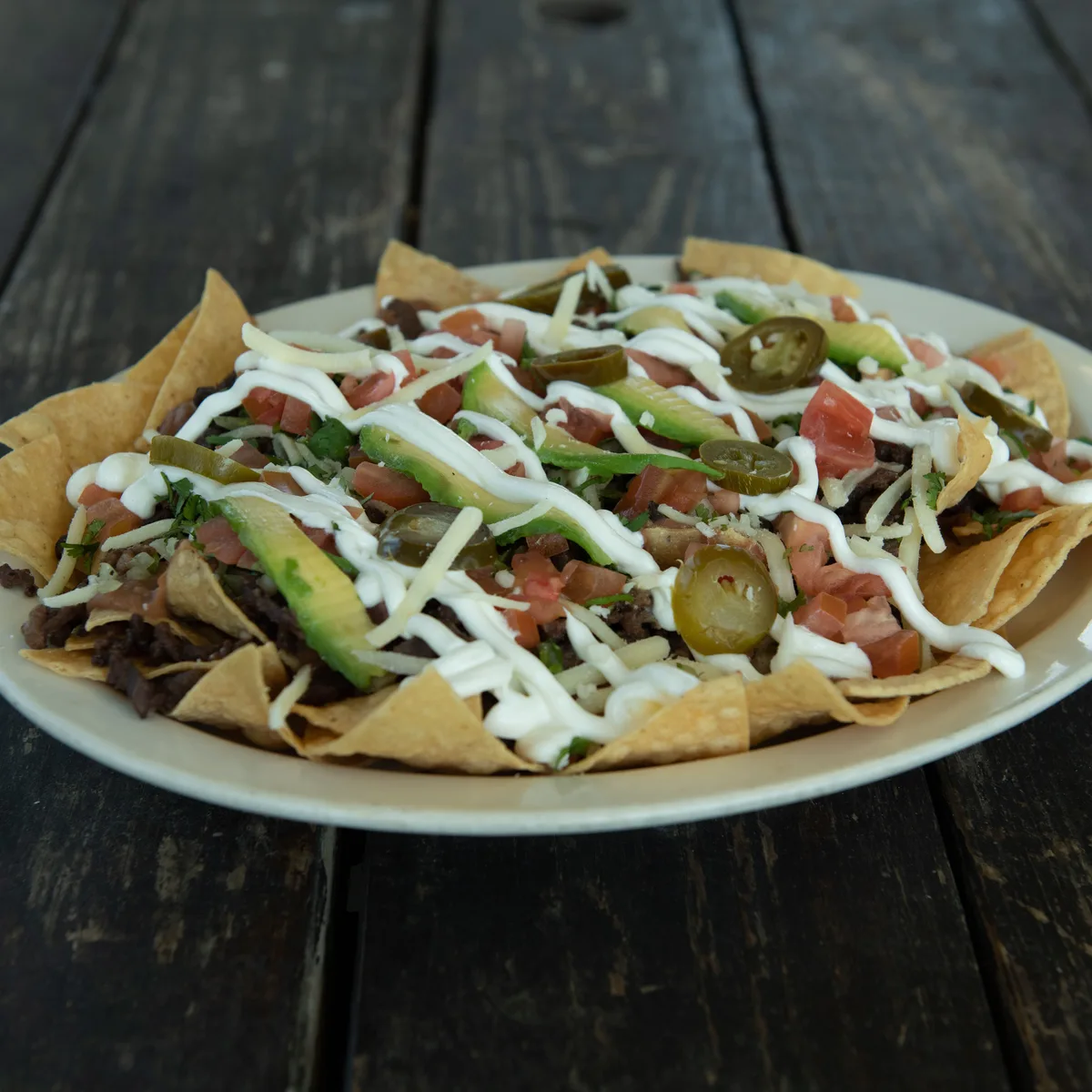
Nachos are tortilla chips baked under cheese with whatever else is going, and the difference between good ones and a disappointing tray is entirely structural. The usual failure is the same one: a pile of chips with the toppings sitting on top, so the surface burns while the middle stays bare and the bottom turns to mush. Building them in two thin layers fixes all of it. The recipe card carries the full method with USDA-calculated numbers.
Ingredients
Method
- Heat the oven to 400F. Brown the ground beef hard in a dry skillet, then add the onion and cook 5 minutes until soft.
- Stir in the cumin, chili powder and salt, then the drained beans. Cook 2 minutes and take it off the heat. The topping must be thick, with no loose liquid.
- Spread half the chips over a large rimmed baking sheet in a single layer, not a pile.
- Scatter half the beef and bean mixture over them, then half the cheese, keeping everything in small clumps rather than large patches.
- Repeat with the remaining chips, beef mixture and cheese, then scatter the jalapenos over the top.
- Bake 10 to 12 minutes, until the cheese has melted and is just starting to bubble at the edges. Longer than that and the chips under the cheese go hard.
- {‘Take the tray out and add the cold toppings now’: ‘dollops of sour cream, the diced tomato and the cilantro.’}
- Serve directly from the tray, immediately.
Where Nachos Come From
Nachos were invented in Piedras Negras, Coahuila, just across the border from Texas, and they are usually credited to a maitre d’ named Ignacio Anaya, whose nickname gives the dish its name. The original was simple: fried tortilla pieces, cheese, sliced jalapenos. The loaded tray of beef, beans and sour cream is the American stadium and sports-bar descendant, and that is what this recipe builds. Both are real; calling the loaded version traditional Mexican food would not be accurate, so this page does not.
Why This Recipe Works
- Two thin layers beat one thick pile. Heat and cheese only reach what they touch. A mound three or four chips deep leaves the interior dry and unseasoned, and anything spooned on top runs down into the middle and sits there as liquid. Two single layers, each topped before the next goes on, puts cheese on every chip.
- Shredded cheese melts onto chips; sauce soaks into them. Grated cheese melts and sets around the chip without saturating it, because it is mostly fat and protein rather than water. A pourable cheese sauce carries water that the chip’s starch absorbs immediately, which is why sauce-covered nachos go limp within a minute or two.
- Cold and wet toppings go on after the oven. Sour cream splits and goes oily when baked, tomato releases water, and fresh herbs blacken. Adding them to the hot tray at the end gives the contrast that makes nachos work: hot and crisp underneath, cool and sharp on top.
Ingredient Notes
The chips. Sturdy, thick, restaurant-style chips. Thin supermarket chips are built for dipping and collapse under this much weight; the chip is structural here. Because tortilla chips vary between brands in thickness and salt, the note under the card says to check your own label.
The cheese. Monterey Jack for melt and mild cheddar for flavour, shredded from blocks. Bagged shreds are dusted with starch to stop them clumping, which gives a slightly grainy melt. Pre-melted cheese sauce is the other route, and it is the likeliest cause of soggy nachos.
The beef and beans. Cooked until there is no loose liquid in the pan, which matters more here than taste. Any moisture in the topping goes straight into the chips. Picadillo works well as a topping for the same reason: it is already cooked down thick.
The jalapenos. Fresh sliced, or pickled for a sharper, more acidic bite. Pickled go on before baking too; their liquid should be drained off first.
The Method, In Short
Cook the topping dry, layer chips, topping and cheese twice, bake 10 to 12 minutes at 400F, add the cold toppings out of the oven, serve immediately from the tray.
On the timing. Nachos have a short window. The cheese needs long enough to melt but not long enough to dry the chips underneath it into something hard and brittle. Pull them as soon as the cheese is molten and barely bubbling at the edges.
Building for a Crowd
A rimmed baking sheet feeds about six. For more people, use two trays and stagger them in the oven rather than building one deep tray, which guarantees a cold, bare middle. Set out the cold toppings in bowls so people can add their own, which also keeps the tray crisp longer. For the rest of the spread, see Mexican party food and Mexican appetizer recipes.
Variations Worth Making
Swap the beef for shredded chicken tinga, beef barbacoa or chorizo. For a vegetarian tray, double the beans and add charred corn or esquites. Pour queso over the finished tray at the table rather than before baking, so the chips stay crisp until the moment they are eaten. Black beans, pickled red onion and guacamole all belong in the after-oven group.
Storage
Nachos do not keep and are not worth trying to save: the chips soften within an hour as they take on moisture from the toppings, and reheating dries the cheese into a rubbery sheet while leaving the chips limp. Make what you will eat. The components, though, keep well separately: the beef and bean mixture holds four days refrigerated and freezes for three months, so a second tray is ten minutes of work rather than thirty.
Why the Middle Ends Up Bare and the Bottom Soggy
Both come from the same decision, which is building a pile instead of layers. Cheese scattered on top of a mound only ever reaches the top chips, so the interior stays plain, and because the mound traps steam, the chips at the bottom sit in moisture rising from the hot topping above them and soften. Spreading the chips in a single layer and repeating gives every chip contact with cheese and lets steam escape between them. The other contributor is a wet topping: beef and beans that still have liquid in the pan will release it onto the chips in the oven, so cook the mixture until a spoon leaves a dry track before any of it touches a chip.
FAQ
How do I keep nachos from getting soggy? Build them in two thin layers rather than one pile, use shredded cheese instead of a poured sauce, cook the meat and beans until no liquid remains, and add sour cream, tomato and herbs only after baking.
What cheese is best for nachos? Monterey Jack for melt with some mild cheddar for flavour, shredded from a block. Avoid bagged shreds, which carry anti-caking starch, and avoid pouring a cheese sauce on before baking.
What temperature and how long? 400F for 10 to 12 minutes, just until the cheese is melted and barely bubbling. Longer bakes the chips hard.
Are nachos Mexican? They were invented in Piedras Negras, Mexico, as chips with cheese and jalapenos. The loaded version with beef, beans and sour cream is the American descendant of that original.
Can I make nachos ahead? No, but the components can be. The seasoned beef and beans keep four days refrigerated or three months frozen, so assembly takes ten minutes.
Can I use an air fryer? Yes, for a small batch. Build a single layer in a lined basket and cook at 350F for about 5 minutes. The depth limit means it suits one or two servings rather than a tray.
Where to Go Next
Top them with chicken tinga, pour queso at the table, or add guacamole after the oven. More party cooking is at Mexican party food, and the library starts at easy Mexican recipes at home.
Label note: most of the carbohydrate in this recipe comes from the tortilla chips, calculated here from USDA’s generic entry. Brands vary, and some contain added sugar, so check the label on the one in your kitchen.
Written by Frank Thomson, Skillet & Spoon editorial. Every nutrition figure on this site is calculated ingredient by ingredient from the USDA FoodData Central database, never estimated and never rounded to look better. We do not publish net-carb figures or use non-nutritive sweeteners. How we develop and source recipes is set out in our editorial policy.