Huevos Rancheros (Fried Eggs, Warm Salsa, Crisp Tortillas)
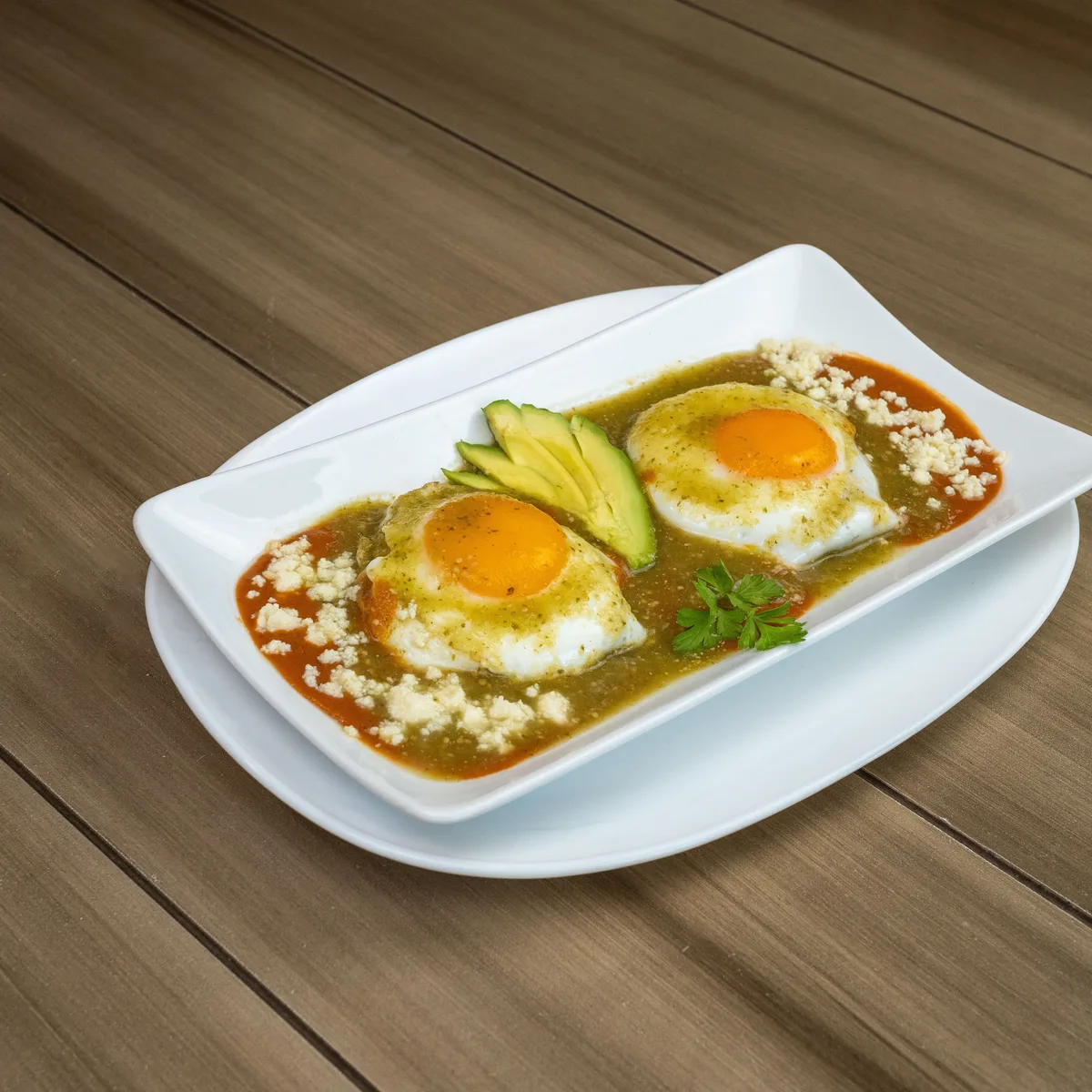
Huevos rancheros is fried eggs on fried corn tortillas under a warm chile and tomato sauce, with beans and cheese. It is ranch breakfast food, built from what keeps in a pantry, and it is assembled rather than cooked as one thing. Everything that goes wrong with it is a sequencing problem: a tortilla that has gone to pulp, a yolk cooked hard by sauce poured over it, a plate that was hot four minutes ago. The recipe card carries the full method with USDA-calculated numbers.
Ingredients
Method
- Char the tomatoes, half onion, serranos and unpeeled garlic in a dry pan over high heat, turning, until blackened in patches, about 8 minutes. Peel the garlic.
- Blend them with 1 teaspoon of the salt into a slightly coarse sauce.
- Heat 1 tablespoon of the oil in a pan and pour in the sauce. Fry it, stirring, for 5 minutes, until it darkens and thickens. Keep it warm.
- In a separate pan, fry each tortilla in a little of the remaining oil for about 30 seconds a side, until it is firm at the edges but still flexible in the middle. Drain on a rack.
- Fry the eggs in the same pan over medium-low heat, covered, 3 minutes, until the whites are set and the yolks still liquid.
- {‘Build each plate immediately’: ‘two tortillas, a spoon of warm mashed beans, two eggs, then the warm sauce ladled around the yolks rather than over them.’}
- Scatter with queso fresco, cilantro and diced raw onion, and serve at once.
What Makes It Rancheros
The name means ranch style, and the dish is a working breakfast: eggs, tortillas, beans and a cooked salsa, all of which keep without refrigeration or are quick to make fresh. The sauce is the defining element, a fried tomato and chile salsa served warm rather than a raw pico. Everything else is open. Huevos divorciados is the same build with one egg under red sauce and one under green, and the two sit side by side on menus.
Why This Recipe Works
- The tortilla is fried to make it waterproof, not to make it crisp. Thirty seconds a side in hot oil sets the surface starch and leaves a thin film of fat on it, and fat repels the water in the sauce. An untreated corn tortilla under warm salsa turns to pulp within about a minute. This is the same mechanism that keeps chicken enchiladas from collapsing.
- Frying the salsa concentrates it. Poured into hot oil the blended sauce darkens and thickens as water evaporates and sugars brown, which also matters structurally: a thinner sauce carries more water onto the tortilla. Five minutes in the pan is both a flavour step and a waterproofing one.
- Covering the egg pan cooks the top of the white without touching the yolk. The trapped steam sets the thin layer of white over the yolk, which is the part that stays raw and slippery in an uncovered pan, while the yolk itself stays liquid because steam is far gentler than direct contact with hot metal.
Ingredient Notes
The tortillas. Corn, always, and two per plate. Flour tortillas go gummy under sauce rather than holding their structure. Day-old tortillas fry better than very fresh ones, which hold more water.
The eggs. Fried, with runny yolks, which act as a second sauce when broken into the salsa and beans. Cook them over medium-low rather than high: hot fat sets the white edges into something brown and lacy before the top is done, which is good on a crisp fried egg and wrong here.
The sauce. Charred tomato, serrano, onion and garlic, blended and fried. The charring is what separates a ranchero sauce from plain blended tomato; blackened skins give it the smoky backbone the dish is known for. Make it a day ahead if you like, since it reheats perfectly.
The beans. A spoon of warm mashed pinto beans between tortilla and egg. They are traditional, they add substance, and they also sit as a barrier between the wet sauce and the tortilla. Refried beans are the fuller version.
The Method, In Short
Char and blend the vegetables, fry the sauce, fry the tortillas, fry the eggs, build and serve. The only rule is that building happens last and fast, because every component is at its best for about two minutes.
Where the sauce goes. Ladle it around the eggs rather than over the yolks. Hot sauce poured directly over a yolk starts cooking it, and a runny yolk is most of the point. It also keeps the yellow visible, which is how the dish is meant to look.
Making It for Several People
The assembly is fast but it does not scale by doing everything at once. Make the sauce ahead and keep it warm, fry all the tortillas first and hold them on a rack in a low oven, then fry eggs in batches and build plates as they come. A rack matters more than it sounds: tortillas stacked on a plate steam each other and undo the frying you just did. For more morning cooking, see Mexican breakfast recipes.
Rancheros, Motuleños and Divorciados
All three are the same foundation with different finishes. Huevos motuleños, from Yucatán, add peas, ham and fried plantain over the same build. Huevos divorciados splits the plate between red sauce and salsa verde. Chilaquiles is the closest relative and the clearest contrast: there the tortillas are cut, fried and simmered in the sauce until they soften deliberately, where here they are kept whole and defended against it. See chilaquiles for that version.
Storage
This is an assemble-and-eat dish and leftovers do not work: a fried egg reheats badly and a sauced tortilla is already past saving by the time it cools. The sauce is the part worth making ahead, and it keeps five days refrigerated and three months frozen, which turns a weekend breakfast into a fifteen minute one. Beans keep four days. Fry the tortillas and the eggs to order, always.
Why the Tortilla Goes to Pulp
A tortilla fails here for one of three reasons and each is visible. It was not fried, so nothing was protecting it from the sauce. It was fried too long, which makes it a crisp tostada that shatters under a knife instead of yielding, a different dish entirely. Or it sat under the sauce too long before being eaten, which no amount of frying prevents past a couple of minutes. The target is a tortilla firm at the edges and still flexible at the centre, built on within a minute of coming out of the pan, with a layer of beans between it and anything wet.
FAQ
What is huevos rancheros? Fried eggs served on lightly fried corn tortillas with a warm cooked tomato and chile sauce, usually with beans, cheese and cilantro. It is a traditional Mexican ranch breakfast.
Why fry the tortillas? To waterproof them. A brief fry sets the surface starch and leaves a thin layer of fat, which keeps the sauce from soaking in. An untreated tortilla turns to pulp in about a minute.
How do I keep the yolks runny? Fry the eggs over medium-low heat with a lid on for about three minutes, so the steam sets the top of the white, and ladle the sauce around the eggs rather than over the yolks.
What is the difference between huevos rancheros and chilaquiles? In chilaquiles the tortillas are cut, fried and then simmered in sauce until they soften. In huevos rancheros the tortillas stay whole and are specifically protected from the sauce.
Can I make the sauce ahead? Yes, and it is the best way to speed up the dish. It keeps five days refrigerated and three months frozen, and reheats perfectly.
What are huevos divorciados? The same plate with one egg under red sauce and the other under green salsa, kept apart. It is a common menu item next to huevos rancheros.
Where to Go Next
The sauce-soaked relative is chilaquiles, the beans underneath are refried beans, and the green sauce alternative is salsa verde. More mornings are at Mexican breakfast recipes, and the library starts at easy Mexican recipes at home.
Label note: most of the carbohydrate in this recipe comes from the corn tortillas, calculated here from USDA’s generic entry. Brands vary, and some contain added sugar, so check the label on the one in your kitchen.
Written by Frank Thomson, Skillet & Spoon editorial. Every nutrition figure on this site is calculated ingredient by ingredient from the USDA FoodData Central database, never estimated and never rounded to look better. We do not publish net-carb figures or use non-nutritive sweeteners. How we develop and source recipes is set out in our editorial policy.