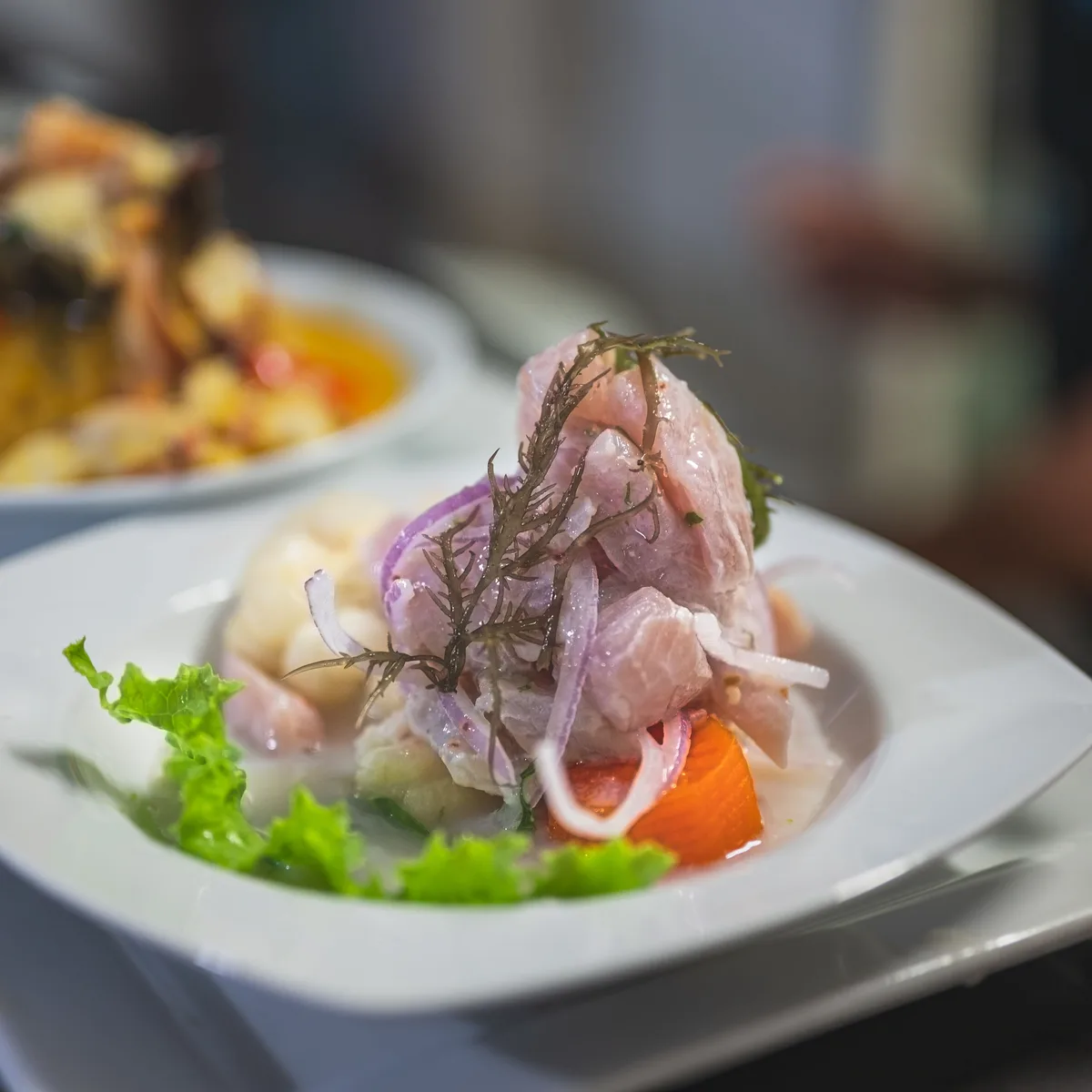
Ceviche (Lime-Cured Fish, Firm Not Chalky)
Ceviche is raw fish cut small and cured in lime juice until it turns opaque and firm, then tossed with onion, chile and herbs. The acid does the work heat would normally do, which is why the only real skill in it is knowing when to stop. Left too long, the same lime that firms the fish keeps going and turns it chalky and dry. The recipe card carries the full method with USDA-calculated numbers, and this page covers the timing, the fish and the safety question that matters more here than in any cooked dish.
Ingredients
Method
- Check the fish is impeccably fresh and cold. Cut it into even half inch cubes; uneven pieces cure unevenly.
- Toss the cubes with the salt and the lime juice in a non-metal bowl, making sure the fish is fully submerged. Refrigerate.
- {‘Cure 20 to 30 minutes for half inch cubes, stirring once. Cut a piece in half’: ‘it should be opaque most of the way through with a faint translucent line at the centre.’}
- Drain off most of the lime juice, keeping a few spoonfuls. Draining is what stops the curing.
- Fold in the red onion, tomato, cucumber, serrano and cilantro.
- Taste for salt and lime, then fold in the avocado last so it stays in distinct pieces.
- Serve cold, within the hour, with tostadas, tortilla chips or saltines.
What Ceviche Is, and Whose It Is
Ceviche belongs to the Pacific coast of Latin America, and Peru has the strongest claim to its origin, where it is usually cured briefly and served with sweet potato and corn. The Mexican version, found all along both coasts, leans on tomato, cucumber, cilantro and avocado and is eaten on tostadas, and that is the version on the card. Calling it a Mexican dish is accurate; calling it a Mexican invention would not be. Variations are endless and regional, with shrimp, octopus and mixed seafood all common.
Why This Recipe Works
- The acid denatures protein from the outside inward. Lime juice unfolds the proteins in the fish and makes them clump together, which is the same structural change heat produces: the flesh turns opaque and firms up. Because the acid can only work where it touches, curing moves from the surface toward the centre, and that is why cube size controls timing far more than the clock does.
- Draining is the off switch. Nothing stops the reaction while the fish is sitting in juice. Pouring most of it off is the only way to hold the texture where you want it, which is why the recipe drains before the vegetables go in rather than after.
- Fish is cut to one size on purpose. Half inch cubes cure in roughly 20 to 30 minutes. A bowl of mixed sizes gives you chalky small pieces and raw big ones at the same moment, and no amount of extra time fixes that, it only makes the small ones worse.
Choosing the Fish
Use the freshest firm white fish you can buy, and tell the counter it is for ceviche. Sea bass, corvina, snapper, halibut, grouper and cod all work. Avoid oily fish such as salmon and mackerel, whose fat turns the cure muddy, and avoid anything soft and flaky that will fall apart when stirred.
On safety, plainly. Lime juice firms fish but it is not a substitute for cooking and it does not reliably kill parasites. The standard precaution is to use fish that has been frozen, since freezing at commercial temperatures is what addresses parasites; much of the fish sold frozen or previously frozen has already had this done. Buy from a counter you trust, ask whether it has been frozen, keep everything cold, and eat it the day you make it. Anyone pregnant, very young, elderly or immunocompromised should give raw-cured fish a miss entirely.
Timing, and How to Read It
Twenty to thirty minutes for half inch cubes of white fish is the working range in this recipe. Shrimp, cut small, cures faster, in roughly 15 to 20 minutes. The test is visual, not timed: cut a cube in half and look at the cross section. Opaque all the way through means it has gone slightly too far and will be firm and dry. Opaque with a thin translucent line at the centre is the point to drain, because the cure continues for a few minutes afterwards and the centre finishes on its own.
Peruvian-style ceviche is often cured for only a few minutes and served nearly raw in the middle, which is a legitimate choice rather than an undercooked one. The Mexican style on this card is cured further, firm through, and better suited to sitting on a tostada.
Ingredient Notes
The lime. Fresh juice only. Bottled lime juice is pasteurised and flat, and its acidity is standardised in a way that tastes dull against raw fish. A cup is enough to submerge a pound and a half of cubes, which matters: fish above the waterline does not cure.
The onion. Red, sliced as thin as you can. Thick onion dominates and stays harsh. If raw onion is too sharp for you, rinse the slices under cold water for a minute and pat them dry, which removes some of the sulphur compounds responsible for the bite.
The avocado. Added at the very end, after draining, or it dissolves into the mixture when stirred.
The bowl. Glass or ceramic, never aluminium or unlined metal, which react with this much acid and leave a metallic taste.
What to Serve It With
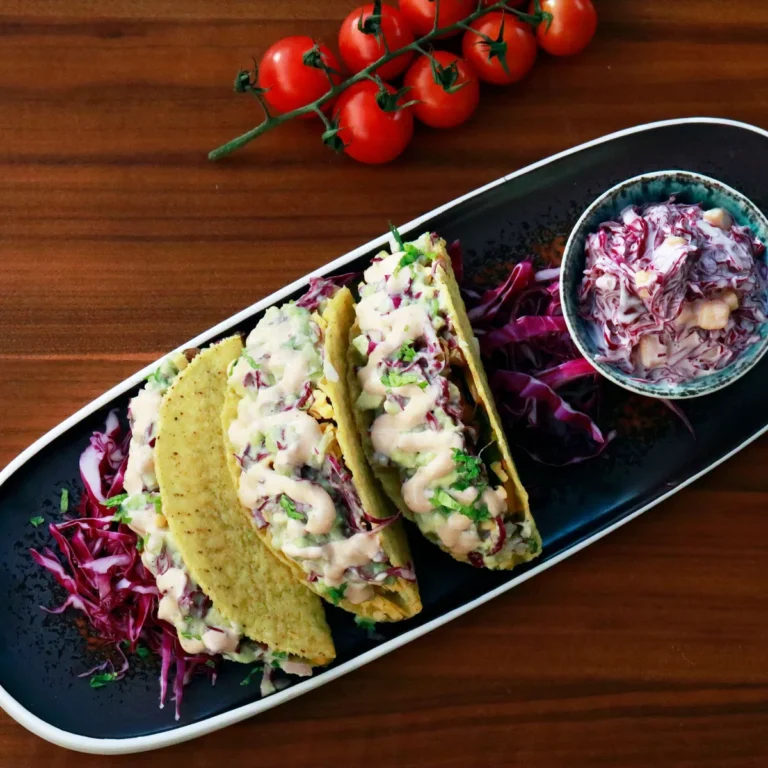
Tostadas are the standard Mexican base, and crisp tostadas hold up better than soft tortillas under something this wet. Tortilla chips and saltines are both traditional. A cold beer or an agua fresca, and hot sauce on the table for those who want it. As part of a spread, see Mexican appetizer recipes and Mexican shrimp recipes.
Storage
Ceviche is a same-day dish and it does not improve overnight. Even drained, residual acid keeps working in the fridge, so by the next day the fish has firmed into something closer to chalk and the cucumber has wept water into the bowl. Four hours refrigerated is a realistic outside limit, and the texture is best within one. Do not freeze it: freezing and thawing already-cured fish destroys what little structure it has left.
Why Ceviche Turns Rubbery or Watery
These are the two failures and they have different causes. Rubbery, dry and chalky means it cured too long, and that is irreversible: the proteins have squeezed out their moisture exactly as overcooked fish does. The prevention is draining on time and cutting the cubes evenly. Watery, with a thin pool in the bowl, usually means salted vegetables were added early: salt draws water out of cucumber and tomato through osmosis, and twenty minutes is enough to see it. Seeding both before dicing removes the wettest part, and folding them in just before serving keeps the liquid where it belongs.
FAQ
Is ceviche raw? It is uncooked by heat. The lime juice denatures the proteins and firms the flesh, which looks and feels like cooking, but it does not reliably kill parasites the way heat does.
How long should fish cure in lime? About 20 to 30 minutes for half inch cubes of white fish, and 15 to 20 for small pieces of shrimp. Judge by a cut cube, draining when a thin translucent line is still visible at the centre.
What fish is best for ceviche? A firm, lean white fish: sea bass, corvina, snapper, halibut, grouper or cod. Avoid oily fish such as salmon, and anything so soft it breaks up when stirred.
Is it safe to eat? Treat it like any raw fish dish. Use fish that has been frozen, buy from a trusted counter, keep it cold and eat it the same day. People who are pregnant, very young, elderly or immunocompromised should avoid raw-cured fish.
Can I make ceviche ahead of time? Not really. The cure continues in the fridge and the texture declines within hours. Cut and chill the fish and prep the vegetables in advance, then combine shortly before serving.
Why did my ceviche go rubbery? It sat in the lime too long. Once the proteins tighten and expel their moisture there is no way back, so drain off the juice as soon as the cubes are nearly opaque through.
Where to Go Next
Serve it on tostadas, compare the cooked-shrimp cousin at Mexican shrimp cocktail recipes, and find more seafood at Mexican shrimp recipes. The whole library starts at easy Mexican recipes at home.
Written by Frank Thomson, Skillet & Spoon editorial. Every nutrition figure on this site is calculated ingredient by ingredient from the USDA FoodData Central database, never estimated and never rounded to look better. We do not publish net-carb figures or use non-nutritive sweeteners. How we develop and source recipes is set out in our editorial policy.