Chimichanga (Chicken, Fried Until the Shell Blisters)
A chimichanga is a burrito that has been deep fried, so the shell blisters and crackles while the filling inside stays soft. It fails in one spectacular way: the parcel opens in the oil and the filling boils out. There are two causes, both avoidable, and both happen before the thing ever reaches the pan. The recipe card carries the full method with USDA-calculated numbers, and this page covers the folding, the oil temperature and how to get the same shell in an oven or air fryer.
Ingredients
Method
- Cook the onion in a dry skillet with a spoonful of the oil until soft, about 5 minutes. Add the cumin, chili powder and salt, then the chicken, beans and broth.
- Simmer 5 to 8 minutes, until the mixture is thick and no liquid runs when you drag a spoon through it. Spread it on a plate and chill it until cold, at least 30 minutes.
- Warm the tortillas briefly so they fold without cracking. Lay one flat, put a quarter of the cold filling slightly below the centre, and scatter cheese over it.
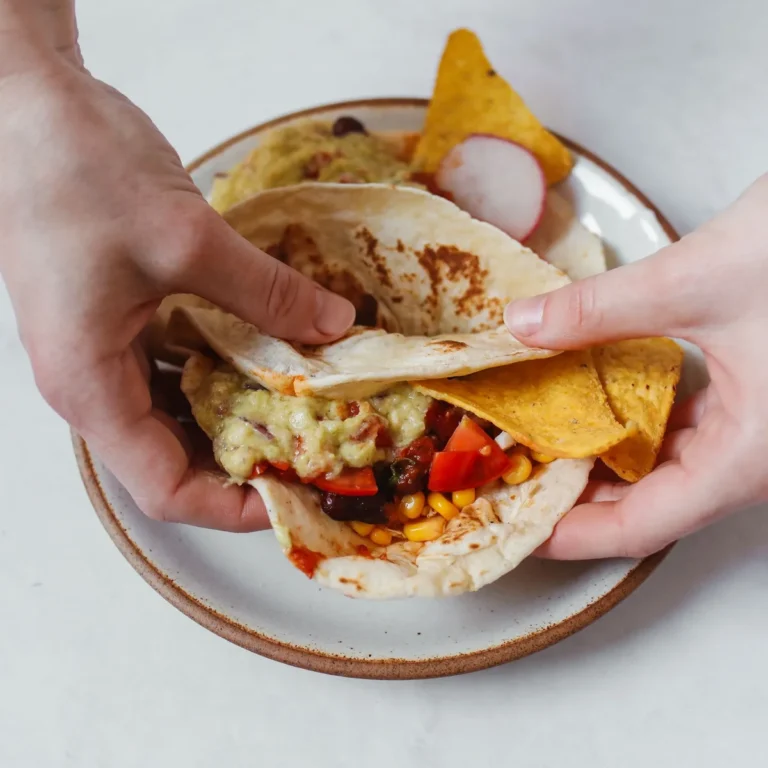
- Fold the bottom edge up over the filling, fold both sides in tightly, then roll it up into a sealed parcel. Press out any air as you go.
- Heat the oil in a wide skillet to 350F to 360F, enough to come about a third of the way up a parcel. A scrap of tortilla dropped in should sizzle steadily and brown in about 40 seconds.
- Lower two parcels in seam side down and fry 2 to 3 minutes, until the seam is set and golden, then turn to brown the remaining sides, about 2 minutes more in total.
- Lift out with tongs and drain on a rack rather than on paper, so the underside stays crisp. Fry the remaining two.
- Rest 2 minutes before cutting, and serve with sour cream, salsa or guacamole.
Where the Chimichanga Comes From
The chimichanga is an Arizona dish, claimed by restaurants in both Tucson and Phoenix, and it is best described as Mexican-American rather than traditional Mexican. It is an American invention rather than a Mexican one. That is not a mark against it: a deep-fried burrito served under crema and salsa is a genuinely good piece of cooking, and this page labels it honestly rather than dressing it up as something older than it is. The filling, shredded meat with beans and cheese, is traditional; the frying is the American addition.
Why This Recipe Works
- The filling goes in cold and dry, because water is what bursts the shell. Any liquid left in the filling turns to steam the moment it hits 350F oil. Steam expands hundreds of times over as it forms, and it will find the weakest seam and open it. Simmering the filling until a spoon leaves a dry track removes most of that water, and chilling it means the oil has to heat the parcel through before any steam forms at all, which gives the shell time to set first.
- The seam is fried shut before anything else happens. Laid into the oil seam side down, the overlapping tortilla dehydrates and stiffens within a minute or two, which locks the parcel closed. Turned too early, or dropped in seam up, it has nothing holding it but the fold.
- 350F to 360F is the window, and it matters in both directions. Below about 325F the oil soaks in faster than steam pushes out, and the shell turns heavy and greasy. Above about 375F the tortilla browns and blisters before the filling inside is even warm. In the right window the escaping steam actively holds the oil out, which is why properly fried food is less greasy than food fried too cool.
Ingredient Notes
The tortillas. Burrito-size flour tortillas, around ten inches. Smaller ones cannot be folded into a closed parcel with this much filling, and corn tortillas will not fold at all without cracking. Warm them for a few seconds before folding; a cold tortilla splits along the crease, and that split becomes the leak. Because flour tortillas vary quite a lot between brands, the note under the card says to check your own label.
The filling. Shredded chicken with mashed pinto beans, which do useful work beyond flavour: the starch in mashed beans binds the mixture so it holds its shape inside the shell instead of flowing to one end. Chicken tinga or leftover beef barbacoa both make excellent chimichangas for the same reason, since their sauces are already cooked down.
The cheese. Monterey Jack, scattered over the filling rather than mixed through it, so it melts into a layer and helps hold everything together.
What the card counts. The oil is counted in full, but most of a frying panful stays in the pan rather than on the food. USDA has no entry for what a fried piece actually absorbs, and putting a figure on it would mean estimating, which this site does not do. So read the fat and calorie numbers as the ceiling rather than the plate.
The Method, In Short
Cook the filling until dry, chill it, fold tight parcels, fry at 350F to 360F seam side down first, drain on a rack, rest, serve. The only timing that needs watching is the oil, and a thermometer removes the guesswork entirely.
Draining on a rack, not paper. A chimichanga set on paper towel sits in its own steam, and the underside softens within a minute. A rack lets air circulate underneath, so the shell stays crisp all the way round.
Folding a Parcel That Holds
Put the filling below the centre of the tortilla, not in the middle, so you have more tortilla to roll with. Fold the bottom edge over the filling and pull it back toward you to tighten it, then fold the sides in, then roll. Pressing the air out matters as much as the filling being dry, since trapped air expands in heat exactly as steam does. If a tortilla tears, start again with another one rather than patching it; a patch is the weak point the steam will find.
Baked and Air Fryer Versions
Neither reproduces a deep-fried shell exactly, and both are good in their own right. For the oven, brush the parcels all over with oil, set them seam side down on a rack over a tray, and bake at 425F for 20 to 25 minutes, turning once. For an air fryer, the same brushing and about 12 minutes at 390F, turned halfway. The texture is drier and more papery than fried, with less blistering, because blisters come from water flashing to steam under a sealed surface in hot oil. The upside is that they cannot burst in a pan of fat.
What to Serve With It
A chimichanga is rich, so the plate wants sharp and cold things: pico de gallo, guacamole, sour cream, shredded lettuce. Underneath, authentic Mexican rice or refried beans. Smother it in enchilada sauce and melted cheese and you have the restaurant presentation. More in this register is at Mexican dinner recipes.
Storage and Reheating
Fried chimichangas keep two days refrigerated and reheat well in a hot oven or air fryer, about ten minutes at 375F, which drives off the moisture the fridge introduced. A microwave turns the shell soft and chewy. You can freeze them assembled but unfried for three months: freeze them solid on a tray first, then bag them, and fry from frozen at a slightly lower temperature for a couple of minutes longer, because a frozen parcel needs time to heat through before the shell overcooks.
Chimichanga, Burrito, Flauta: What Actually Differs
All three are fillings wrapped in a tortilla, and the differences are the wrapper, the shape and the cooking. A burrito is a large flour tortilla, folded and eaten soft. A chimichanga is that same burrito deep fried. A flauta or taquito is much smaller, usually rolled in a corn tortilla into a tight tube and fried, with no folded ends, so it is a crisp snack rather than a meal. The practical consequence is in how much filling each can carry: a sealed chimichanga holds a cup or more, while a rolled taquito holds a couple of tablespoons and fries crisp all the way through.
FAQ
What is a chimichanga? A deep-fried burrito: a flour tortilla wrapped around a filling of shredded meat, beans and cheese, then fried until the shell is golden and blistered. It comes from Arizona rather than from Mexico.
How do I stop a chimichanga bursting open? Use a cold, dry filling, press the air out as you fold, and lay it into the oil seam side down so the seam sets first. Steam from wet filling is what forces the seam open.
What oil temperature should I use? 350F to 360F. Cooler oil soaks into the tortilla and makes it greasy; hotter oil browns the shell before the filling has warmed through.
Can I bake or air fry a chimichanga? Yes. Brush with oil and bake at 425F for 20 to 25 minutes, or air fry at 390F for about 12 minutes. The shell is drier and less blistered than fried, but it will not leak.
What is the difference between a chimichanga and a burrito? A chimichanga is a burrito that has been deep fried. The filling and the fold are the same; the frying is what changes the texture and the name.
Can I make them ahead? Yes. Assemble and freeze them unfried on a tray, then bag them. Fry from frozen slightly cooler and slightly longer so the inside heats before the shell overcooks.
Where to Go Next
Use chicken tinga as the filling, compare the smaller fried cousin at taquitos, and smother it in enchilada sauce. The whole library starts at easy Mexican recipes at home.
Label note: most of the carbohydrate in this recipe comes from the flour tortillas, calculated here from USDA’s generic entry. Brands vary, and some contain added sugar, so check the label on the one in your kitchen.
Written by Frank Thomson, Skillet & Spoon editorial. Every nutrition figure on this site is calculated ingredient by ingredient from the USDA FoodData Central database, never estimated and never rounded to look better. We do not publish net-carb figures or use non-nutritive sweeteners. How we develop and source recipes is set out in our editorial policy.