Carrot Cake With Cream Cheese Frosting
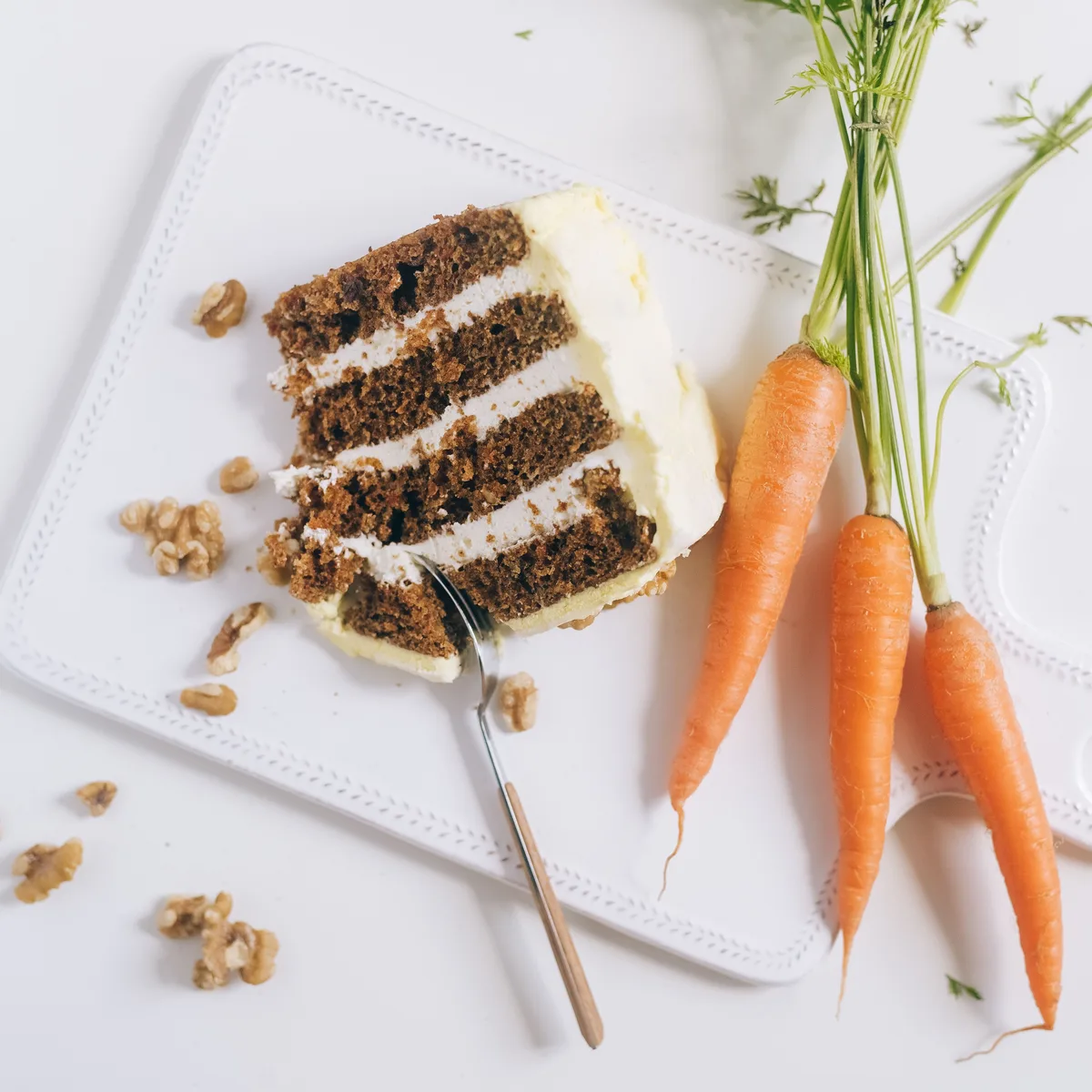
Carrot cake is a moist, spiced cake that stays soft for days, and the two things that make it work are using oil rather than creamed butter and grating the carrots finely. The carrots do not make it taste of carrot; they melt into the crumb and keep it moist, the way banana does in banana bread. Topped with a tangy cream cheese frosting, it is a reliable crowd-pleaser. This version is calculated from USDA FoodData Central so the number under each slice is real, and the sweetness is real sugar, never a substitute.
Ingredients
Method
- Heat the oven to 350F and grease and line two 8-inch round tins.
- Whisk the flour, sugar, baking soda, baking powder, cinnamon and salt together.
- Beat in the oil and eggs until smooth, then stir in the grated carrots and walnuts.
- Divide between the tins and bake for about 35 to 40 minutes, until a skewer in the centre comes out with a few moist crumbs, then cool completely.
- For the frosting, beat the softened cream cheese and butter smooth, then beat in the powdered sugar and vanilla until light.
- Frost only once the cakes are fully cool, filling between the layers and covering the top and sides, and keep the finished cake cool.
Why Oil, Not Butter
Carrot cake is built on oil rather than creamed butter, and that is the secret to how moist it stays. Oil is liquid at room temperature, so the crumb stays soft and moist even after a day or two in the fridge, where a butter cake firms up and dries. Oil also means no creaming step, so the batter comes together quickly by hand; the only caution is not to over-stir once the flour is in, which would build gluten and toughen it.
Grate the Carrots Finely
Finely grated carrots melt into the batter and disappear into a moist crumb, while coarsely grated or shredded carrots stay as firm, noticeable strands that do not soften fully in the bake. Grate them yourself on the fine side of a box grater rather than buying pre-shredded carrots, which are dry and too thick. The carrots add moisture and natural sweetness, not a vegetable flavour.
The Cream Cheese Frosting
Cream cheese frosting is the classic partner, tangy enough to cut the sweetness of the cake. Beat the softened cream cheese and butter smooth before adding the powdered sugar, and do not over-beat, because over-beaten cream cheese frosting turns loose and runny. Its one weakness is heat, so it softens and slides in a warm room, which means the cakes must be completely cool before frosting and the finished cake kept cool. The frosting is covered in full in the frosting recipes guide.
Spices and Add-Ins
Cinnamon is the backbone, and a little nutmeg, ginger or allspice deepens the spice. Walnuts or pecans add crunch, raisins or crushed pineapple add moisture and sweetness, and shredded coconut is a common addition. Fold any of these in at the end, keeping the total modest so the batter still bakes through.
Sheet Cake, Layers or Cupcakes
The same batter bakes in whatever shape suits the occasion. Two round tins make the classic layer cake, stacked with frosting between; a 9-by-13 inch tin makes a sheet cake frosted right in the pan, which is the easiest for a crowd and bakes a little longer; and a muffin tin makes carrot cake cupcakes in around 20 minutes, each swirled with cream cheese frosting. A bundt is an option too, finished with a glaze rather than frosting, since cream cheese frosting would slide off the sloped sides. Whatever the shape, the doneness test is the same skewer with a few moist crumbs, and the cakes must be completely cool before any cream cheese frosting goes near them, because warmth makes it slide.
Storage
Carrot cake keeps well thanks to the oil and the moisture from the carrots: because it is frosted with cream cheese, store it covered in the fridge, where it keeps for up to a week, and bring slices to room temperature before serving so the crumb softens and the flavour returns. Unfrosted layers freeze well wrapped against air, so the cake can be baked ahead and frosted on the day. Because of the cream cheese frosting, it is not a cake to leave out at a warm gathering for long, so keep it chilled and bring out slices as needed.
FAQ
Why is carrot cake made with oil instead of butter? Oil stays liquid at room temperature, so it keeps the crumb moist for days, even refrigerated, where a butter cake firms and dries. It also skips the creaming step, making the batter quick to mix.
Should I grate the carrots myself? Yes. Finely grate them on a box grater so they melt into the crumb. Pre-shredded bagged carrots are dry and too thick, and they stay as firm strands that do not soften in the bake.
Why is my cream cheese frosting runny? It was over-beaten or too warm. Beat it just until smooth and light, keep it cool, and frost only a fully cooled cake, because warmth makes cream cheese frosting slide.
Does carrot cake taste of carrot? No. The finely grated carrots melt into the crumb and add moisture and a little natural sweetness, the way banana does in banana bread, rather than a vegetable flavour.
Can I make it as a sheet cake or cupcakes? Yes. The same batter bakes in a 9-by-13 tin as a sheet cake, frosted in the pan, or in a muffin tin as cupcakes in around 20 minutes. Adjust the time and test with a skewer.
Can I use a sugar substitute? This recipe does not, because sugar provides structure and moisture in the cake and body in the frosting, which substitutes cannot do. It uses real sugar, counted honestly from USDA data.
Where to Go Next
For every cake method see the cake recipes guide, for the topping the frosting recipes guide, and for the baking behind every cake, the dessert recipes guide.
Written by Frank Thomson, Skillet & Spoon editorial. Every nutrition figure on this site is calculated ingredient by ingredient from the USDA FoodData Central database, never estimated and never rounded to look better. We do not publish net-carb figures or use non-nutritive sweeteners. How we develop and source recipes is set out in our editorial policy.