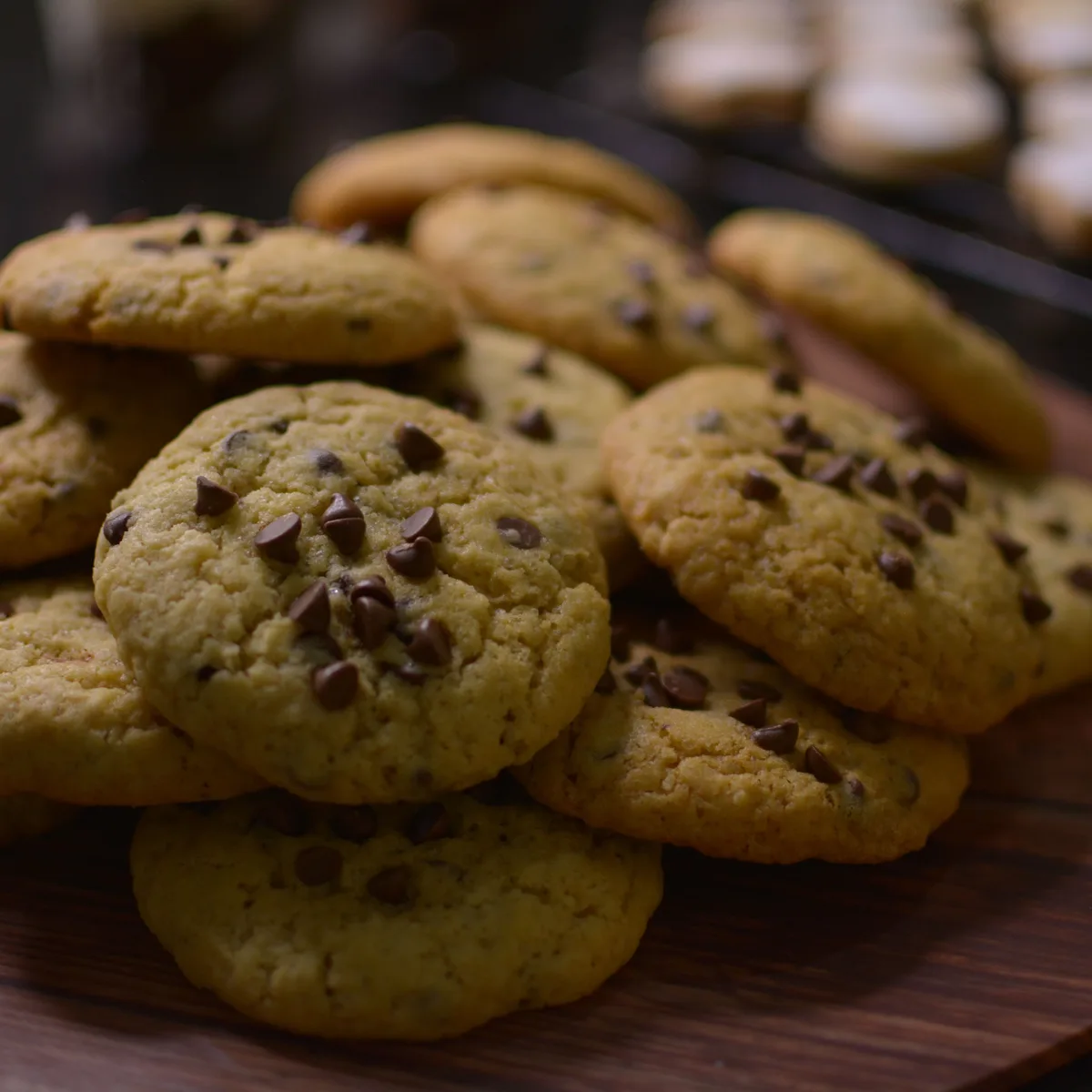
Chocolate Chip Cookies, Soft and Chewy
Chocolate chip cookies are the most made cookie there is, and the gap between a flat, crisp disc and a thick, soft, chewy one is not a secret recipe but a handful of choices made before the oven: how warm the butter is, which sugars you use, and whether you chill the dough. This version is built for soft and chewy, leaning on brown sugar, a proper creaming and a rest in the fridge, and it is calculated from USDA FoodData Central so the number under each cookie is real rather than estimated. The sweetness is real sugar, never a substitute, because sugar is half of what makes a chocolate chip cookie spread, brown and stay soft.
Ingredients
Method
- Whisk the flour, baking soda and salt together in a bowl and set aside.
- Beat the softened butter with both sugars until light and fluffy, about three minutes, which beats in the air that gives the cookies their rise.
- Beat in the eggs one at a time, then the vanilla, scraping the bowl so the batter stays smooth.
- Add the dry ingredients and mix just until no streaks of flour remain, stopping there so the dough does not toughen.
- Fold in the chocolate chips by hand.
- Chill the dough for at least an hour, or overnight, which firms the butter so the cookies spread less and deepens the flavour.
- Scoop rounded two-tablespoon portions onto parchment-lined trays, spaced well apart to make about 36 cookies, and bake at 375F for 9 to 11 minutes, until the edges are set but the centres still look slightly underdone.
- Let the cookies sit on the hot tray for five minutes to finish cooking, then move them to a rack.
Why These Come Out Soft and Chewy
Three choices steer a chocolate chip cookie toward chew. Brown sugar over white: brown sugar is moist and slightly acidic, so leaning on it gives a softer, chewier cookie and a gentler spread, where white sugar crisps and spreads thin. This dough uses both, weighted toward brown. Creamed, softened butter, not melted: creaming the butter with the sugars beats in air for a cookie that rises rather than puddles, and softened butter holds that structure where melted butter runs. A cold dough: chilling firms the butter so the cookies hold their shape and bake thick, and it lets the flour hydrate, which deepens the flavour.
The last lever is the bake itself. Pull the trays while the centres still look underdone, because cookies keep cooking on the hot tray, and a cookie baked until the middle looks done is already on its way to hard.
Ingredient Notes
Flour: measure it by spooning it into the cup and levelling, or weigh it, because a packed cup can hold a quarter more flour than intended and bakes a dry, cakey cookie. Butter: softened to room temperature so it creams, not melted. Baking soda, not baking powder, because soda reacts with the acidity of the brown sugar and pushes browning. Chocolate chips: semisweet is the standard; chop a bar instead if you want pools of melted chocolate rather than chips that hold their shape.
Make It Crisp Instead
If you prefer a thin, crisp cookie, the same dough bends that way: soften the butter further or melt it, shift the sugar balance toward white, and skip the chill so the cookies spread. The ingredients do not change, only the handling, which is the whole point of understanding what each one does.
Common Problems
Cookies spread too flat: the butter was too warm, the dough was not chilled, or the tray was still hot from the last batch. Chill the dough and always start on a cool tray. Cookies came out cakey and dry: too much flour, almost always from scooping a packed cup. Spoon and level, or weigh. Hard the next day: they were overbaked, so pull them while the centres look underdone, and store them airtight.
Variations
The dough takes easily to changes. Fold in chopped walnuts or pecans with the chocolate for crunch, or swap half the semisweet chips for dark or milk chocolate, or for chopped chocolate chunks that melt into pools. A few flakes of salt pressed onto the tops before baking sharpen the sweetness and play against the chocolate. For bakery-size cookies, scoop larger portions and add a couple of minutes to the bake, watching for set edges and soft centres.
Storage
Keep the cookies airtight at room temperature, where they stay soft for several days, and a slice of bread tucked in the container keeps them softer still because they draw its moisture. The dough freezes well: scoop it into balls, freeze them solid, then bake from frozen with an extra minute or two, so fresh cookies are always a few minutes away.
FAQ
Why are my chocolate chip cookies flat? The butter was too warm, the dough was not chilled, or the baking tray was still hot. Chill the dough so the butter is firm going in, and bake each batch on a cool tray so the cookies set before they spread.
Should I chill chocolate chip cookie dough? For soft, thick cookies, yes. Chilling firms the butter so the cookies spread less and hold their shape, and it lets the flour hydrate, which deepens the flavour. An hour helps and overnight helps more.
Why use brown sugar in chocolate chip cookies? Brown sugar is moist and slightly acidic, so it makes a softer, chewier cookie and a gentler spread, and it reacts with the baking soda for browning. White sugar, by contrast, crisps and spreads the cookie thin.
Baking soda or baking powder for cookies? Baking soda, because it reacts with the acidity in brown sugar and promotes browning. Swapping in baking powder changes the rise and the colour and is not a direct substitute.
How do I keep chocolate chip cookies soft? Pull them from the oven while the centres still look underdone, since they finish on the hot tray, and store them airtight. A slice of bread in the container keeps them soft by giving up its moisture.
Can I use a sugar substitute? This recipe does not, because sugar is half of what makes a chocolate chip cookie spread, brown and stay soft, which substitutes cannot do. It uses real sugar, counted honestly from USDA data.
Where to Go Next
For the science behind every cookie texture, see the cookie recipes guide, and for the baking that runs under all sweets, the dessert recipes guide. For a carb-counted version, see diabetic cookie recipes.
Written by Frank Thomson, Skillet & Spoon editorial. Every nutrition figure on this site is calculated ingredient by ingredient from the USDA FoodData Central database, never estimated and never rounded to look better. We do not publish net-carb figures or use non-nutritive sweeteners. How we develop and source recipes is set out in our editorial policy.