Fruit Desserts: Cobblers, Crisps, Crumbles and More
Fruit desserts are the most forgiving sweets there are and the easiest to keep honest, because the fruit does most of the work and most of the sweetening. They are also the most confused: cobbler, crisp, crumble, buckle and betty are all baked fruit with a topping, and the names get used interchangeably when they actually mean different toppings. This page sorts them out, explains how to stop a fruit filling going watery, and covers the no-bake fruit desserts too. Every number here is from USDA FoodData Central, and the sweetness leans on the fruit’s own, with real sugar where it is added, never a substitute.
Cobbler, Crisp, Crumble and Buckle
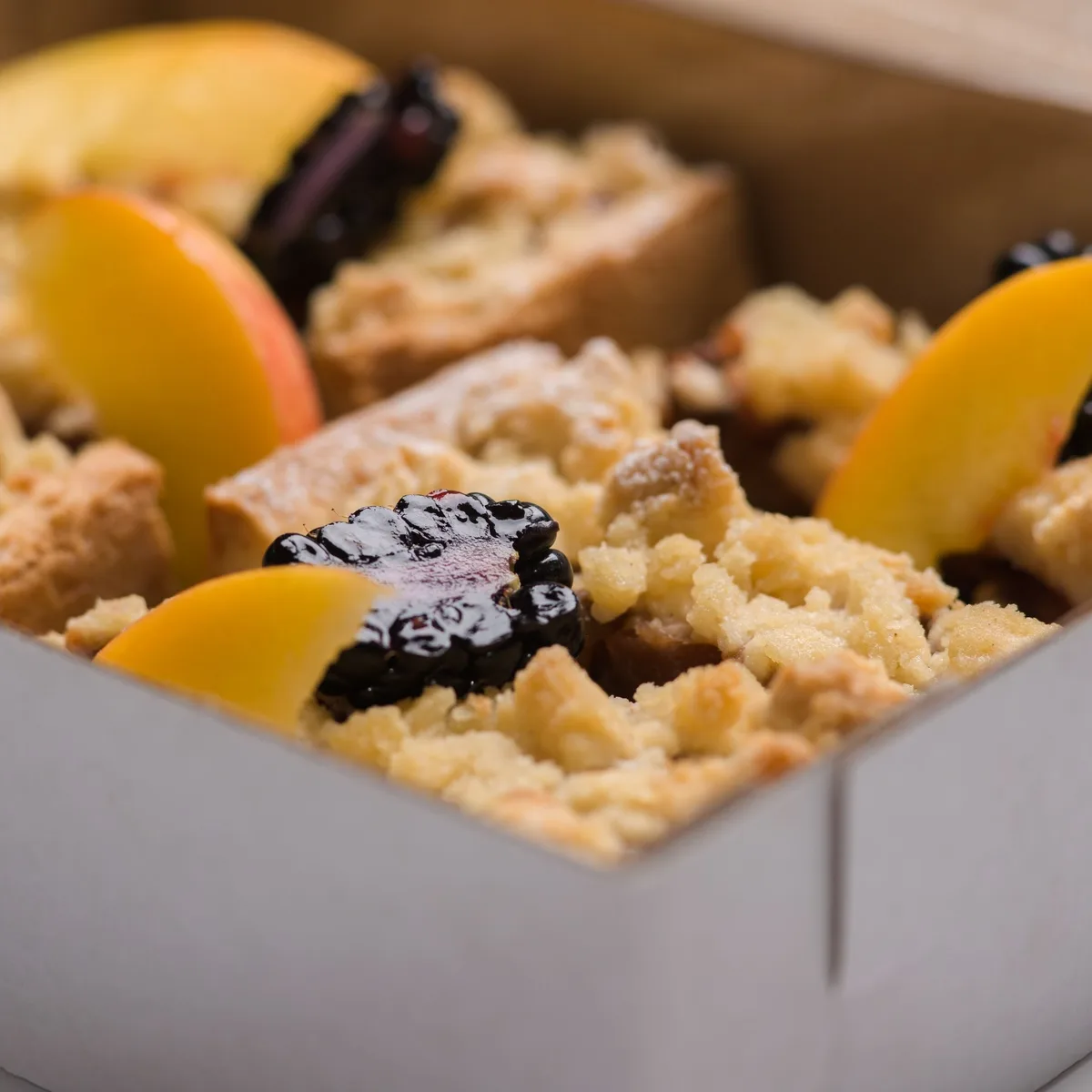
The names describe the topping over the fruit. A crisp has a topping of oats, flour, butter and sugar that bakes crunchy. A crumble is similar but usually without oats, a sandier streusel. A cobbler has a biscuit or batter topping dropped or spread over the fruit, which bakes up like a soft scone or cake. A buckle mixes the fruit into a cake batter so it bakes through the crumb, and a betty layers the fruit with buttered breadcrumbs. Knowing which is which means you can pick the texture you want, since the fruit underneath is the same.
Stopping a Watery Fruit Filling
The main fault in baked fruit desserts is a soupy filling, and the cause is the juice fruit releases as it heats. The fix is a thickener, usually cornstarch or flour tossed with the fruit and sugar, which sets that juice into a glossy, spoonable filling. Cornstarch only thickens once it reaches a boil, so the dessert has to bake until the filling bubbles in the centre, not just at the edges. Juicier fruits such as berries and peaches need more thickener than firm apples.
Why Sugar Draws Out Juice
Tossing cut fruit with sugar and leaving it a while, called macerating, draws juice out of the fruit by osmosis and makes a light syrup, which is useful for fresh fruit desserts and for softening firm fruit before baking. It is the same reason a sugared strawberry weeps into a sauce. A little sugar there does double duty, sweetening and creating the syrup, which is why fruit desserts can use less added sugar than other sweets and still taste sweet.
Baked Fruit on Its Own
Fruit needs no topping at all to be a dessert. Baked or roasted apples, pears and stone fruit concentrate their sweetness as they cook and the natural sugars caramelise, and a stuffing of oats, nuts and spice turns a baked apple into a full dessert. Grilled fruit, such as pineapple or peaches, does the same over direct heat, the sugars caramelising on the cut face.
No-Bake and Fresh Fruit Desserts
Not every fruit dessert is baked. A fruit salad, fruit macerated in a little sugar or liqueur, fruit folded into whipped cream for a fool, or fruit layered with cream and cake into a trifle all skip the oven. These are the lightest desserts on the site, since the sweetness is mostly the fruit’s own and little is added. Fresh and set versions also appear in the no-bake desserts guide.
Serving and the Crossover With Pies
Fruit desserts overlap with pies, the difference being mostly the crust: a fruit pie wraps the fruit in pastry, while a cobbler or crisp leaves it open with a topping, which makes them faster and more forgiving than a pie since there is no crust to roll or blind-bake. The fruit-and-thickener logic is shared, and the full crust side is in the pie recipes guide. A warm fruit dessert with a scoop of ice cream is the classic serving.
Choosing and Preparing the Fruit
The fruit is most of a fruit dessert, so its condition matters. Ripe, in-season fruit brings its own sweetness and needs little added sugar, while out-of-season or under-ripe fruit is firmer, more tart and needs more sugar and a longer cook. Firm fruits such as apples and pears hold their shape and suit long bakes; soft fruits such as berries collapse quickly and release a lot of juice, so they need more thickener and a shorter cook. Peel and core as the fruit requires, cut pieces to an even size so they cook at the same rate, and toss watery fruit with its sugar and thickener ahead so the mixture is ready to bake.
Toppings and Serving
The topping is where a fruit dessert is finished and varied. An oat crisp topping bakes crunchy and hearty; a sandier crumble is more delicate; a biscuit cobbler top bakes soft and bready; and for the lightest finish, baked or poached fruit needs no topping at all beyond a spoon of cream. Whatever the topping, a warm fruit dessert with a scoop of homemade ice cream or a pour of cold cream is the classic serving, the hot fruit and cold cream playing against each other. Most fruit desserts reheat well, so they can be baked ahead and warmed to serve.
Freezing and Make-Ahead
Fruit desserts suit getting ahead. An unbaked crumble or crisp can be assembled and frozen, then baked from frozen with extra time, which is a useful way to use a glut of summer fruit later in the year. Baked fruit desserts keep a day or two covered, in the fridge if they are rich or creamy, and reheat to bring back the just-baked texture. The toppings generally survive freezing better than a pastry crust does, which is another reason crisps and crumbles are more forgiving than pies.
A Note on Sugar
Fruit desserts are where sugar can be lightest, because the fruit brings its own, but a little added sugar still helps draw out juice and set a filling. This site uses real sugar, counted honestly from USDA data, and never non-nutritive sweeteners, which cannot macerate fruit or set a filling and misreport carbohydrate. For carb-counted options, see the diabetic dessert recipes collection.
Why Fruit Desserts Are the Easiest to Keep Honest
Of all the sweets on this site, fruit desserts carry the least added sugar for the most flavour, because the fruit brings its own sweetness, its own acidity for balance, and its own moisture. A ripe peach or a handful of berries is most of the way to a dessert before anything is added, so the sugar is there to draw out juice and set a filling rather than to carry the whole sweetness. That is why a fruit crisp can taste generously sweet on a fraction of the sugar a frosting or a candy needs, and why fruit desserts sit comfortably alongside the carb-counted collections elsewhere on the site.
FAQ
What is the difference between a cobbler, a crisp and a crumble? The topping. A crisp has an oat topping, a crumble a sandier streusel without oats, and a cobbler a biscuit or batter topping like a soft scone. The fruit underneath is the same.
Why is my fruit cobbler or crisp watery? The fruit’s juice was not thickened or the dessert did not bake long enough. Toss the fruit with cornstarch or flour, and bake until the filling bubbles in the centre, since cornstarch only sets at a boil.
How do I make fruit desserts with less sugar? Lean on the fruit’s own sweetness and macerate it, since even a little sugar draws out juice and tastes sweet. Fruit desserts naturally need less added sugar than richer sweets.
What is macerating? Tossing cut fruit with sugar and leaving it to sit, which draws juice out by osmosis into a light syrup and softens the fruit. It sweetens and makes a sauce at the same time.
Can I make a fruit dessert without baking? Yes. Fruit salad, macerated fruit, a fruit fool folded with whipped cream, or a trifle all skip the oven and are among the lightest desserts there are.
Can I use a sugar substitute in fruit desserts? This site does not, because sugar macerates fruit and sets fillings, which substitutes cannot do, and they misreport carbohydrate. We use real sugar and count it honestly.
Where to Go Next
See the pie recipes guide for the crusted cousins of these desserts, no-bake desserts for fresh and set fruit sweets, and homemade ice cream for what to serve alongside. For the baking behind it all, see dessert recipes. For spiced apples under a crunchy oat topping, see apple crisp.
Written by Frank Thomson, Skillet & Spoon editorial. Every nutrition figure on this site is calculated ingredient by ingredient from the USDA FoodData Central database, never estimated and never rounded to look better. We do not publish net-carb figures or use non-nutritive sweeteners. How we develop and source recipes is set out in our editorial policy.