Blondies, Chewy Brown Sugar Bars
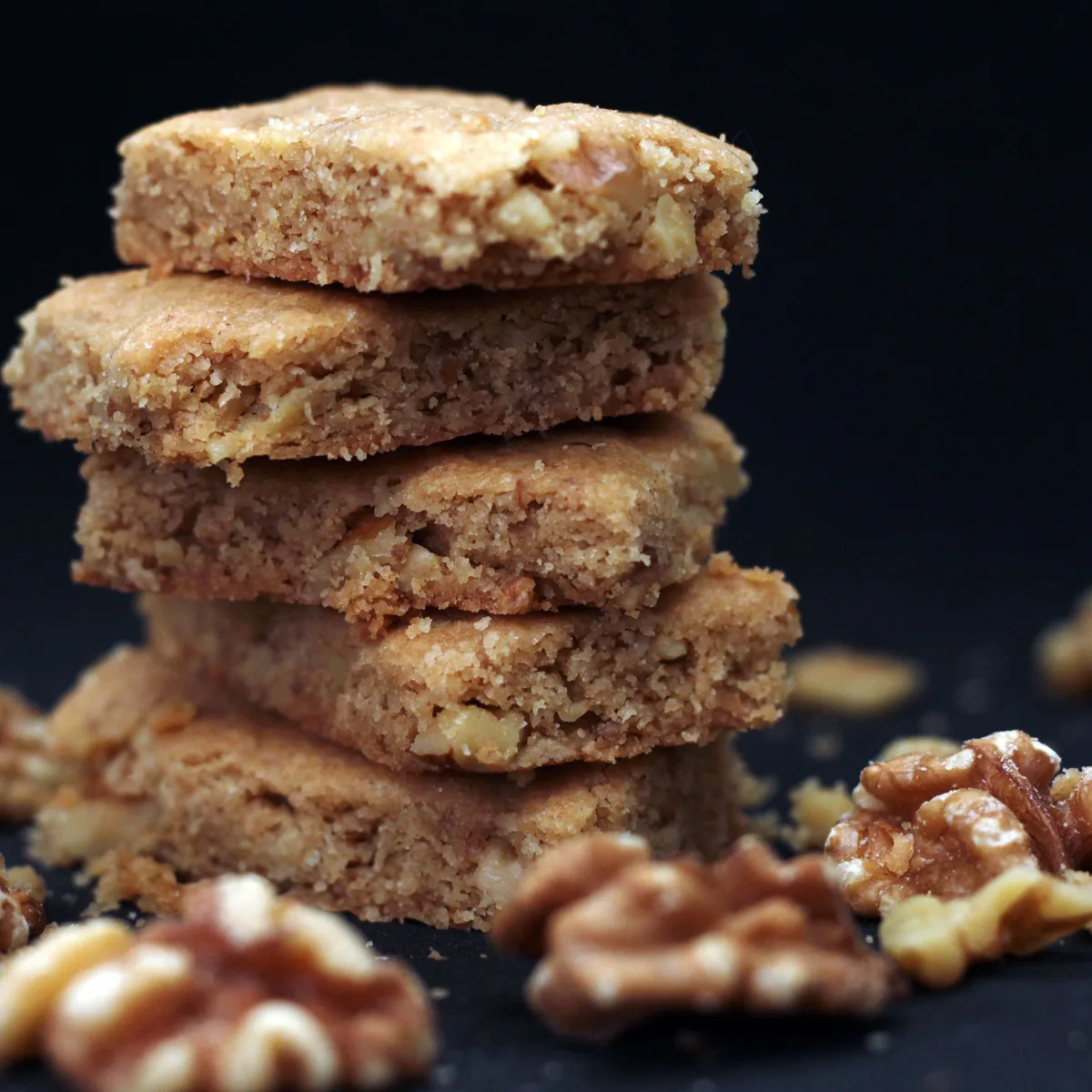
Blondies are the brown-sugar cousin of the brownie: the same dense, chewy bar, but built on brown sugar and vanilla instead of chocolate, which gives them a butterscotch, toffee-like flavour. They are even easier than brownies, mixed in one bowl with melted butter and no mixer, and the whole character comes from the brown sugar and butter rather than from cocoa. This recipe is calculated from USDA FoodData Central so the number under each bar is real, and the sweetness is real sugar, never a substitute, because the brown sugar is doing the flavour work as well as the sweetening.
Ingredients
Method
- Heat the oven to 350F and line an 8-inch square tin with parchment, leaving an overhang.
- Whisk the melted butter and brown sugar together until smooth and glossy.
- Beat in the egg and vanilla.
- Stir in the flour, baking powder and salt just until combined, keeping the mixing minimal.
- Fold in the chocolate chips, then spread into the tin.
- Bake for about 22 to 25 minutes, until the top is set and golden and a skewer in the centre comes out with a few moist crumbs.
- Cool completely in the tin before lifting out and cutting into squares.
Where the Butterscotch Flavour Comes From
A blondie tastes of butterscotch without any butterscotch in it, and that comes from two ingredients. Brown sugar carries molasses, which gives the toffee note and keeps the bar moist and chewy, and butter, especially if you brown it first, adds a nutty depth. Whisking the melted butter into the brown sugar until glossy dissolves the sugar and sets up that flavour, the same way beating sugar into eggs gives a brownie its shine. For an even deeper flavour, brown the butter before mixing, cooking it until the milk solids turn golden and smell nutty.
Keep Them Chewy, Not Cakey
Blondies should be dense and chewy like a fudgy brownie, not light like a cake, so the recipe keeps the flour modest and uses only a little baking powder. Over-mixing once the flour is in builds gluten and pushes them toward cakey and tough, so stir just until combined. And like brownies, they are meant to be pulled before a cake would be: a skewer should show moist crumbs, not come out clean, and they finish setting as they cool.
Mix-Ins
Blondies take add-ins well. Chocolate chips are classic, but white chocolate, butterscotch chips, chopped nuts such as pecans or walnuts, or a swirl of jam all work, folded in at the end. Keep the total modest so the batter still sets. A few flakes of salt on top before baking balances the sweetness, which blondies need more than brownies because there is no bitter cocoa to cut it.
Measuring and Common Problems
Measure the flour by spooning and levelling, because a packed cup is the quickest way to a dry, cakey blondie. The usual faults are easy to place: a cakey, dry blondie had too much flour or raising agent, or was over-mixed, so keep the flour modest and stir just until combined; a greasy one had too much butter or was under-baked; and pale, under-set middles mean it came out too soon, so give it a few more minutes and judge by the set top rather than the clock. Because there is no cocoa to cut the sweetness, blondies taste sweeter than brownies for the same sugar, which is why a little salt in the batter and a few flakes on top are worth adding.
Browning the Butter
Browning the butter is the single upgrade that lifts a blondie from good to memorable. Melt it over medium heat and keep cooking past melted until the milk solids at the bottom turn golden and it smells nutty, then pour it out, solids and all, and let it cool slightly before mixing. It adds a toasted, caramel depth that pairs with the brown sugar. Watch it closely at the end, because browned butter turns to burnt butter in seconds.
Storage
Blondies keep several days airtight at room temperature and stay moist thanks to the brown sugar and butter. They freeze well, whole or cut and wrapped against air, and thaw quickly. Like brownies, they are often better the day after baking, once the crumb settles and the flavour deepens. Cut them small, since like brownies they are rich and a little goes a long way.
FAQ
What is the difference between a blondie and a brownie? A blondie is built on brown sugar and vanilla instead of chocolate and cocoa, so it tastes of butterscotch and toffee rather than chocolate. The dense, chewy bar texture is the same; only the flavour base changes.
Why are my blondies cakey instead of chewy? Too much flour, too much raising agent, or over-mixing. Keep the flour modest, use only a little baking powder, and stir just until combined so you do not build gluten.
Why are my blondies dry? They were overbaked. Pull them when a skewer shows moist crumbs, not clean, because they finish setting in the hot tin as they cool.
Should I brown the butter? It is optional but worth it. Browning the butter until the milk solids turn golden and smell nutty deepens the butterscotch flavour. Let it cool slightly before mixing it with the brown sugar.
What mix-ins work in blondies? Chocolate chips, white chocolate, butterscotch chips, chopped nuts or a jam swirl all work, folded in at the end. Keep the amount modest so the batter still sets, and a little flaky salt balances the sweetness.
Can I use a sugar substitute? This recipe does not, because the brown sugar provides the butterscotch flavour and the chewy texture, which substitutes cannot do. It uses real sugar, counted honestly from USDA data.
Where to Go Next
For the chocolate version and every brownie texture, see the brownie recipes guide, and for the baking behind every bar, the dessert recipes guide. For a worked chocolate bar, see fudgy brownies.
Written by Frank Thomson, Skillet & Spoon editorial. Every nutrition figure on this site is calculated ingredient by ingredient from the USDA FoodData Central database, never estimated and never rounded to look better. We do not publish net-carb figures or use non-nutritive sweeteners. How we develop and source recipes is set out in our editorial policy.