Key Lime Pie, Tart and Creamy
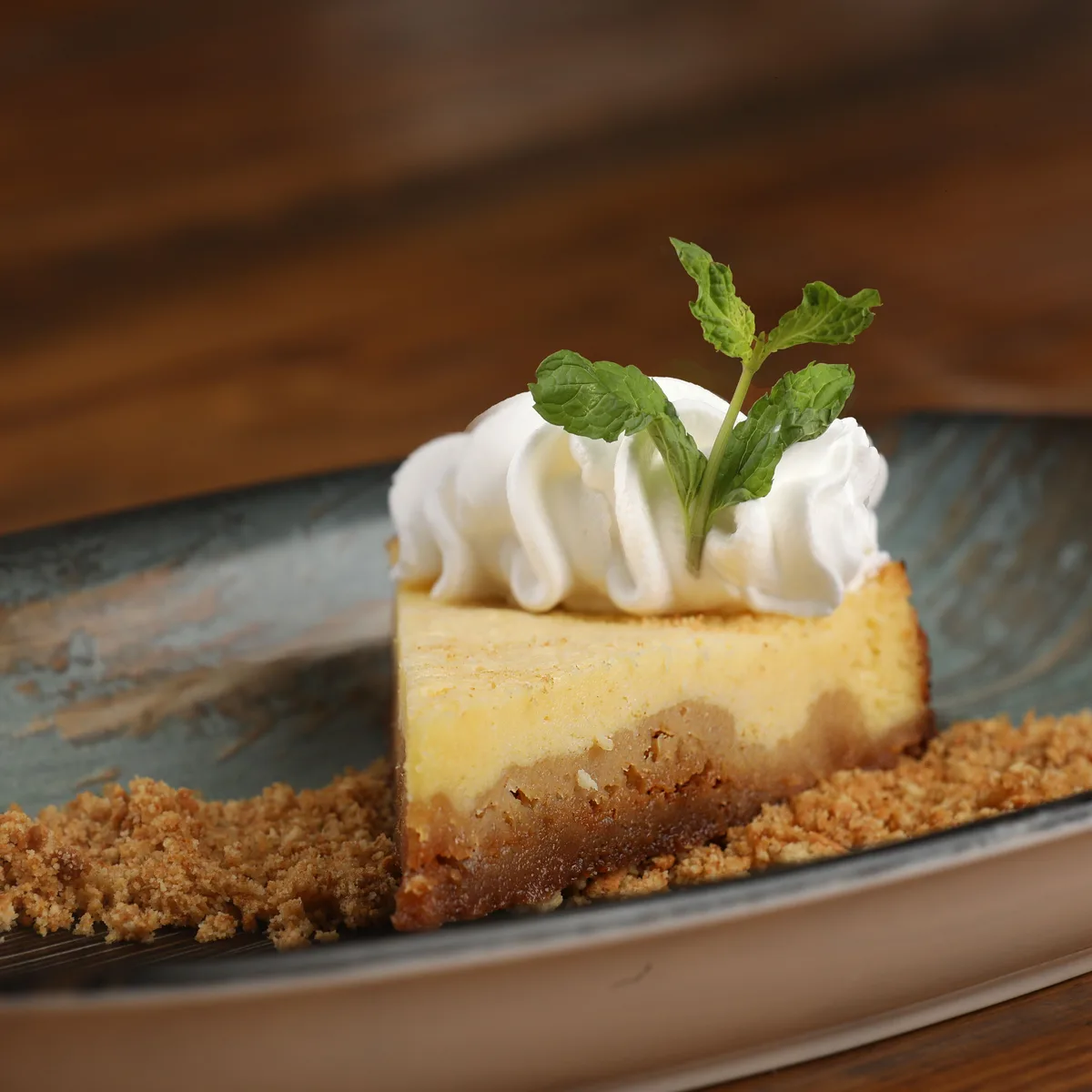
Key lime pie is a tart, creamy custard on a graham crust, and the clever part is the filling: it is set by a chemical reaction, not only by the oven. Lime juice is acidic, and when it meets sweetened condensed milk the acid thickens the milk almost instantly, which is why this is one of the easiest pies to get right. A short bake sets the eggs and the rest is chilling. This version is calculated from USDA FoodData Central so the number under each slice is real, and the sweetness is real sugar and condensed milk, never a substitute.
Ingredients
Method
- Heat the oven to 350F.
- Mix the graham cracker crumbs, melted butter and sugar until they clump, press firmly into a pie dish, and bake for 8 minutes, then leave to cool a little.
- Whisk the sweetened condensed milk and eggs together until smooth.
- Whisk in the lime juice; the mixture thickens almost at once as the acid reacts with the milk.
- Pour the filling into the crust and bake for 12 to 15 minutes, until the centre is just set with a slight wobble.
- Cool completely, then chill for at least three hours before slicing.
How the Filling Sets
The filling thickens two ways. The acid in the lime juice reacts with the proteins in sweetened condensed milk and curdles it gently into a thick, smooth custard the moment they are whisked together, which is why the mixture stiffens in the bowl before it ever reaches the oven. The eggs then firm it fully during a short bake, so it slices cleanly once chilled. Without the bake the eggs stay raw and the pie never sets past a soft, spoonable thickness.
The Graham Crust
The base is graham cracker crumbs bound with melted butter and a little sugar, pressed firm and par-baked. The butter ratio matters: enough to hold the crumbs together without going greasy. Press it firmly and evenly up the sides with the back of a spoon or a flat cup, because a loosely pressed crust crumbles when you cut the pie. A short bake sets the butter so the crust holds its shape under the wet filling.
Lime Juice, Key or Regular
Classic key lime pie uses small, aromatic Key limes, which are tarter and more floral than ordinary Persian limes but fiddly to juice. Regular lime juice makes an excellent pie and is far easier, so either works. Fresh juice has the brightest flavour, and bottled key lime juice is a fair shortcut when fresh limes are out of season. Whichever you use, it is the acid that sets the filling, so do not reduce it.
Getting a Clean Slice
Chill the pie thoroughly, at least three hours and ideally overnight, so the filling sets firm all the way through. A pie cut while still warm or barely cool will slump on the plate. Use a sharp knife wiped clean between cuts for neat edges, and top with whipped cream just before serving rather than ahead, so it stays fresh. The classic finish is a swirl of whipped cream and a little grated lime zest for colour.
Common Problems
The faults are few. A runny filling was underbaked, so the eggs never set; bake until the centre is just set with a slight wobble, then chill fully. A filling that never thickened in the bowl means too little lime juice, since the acid is what curdles the milk. A crumbly crust was pressed too loosely or was short on butter. A rubbery, cracked filling was overbaked, so pull it while the centre still wobbles slightly, as it firms on cooling.
Variations
The pie takes small changes well. A meringue baked on top is the old-fashioned finish instead of whipped cream, using the whites if you separate the eggs. Swap the graham crust for a digestive or gingersnap crumb base for a spicier note. A lemon version follows exactly the same method with lemon juice in place of lime, since both are acidic enough to set the condensed milk.
Storage
Key lime pie keeps three or four days covered in the fridge, and it is an ideal make-ahead dessert because it needs the chilling time anyway. It freezes well too: freeze it uncovered until firm, then wrap, and thaw in the fridge before serving, which gives an almost ice-cream-like texture some bakers prefer. Add the whipped cream after thawing rather than before freezing so it stays fresh.
FAQ
Why is my key lime pie runny? It was underbaked, so the eggs never set. The lime juice thickens the condensed milk in the bowl, but the eggs need a short bake to firm it. Bake until the centre is just set with a slight wobble, then chill at least three hours.
Do I need Key limes? No. Key limes are more aromatic but fiddly to juice, and ordinary lime juice makes an excellent pie. Fresh is brightest; bottled key lime juice is a fair shortcut. The acid is what sets the filling, so use the full amount.
Why did the filling thicken in the bowl before baking? That is the reaction you want. The acid in the lime juice curdles the proteins in sweetened condensed milk into a thick, smooth custard. The bake then sets the eggs so it slices cleanly.
Can I make it without baking? A no-bake version sets only to a soft, spoonable thickness and leaves the eggs raw. The short bake is what firms the filling enough to slice and makes the eggs safe, so it is worth the fifteen minutes.
How far ahead can I make it? A day ahead is ideal, since it needs at least three hours to chill and firm. Keep it covered in the fridge and add whipped cream just before serving.
Can I use a sugar substitute? This recipe does not, because sweetened condensed milk is both the sweetener and the body of the filling, and no substitute reacts with the lime juice the same way. It uses real sugar and condensed milk, counted honestly from USDA data.
Where to Go Next
For custard and crust science, see the pie recipes and dessert recipes guides, and for a chilled, set dessert without a long bake, see no-bake desserts.
Label note: most of the carbohydrate in this recipe comes from the sweetened condensed milk, calculated here from USDA’s generic entry. Brands vary, and some contain added sugar, so check the label on the one in your kitchen.
Written by Frank Thomson, Skillet & Spoon editorial. Every nutrition figure on this site is calculated ingredient by ingredient from the USDA FoodData Central database, never estimated and never rounded to look better. We do not publish net-carb figures or use non-nutritive sweeteners. How we develop and source recipes is set out in our editorial policy.