Shortbread Cookies, Buttery and Crisp
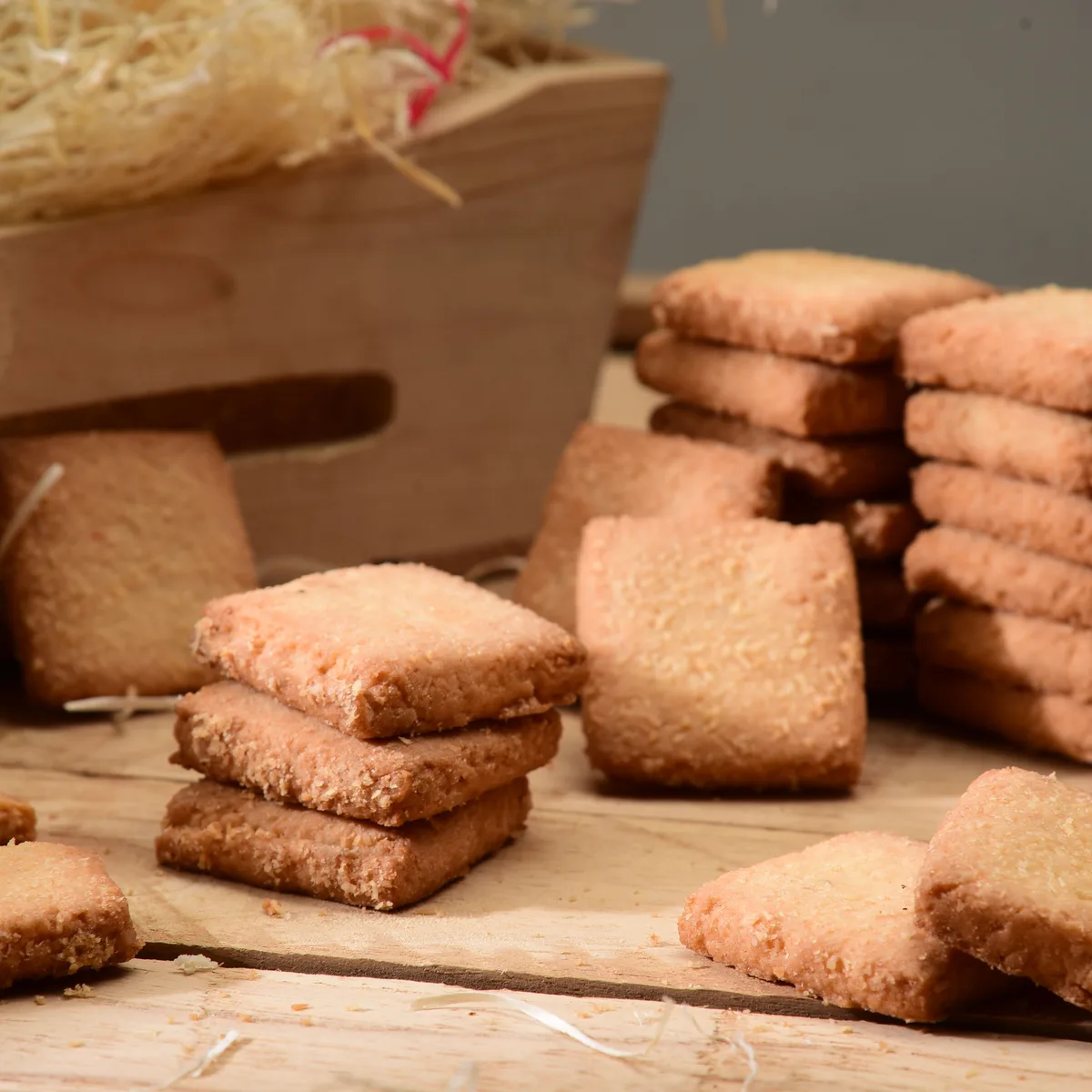
Shortbread cookies are the simplest cookie there is, just butter, sugar and flour, which means there is nowhere to hide: they live or die on the butter and the handling. The name comes from its short texture, a crisp, crumbly snap with no chew, and that short texture is the whole point. There is no egg and no raising agent, so it does not rise or spread much, it just bakes firm and crisp. This version is calculated from USDA FoodData Central so the number under each cookie is real, and the sweetness is real sugar, never a substitute.
Ingredients
Method
- Beat the softened butter and powdered sugar together until just smooth, not fluffy.
- Beat in the vanilla, then add the flour and salt and mix just until a soft dough forms.
- Press or roll the dough and cut into shapes, or press into a pan and score into fingers, then chill for 20 minutes.
- Heat the oven to 325F.
- Bake for 15 to 20 minutes, until the edges are just barely golden; shortbread should stay pale.
- Cool on the tray, where it firms up and turns crisp and snappy.
What Makes Shortbread Short
Short means crisp and crumbly rather than chewy, and it comes from a high ratio of fat to flour with no liquid to develop gluten. The butter coats the flour and keeps the strands of gluten short, so the baked cookie snaps and melts rather than bending. There is no egg to bind it into a chew and no raising agent to puff it, which is why shortbread is dense, flat and crisp. Powdered sugar rather than granulated gives the finest, most tender crumb, because it dissolves completely into the butter.
Handling the Dough
Mix the dough only until it comes together, because over-working develops gluten and bakes a tough, hard cookie instead of a tender, short one. The dough is soft and a little crumbly, which is right; press it together rather than kneading it. Chilling the shaped dough before baking firms the butter so the cookies hold their edges and do not spread into puddles, which matters for cut shapes where you want a clean line.
Baking Low and Pale
Shortbread bakes at a low temperature and should stay pale, barely golden at the edges, because its flavour is buttery and delicate rather than toasted. A hot oven browns it before the centre is done and turns the butter bitter. Bake it slow and pull it while it still looks pale; it firms and crisps as it cools on the tray, so a shortbread that feels soft out of the oven is usually right.
Shaping: Rounds, Fingers or Cut-Outs
Shortbread is versatile to shape. Roll and cut it into rounds or festive shapes, press it into a pan and score it into the traditional fingers before baking so it breaks cleanly, or roll it into a log, chill, and slice into rounds for slice-and-bake cookies. Prick the surface with a fork, which is traditional and also lets steam escape so the cookies stay flat. The dough and bake are the same whichever shape you choose.
Common Problems
The faults are few. Tough, hard cookies were over-worked, so mix just until the dough comes together. Cookies that spread and lost their shape went in warm, so chill the shaped dough first. Too brown means the oven was too hot, so bake low and keep them pale. Crumbling apart when cut means the dough was too cold or too dry; let it warm a minute, or press it together more firmly before chilling.
Variations
Plain shortbread is a base for flavour. Add lemon or orange zest, a spoon of cocoa, chopped toasted nuts, or a little chopped rosemary for a savoury-sweet version. Dip the baked cookies half in melted chocolate, or sandwich two with jam. Replacing a little of the flour with cornstarch or rice flour makes them even more tender and sandy. The butter-sugar-flour base stays the constant.
Storage
Shortbread keeps very well, a week or more in an airtight tin at room temperature, because it has no egg or moist filling to spoil, which is part of why it is a classic gift and holiday cookie. The raw dough freezes well as a log or shaped and ready to bake, straight from frozen with an extra minute or two. Baked shortbread also freezes, though it is so stable at room temperature that it rarely needs to.
FAQ
Why is my shortbread tough and hard? The dough was over-worked, which develops gluten. Mix just until it comes together and press it rather than kneading, since shortbread should be short and crumbly, not chewy.
Why did my shortbread spread and lose its shape? It went into the oven warm. Chill the shaped dough for twenty minutes so the butter is firm, which holds the edges, especially for cut shapes.
Why did it brown too much? The oven was too hot. Shortbread bakes low and should stay pale, barely golden at the edges, or the delicate buttery flavour turns bitter.
Why does powdered sugar matter? Powdered sugar dissolves completely into the butter for the finest, most tender crumb, where granulated can leave a slightly grainy, crunchier cookie. Either works, but powdered gives the classic texture.
Can I make it as a slab? Yes. Press the dough into a pan, score it into fingers before baking, and break along the lines once cool. That is the traditional shortbread finger. Prick it with a fork so it stays flat.
Can I use a sugar substitute? This recipe does not, because sugar is part of the short, crisp texture as well as the sweetness, which substitutes cannot reproduce. It uses real sugar, counted honestly from USDA data.
Where to Go Next
For every cookie texture and type, see the cookie recipes guide, and for the baking science behind every sweet, the dessert recipes guide. For another buttery cut cookie, see sugar cookies.
Written by Frank Thomson, Skillet & Spoon editorial. Every nutrition figure on this site is calculated ingredient by ingredient from the USDA FoodData Central database, never estimated and never rounded to look better. We do not publish net-carb figures or use non-nutritive sweeteners. How we develop and source recipes is set out in our editorial policy.