Buttercream Frosting, Smooth and Pipeable
Buttercream frosting is the simplest frosting there is. American buttercream is softened butter beaten with powdered sugar until light, loosened with a little milk and flavoured with vanilla. It pipes and spreads well and holds its shape at room temperature, which makes it the standard for cakes and cupcakes. The two things that go wrong are a gritty texture and a greasy, too-soft or too-stiff consistency, and both are easy to control. This version is calculated from USDA FoodData Central so the number under each serving is real, and the sweetness is real sugar, never a substitute.
Ingredients
Method
- Beat the softened butter on its own until pale, smooth and fluffy, about three minutes.
- Add the powdered sugar a cup at a time, beating on low so it does not fly out, until combined.
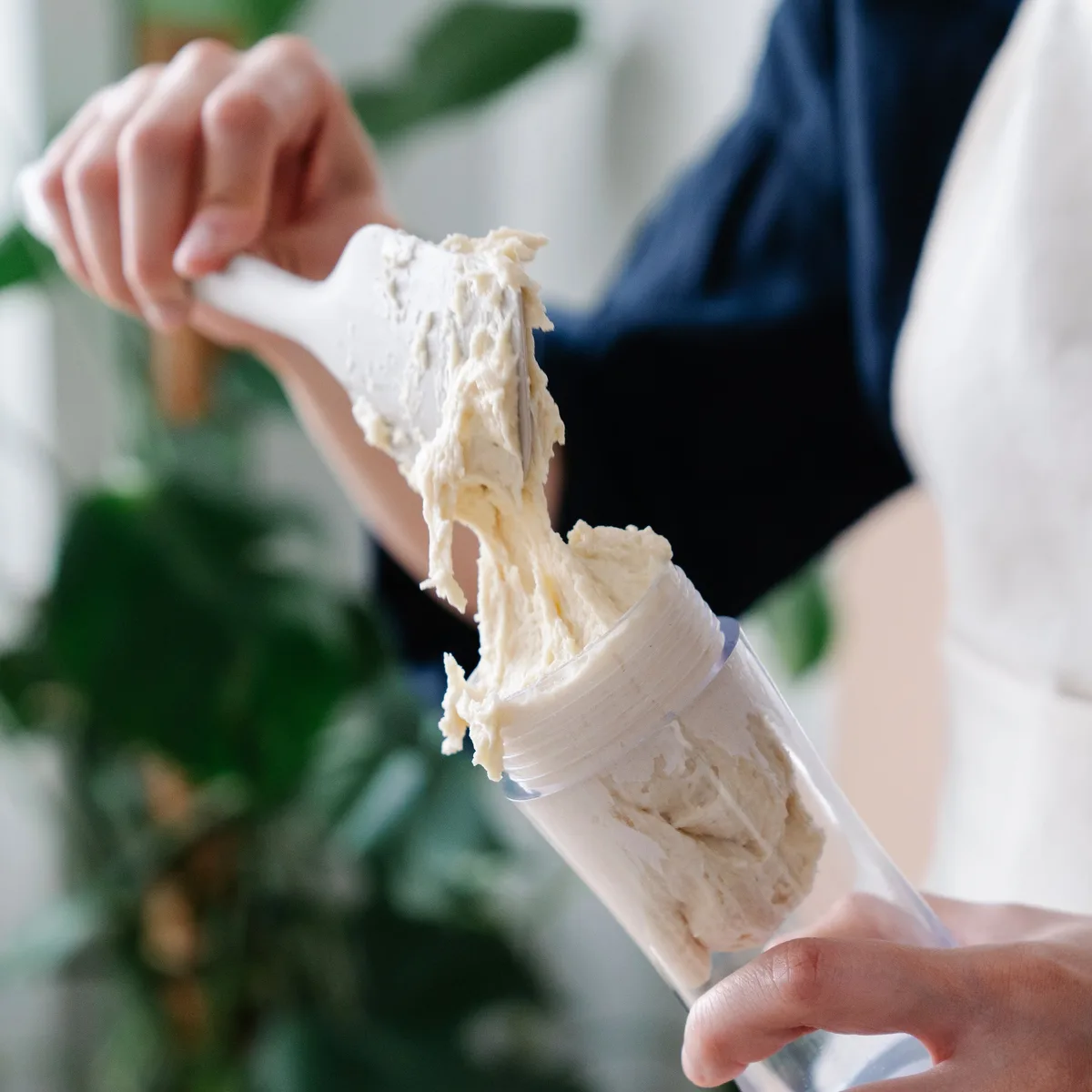
- Beat in the vanilla and salt, then add the milk a spoon at a time until the frosting is smooth and pipeable.
- Beat on medium for a minute or two until light and fluffy; add more sugar to stiffen or more milk to loosen.
- Use at once to pipe or spread, or keep covered so it does not crust.
Why Powdered Sugar, Not Granulated
Buttercream uses powdered sugar because it dissolves completely into the butter for a smooth frosting. Granulated sugar does not dissolve in fat, so it leaves the frosting gritty and crunchy. Powdered sugar also contains a little cornstarch, which helps the frosting hold its shape. If your powdered sugar is lumpy, sift it first, because lumps beat into the frosting as specks that will not smooth out.
Beating the Butter First
Beat the softened butter on its own before adding anything, until it is pale, smooth and fluffy, about three minutes. This whips air into it and breaks down any firmness, so the finished frosting is light rather than dense and the sugar blends in smoothly. The butter must be properly softened, cool room temperature, not melted: too cold and it stays lumpy, too warm and the frosting turns greasy and will not hold its shape.
Getting the Consistency Right
Consistency is controlled by the milk and sugar. Add the powdered sugar first, then loosen with milk a spoon at a time until the frosting is smooth and holds a soft peak for piping. For a stiffer frosting, to pipe tall swirls or flowers, add more sugar; for a looser one, to spread smoothly, add a little more milk. Beat it well at the end to make it light and fluffy, which also makes it easier to spread without tearing the cake.
Avoiding a Greasy or Gritty Result
The two faults are opposite. Gritty means undissolved sugar, so use powdered sugar and sift out lumps. Greasy means the butter was too warm or over-beaten once warm, so start with cool, softened butter and do not over-work it in a warm kitchen. If the frosting splits or looks greasy, chilling it briefly and beating again usually brings it back. A pinch of salt cuts the sweetness, which otherwise can be cloying.
Frosting Only Cooled Cakes
Buttercream must go onto fully cooled cakes and cupcakes. Any warmth melts the butter and the frosting slides off or soaks in. For a neat finish, apply a thin crumb coat first, chill it to set, then add the final layer, which traps loose crumbs underneath. Keep the frosting covered while you work so a crust does not form on the surface, and give it a quick beat if it stiffens.
Common Problems
The faults are quick to place. Gritty frosting was made with granulated or lumpy sugar, so use sifted powdered sugar. Greasy or runny means the butter was too warm or it was over-beaten, so start with cool, softened butter. Too stiff to spread needs a little more milk; too soft to pipe needs more sugar or a brief chill. Frosting sliding off means the cake was still warm, so cool it fully first.
Variations
American buttercream is a base for flavour. Beat in cocoa for chocolate buttercream, a little lemon or orange zest and juice for citrus, or replace some butter with cream cheese for a tangier frosting. Fold in a spoon of jam or a splash of coffee. Tint it with gel colour for decorating. The butter-and-powdered-sugar base and the method stay the same.
Storage
Buttercream keeps well: covered at room temperature for a day, in the fridge for a week, or frozen for months. Bring refrigerated or frozen buttercream back to room temperature and beat it again until smooth before using, since it stiffens when cold. A cake already frosted with buttercream holds at room temperature for a day or two, covered, which is part of why buttercream is the practical choice for cakes made ahead.
FAQ
Why is my buttercream gritty? You used granulated sugar, or the powdered sugar was lumpy. Powdered sugar dissolves into the butter for a smooth frosting; granulated does not. Sift the powdered sugar if it is lumpy.
Why is my buttercream greasy or runny? The butter was too warm or over-beaten. Start with cool, softened butter, not melted, and do not over-work it in a warm kitchen. Chilling it briefly and beating again usually fixes a split frosting.
How do I make it stiffer or softer? More powdered sugar stiffens it for piping tall swirls; more milk loosens it for smooth spreading. Add either a little at a time until it holds a soft peak.
Why did my frosting slide off the cake? The cake was still warm, which melts the butter. Frost only fully cooled cakes, and use a thin crumb coat chilled to set before the final layer for a neat finish.
How much does this frost? This batch frosts about a dozen cupcakes generously or a two-layer cake with a thinner coat. Double it for tall piped swirls or a thickly frosted layer cake.
Can I use a sugar substitute? This recipe does not, because powdered sugar gives buttercream its structure and smooth body as well as sweetness, which substitutes cannot reproduce. It uses real sugar, counted honestly from USDA data.
Where to Go Next
For every frosting type and how to match one to a cake, see the frosting recipes guide, and for the bakes to put it on, the cake recipes and cupcake recipes guides.
Written by Frank Thomson, Skillet & Spoon editorial. Every nutrition figure on this site is calculated ingredient by ingredient from the USDA FoodData Central database, never estimated and never rounded to look better. We do not publish net-carb figures or use non-nutritive sweeteners. How we develop and source recipes is set out in our editorial policy.