Cupcake Recipes: Even Domes and a Tender Crumb
Cupcake recipes are small cakes, and they succeed or fail on the same things a cake does, plus a couple of rules that only matter at cupcake size: filling the liners evenly and getting a gentle, even dome instead of a sharp peak or a sunken top. A cupcake is a cake you can hold, so the crumb still wants to be light and tender, which means creaming for air and mixing the flour in gently. This page groups the cupcakes on this site by type and explains how to get a batch that rises evenly, releases cleanly and holds a swirl of frosting. Every number here is from USDA FoodData Central, and the sweetness is real sugar, counted honestly, never a substitute.
The Tender Crumb
A cupcake’s crumb comes from the same creaming method as a butter cake: beat softened butter with sugar to trap air, add eggs one at a time, then fold in the flour just until it disappears. Over-mixing once the flour is wet builds gluten, and in a cupcake that shows up as a tough, peaked top with a tight crumb. Room-temperature ingredients emulsify into a smooth batter that holds its air, so cold eggs or butter can cost you the rise.
Filling the Liners Evenly
Cupcakes bake unevenly when the cups hold different amounts, so a batch where some overflow and others stay flat is usually a filling problem. Fill each liner about two-thirds full, which leaves room to rise into a dome without spilling over the edge into a flat, spread top. An ice-cream scoop or a measured spoon makes every cup the same, which means they all bake in the same time.
Getting an Even Dome
A gentle dome, not a sharp peak and not a sinkhole, is the goal. A peak usually means the oven was too hot and set the outside before the middle rose evenly, or the batter was over-mixed. A sunken top means underbaking, too much leavening that rose then fell, or the oven door opened too early. A moderate oven and an accurate temperature, checked with a thermometer, give the steady rise that domes gently.
Releasing and Cooling
Let cupcakes cool in the tin a few minutes so they firm enough to lift without tearing, then move them to a rack, because leaving them in the hot tin steams the bottoms soft. Frost only once they are completely cold, since any warmth melts the frosting and makes it slide off the dome.
Flavours: Vanilla, Chocolate and Beyond
The two base cupcakes are vanilla and chocolate, and most others build on one of them. A vanilla cupcake is the plain butter-cake method where creaming matters most; a chocolate cupcake adds cocoa, which is acidic and often pairs with baking soda for lift and a deep colour. Red velvet is a lightly cocoa cake with a tangy buttermilk crumb, carrot and banana cupcakes use the moist oil-based method, and lemon or other flavours ride on the vanilla base with zest and juice. The cake methods behind all of these are in the cake recipes guide.
Filling and Frosting
A cupcake holds more than a swirl on top. Core out the centre with a small knife and pipe in a filling of jam, curd, ganache or more frosting for a surprise middle. For the frosting itself, buttercream pipes into tall swirls, cream cheese frosting is softer and must stay cool, and whipped cream is lightest but needs serving soon. The full range is in the frosting recipes guide.
Storing Cupcakes
Unfrosted cupcakes keep a couple of days airtight at room temperature and freeze well, so a batch can be baked ahead and frosted on the day. Frosted cupcakes depend on the frosting: buttercream holds at room temperature, while cream cheese and whipped cream frostings need the fridge. Bring refrigerated cupcakes back to room temperature before serving so the crumb softens and the flavour returns.
Mini and Jumbo Cupcakes
The same batter makes any size, and only the time changes. Mini cupcakes bake fastest, often in little more than ten minutes, so they need watching closely because they dry out quickly at that size. Jumbo cupcakes need longer and a slightly lower temperature so the large centre cooks through before the big dome over-browns. Fill every size to about two-thirds so they all dome rather than spill, and use the skewer test for doneness whatever the size.
Decorating Ideas
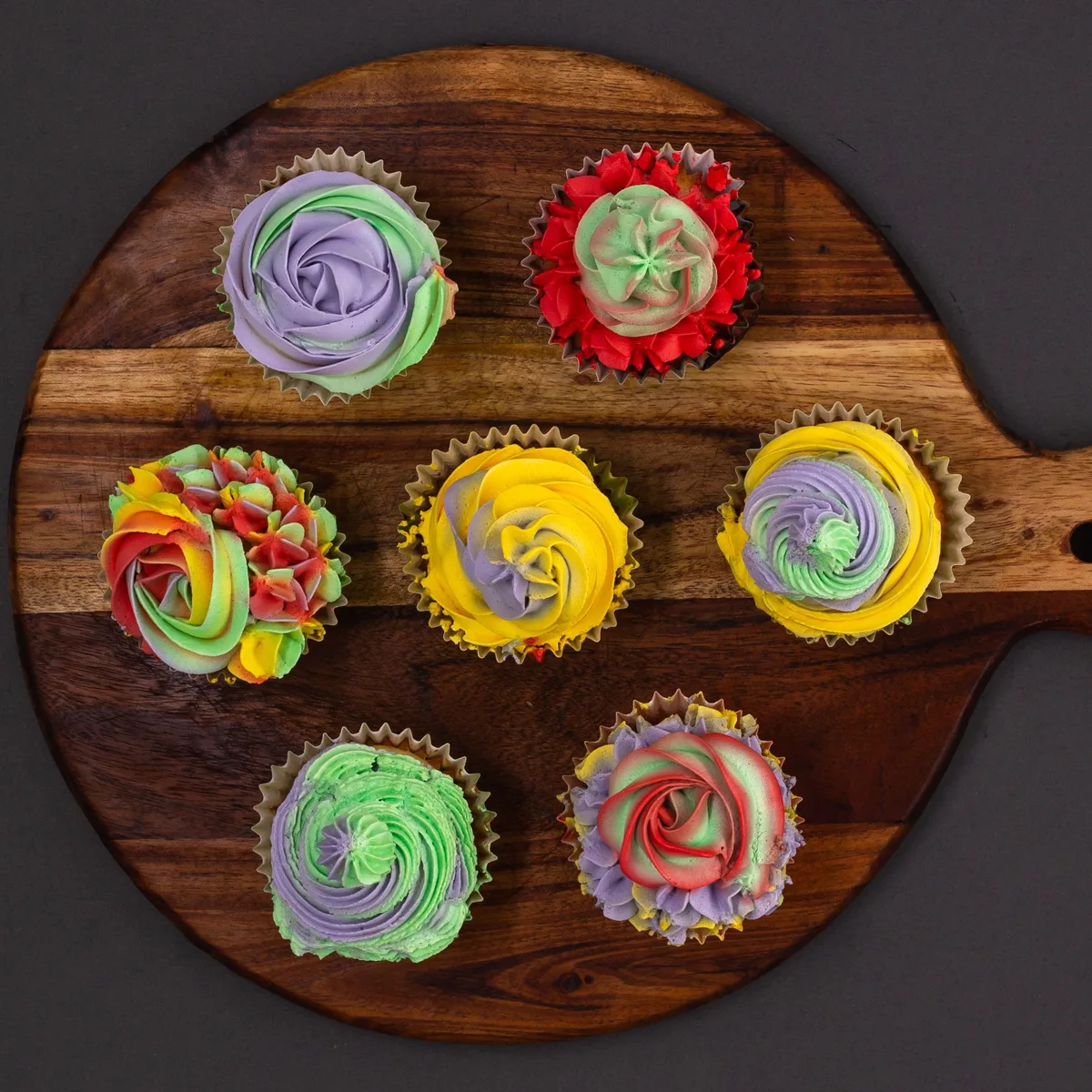
A cupcake is a small canvas. A piped swirl of buttercream is the classic, built tall with a star tip, while a flat spread and a dip into sprinkles is faster for a crowd. Fillings add a surprise: core the centre and pipe in jam, curd, ganache or caramel. Toppings from a shard of chocolate to a single berry finish them, and a light dusting of cocoa or powdered sugar is the simplest finish of all. The frostings themselves are in the frosting recipes guide.
Common Cupcake Problems
The usual faults are quick to diagnose. Cupcakes that overflow had the liners filled too full, so drop to two-thirds. Liners that peel away from the cake mean the cupcakes were wrapped or stored while still warm and steamed, so cool them fully first. A greasy liner points to too much fat in the batter or an over-greased tin. And cupcakes that stick to the liner are often simply too fresh, because a cupcake releases from its paper more cleanly once fully cooled, and a good-quality greaseproof liner helps.
A Note on Sugar
Sugar in a cupcake is structure as well as sweetness: creamed with butter it is half the aeration, and it holds moisture for a tender crumb. This site uses real sugar, counted honestly from USDA data, and never non-nutritive sweeteners, which cannot do that work. For carb-counted sweets, see the diabetic dessert recipes collection.
Cupcakes Versus Muffins
Cupcakes and muffins look alike and bake in the same tin, but they are different things made by different methods. A cupcake is a small cake: made by creaming butter and sugar for a light, fine, tender crumb, and almost always frosted. A muffin is a quick bread: made by the muffin method of folding wet into dry with minimal mixing, denser and less sweet, and usually left plain or with a streusel rather than frosted. If a cupcake comes out heavy and bread-like, the batter was probably treated like a muffin and under-creamed or over-mixed. The two are not interchangeable despite the shared pan, and the muffin recipes guide covers the other method.
FAQ
Why do my cupcakes peak instead of doming? Usually the oven ran too hot and set the outside before the inside rose evenly, or the batter was over-mixed and built gluten. Lower the temperature and fold the flour in just until combined.
Why did my cupcakes sink in the middle? Underbaking, too much raising agent that rose then collapsed, or opening the oven door too early. Measure the leavening, bake until a skewer comes out with moist crumbs, and leave the door shut until near the end.
How full should I fill cupcake liners? About two-thirds full, which leaves room to dome without overflowing into a flat top. Use a scoop so every cup holds the same and bakes evenly.
Can I bake cupcakes ahead? Yes. Unfrosted cupcakes keep a couple of days airtight and freeze well, so bake ahead and frost on the day. Frosted ones keep depending on the frosting, with cream cheese and whipped cream needing the fridge.
Why are my cupcakes dry? Over-baked or over-mixed, or heavy on flour. Check them a little early with a skewer, mix the batter gently, and measure the flour by weight for accuracy.
Can I use a sugar substitute in cupcakes? This site does not, because sugar provides structure and moisture, not just sweetness, and substitutes do not. We use real sugar and count it honestly.
Where to Go Next
Start with the cake recipes guide for the crumb science cupcakes share with cakes, and the frosting recipes guide for the topping. For the baking behind every bake, see dessert recipes.
Written by Frank Thomson, Skillet & Spoon editorial. Every nutrition figure on this site is calculated ingredient by ingredient from the USDA FoodData Central database, never estimated and never rounded to look better. We do not publish net-carb figures or use non-nutritive sweeteners. How we develop and source recipes is set out in our editorial policy.