Banana Bread, Moist and Easy
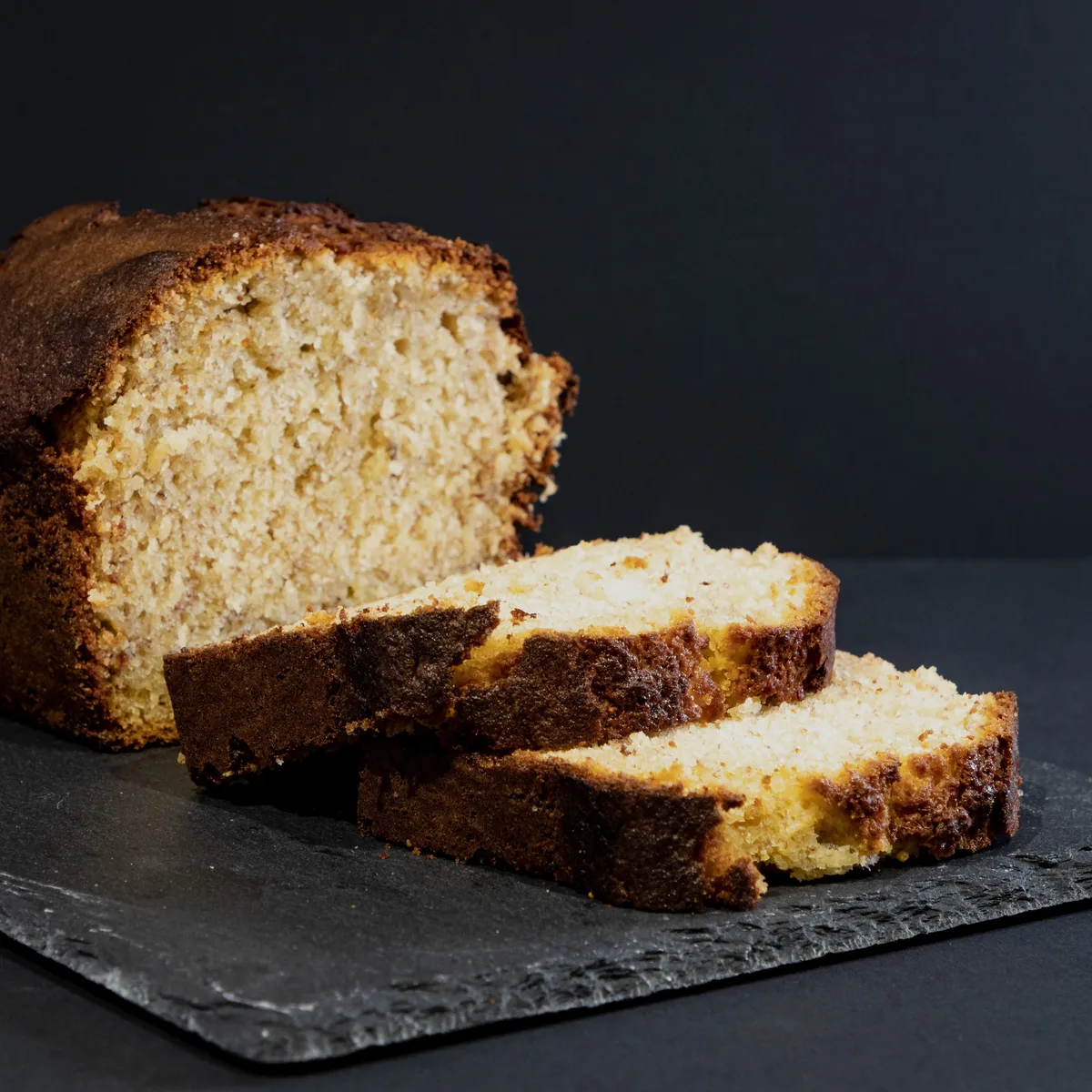
Banana bread is the friendliest bake there is: one bowl, no mixer, and the riper the bananas the better. The one thing that decides whether it comes out moist and tender or dense and gummy is how the batter is mixed, because banana bread is a quick bread and over-stirring it builds the gluten that turns it tough. This version leans on very ripe bananas for natural sweetness and moisture, and it is calculated from USDA FoodData Central so the number under each slice is real. The sweetness is real sugar and the bananas’ own, never a substitute.
Ingredients
Method
- Heat the oven to 350F and line a loaf tin with parchment.
- Mash the very ripe bananas in a large bowl until mostly smooth.
- Stir in the melted butter, brown sugar, eggs and vanilla until combined.
- Add the flour, baking soda and salt, and stir just until no dry flour remains, stopping there so the loaf stays tender.
- Pour into the tin and bake for about 55 to 65 minutes, until a skewer in the centre comes out with a few moist crumbs.
- Cool in the tin for ten minutes, then lift out onto a rack to cool.
Why Very Ripe Bananas Matter
The bananas are the whole point, and they should be spotty, soft and almost black. As a banana ripens its starches turn to sugar, so a very ripe banana is far sweeter and softer than a yellow one, which is why ripe bananas make a sweeter, moister loaf and let the recipe lean on less added sugar. Firm, barely-yellow bananas are starchy and bland and make a flatter, less sweet bread. If your bananas are not ripe enough, a short spell in a warm oven softens and sweetens them in a pinch. The number matters too: too few and the loaf is bland and dry, too many and it turns dense and wet, so three medium ripe bananas is the reliable amount for a standard loaf.
Mix It Like a Quick Bread
Banana bread uses the quick-bread method: combine the wet ingredients, add the dry, and stir only until the flour disappears. The batter should look a little lumpy, and that is correct. Over-mixing develops gluten, and in a loaf that shows up as a dense, rubbery crumb with long tunnels and a cracked, peaked top. A few folds by hand with a spatula is all it takes, and a mixer is more likely to overwork it than help.
Ingredient Notes
Butter, melted, for a rich loaf; a neutral oil works too and makes it even moister, since oil stays liquid at room temperature. Brown sugar over white, because its moisture and faint molasses flavour suit banana and keep the loaf soft. Flour, spooned and levelled rather than scooped, because a packed cup bakes the loaf dry. A teaspoon of cinnamon or a handful of chopped walnuts or chocolate chips all fold in at the end without changing the method.
Common Problems
Gummy or dense in the middle: usually under-baked, so test with a skewer and give it longer if it comes out wet, tenting the top with foil if it is browning too fast. Tough with a peaked, cracked top: the batter was over-mixed, so fold more gently next time. Sank in the centre: too much banana or raising agent, or the oven door opened early.
Add-Ins and Variations
Banana bread is a generous base for additions, all folded in at the end so the batter is not over-worked. A handful of chopped walnuts or pecans adds crunch, and a cup of chocolate chips turns it into chocolate chip banana bread, a reliable favourite. A teaspoon of cinnamon, or a mix of cinnamon and nutmeg, warms the flavour. The same batter bakes as muffins in a lined tin, which cook faster, in around 20 minutes, so check them early with a skewer. For a richer loaf, a swirl of cinnamon sugar through the middle or a streusel scattered on top before baking both work, since the loose batter holds them well.
Storage
Banana bread keeps well because the bananas hold moisture: wrap it and keep it at room temperature for a few days, or in the fridge for a week. It freezes beautifully, whole or in slices wrapped against air, so a double batch now is breakfast later. It is often better on the second day, once the crumb settles and the flavour deepens. Sliced and toasted with a little butter, day-old banana bread becomes a quick treat of its own.
FAQ
Why is my banana bread gummy in the middle? It was under-baked. Test the centre with a skewer, which should come out with a few moist crumbs, not wet batter, and give it longer if needed, covering the top with foil if it is browning too quickly.
How ripe should the bananas be? Very ripe, spotty and soft, almost black. Ripe bananas are sweeter and moister because their starch has turned to sugar, which makes a better loaf than firm, yellow ones.
Why is my banana bread dense and tough? The batter was over-mixed, which builds gluten. Stir just until the flour disappears and the batter looks a little lumpy, and fold by hand rather than using a mixer.
Can I use oil instead of butter? Yes. A neutral oil makes an even moister loaf because it stays liquid at room temperature, while butter adds more flavour. They swap one for one.
Can I freeze banana bread? Yes, very well. Wrap it whole or in slices against air and freeze, then thaw at room temperature. The texture holds up because of the moisture the bananas carry.
Can I use a sugar substitute? This recipe does not. It leans on the bananas’ own sweetness plus real sugar, counted honestly from USDA data, because substitutes change the texture and misreport the carbohydrate.
Where to Go Next
For related quick breads and crumb cakes see the muffin recipes and coffee cake recipes guides, and for the baking behind every bake, the dessert recipes guide.
Written by Frank Thomson, Skillet & Spoon editorial. Every nutrition figure on this site is calculated ingredient by ingredient from the USDA FoodData Central database, never estimated and never rounded to look better. We do not publish net-carb figures or use non-nutritive sweeteners. How we develop and source recipes is set out in our editorial policy.