Chocolate Cake, Moist and Simple
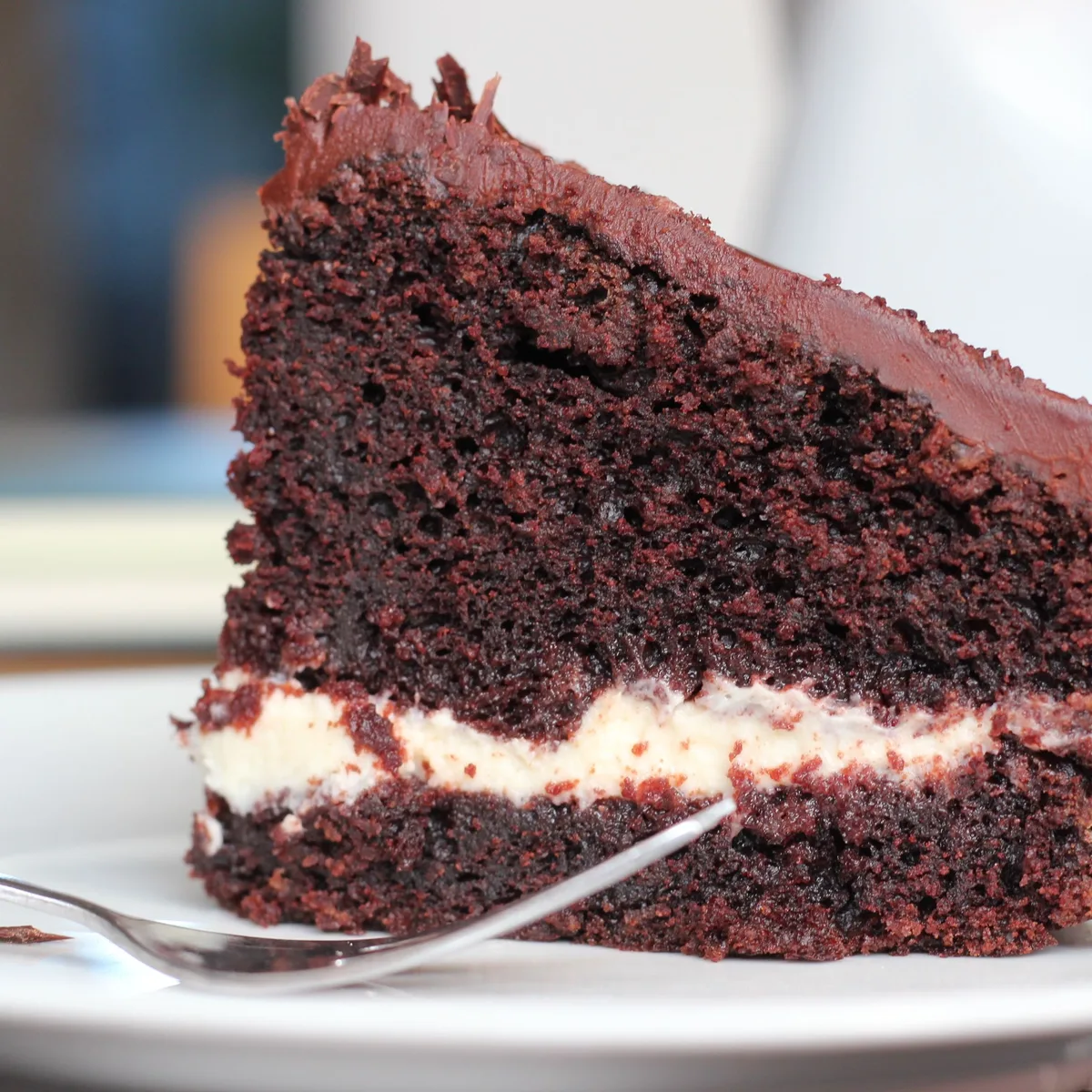
Chocolate cake from scratch is easier than a box mix once you see how it works, and the version people love most is the moist, tender one with a deep cocoa flavour. Two tricks get it there: blooming the cocoa in hot liquid, and a deliberately thin batter. This recipe is mixed in one bowl, needs no creaming, and is calculated from USDA FoodData Central so the number under each slice is real. The sweetness is real sugar, never a substitute, because sugar carries the structure and moisture of the crumb as well as balancing the bitterness of the cocoa.
Ingredients
Method
- Heat the oven to 350F and grease and line two 8-inch round tins or a 9-by-13 inch tin.
- Whisk the flour, sugar, cocoa, baking soda, baking powder and salt together in a large bowl.
- Add the eggs, milk, melted butter and vanilla, and beat until smooth.
- Stir in the hot water last, which blooms the cocoa for a deeper flavour and makes a thin batter that bakes into a moist crumb; the batter will look very loose, and that is correct.
- Divide between the tins and bake for about 30 to 35 minutes, until a skewer in the centre comes out with a few moist crumbs.
- Cool in the tins for ten minutes, then turn out onto a rack to cool completely before frosting.
Why Bloom the Cocoa in Hot Water
The deepest chocolate flavour comes from blooming the cocoa, which means wetting it with hot liquid. Heat dissolves the cocoa and releases more of its flavour compounds, so a cake made with bloomed cocoa tastes richer and more chocolatey than one where the cocoa went in dry. The hot water added at the end does exactly this, and it also thins the batter, which is the second trick. It is worth using a good unsweetened cocoa here, since the cocoa does most of the flavour work, and either natural or Dutch-process cocoa works in this recipe.
Why the Batter Is So Thin
This batter pours like a thick drink, far looser than a creamed cake batter, and that is deliberate. A thin, high-moisture batter bakes into a especially moist, tender crumb, which is what sets this style of chocolate cake apart. Do not be tempted to add flour to thicken it; trust the loose batter and it bakes up right.
Mixing for a Tender Crumb
This is an oil-and-liquid style cake rather than a creamed one, so there is no beating in air for ages. Whisk the dry ingredients, add the wet, and beat just until smooth, then stir in the hot water. The usual cake caution still holds: do not keep beating past smooth, because over-mixing builds gluten and toughens even this forgiving crumb.
Ingredient Notes
Cocoa: unsweetened cocoa powder, the more the better for flavour, which is why there is a generous three-quarter cup. Butter, melted, or a neutral oil, which makes it even moister. Baking soda and a little powder give the rise, and the soda also reacts with the acidic cocoa for colour and lift. Buttermilk can stand in for the milk for extra tang and tenderness.
Frosting and Serving
Cool the layers completely before frosting, because any warmth melts frosting and makes it slide. This cake pairs with almost anything from the frosting recipes guide: a classic chocolate buttercream, a tangy cream cheese frosting, or a glossy ganache poured over the top. Level the domed tops first for a flat stack, and a thin crumb coat chilled before the final coat gives the cleanest finish.
Sheet Cake, Layers or Cupcakes
The same batter bakes in whatever shape you need, and only the time changes. Poured into a 9-by-13 inch tin it makes an easy sheet cake, frosted right in the pan, which bakes a little longer than thin layers. Divided between two or three round tins it makes a layer cake, with each thinner layer baking faster, so start checking early. Spooned into a lined muffin tin it makes about two dozen cupcakes in around 18 to 20 minutes. Whatever the shape, the doneness test is the same: a skewer in the centre with a few moist crumbs, pulled before it comes out clean, because chocolate cake dries quickly past done.
Storage
The cake keeps moist for days thanks to its high moisture: store it covered at room temperature, or in the fridge if it is frosted with cream cheese or whipped cream. Unfrosted layers freeze well wrapped against air, so the cake can be baked ahead and frosted on the day. A frosted slice also freezes well, wrapped firmly, for a single-serving dessert on demand.
FAQ
Why is my chocolate cake dry? Chocolate cake dries out quickly past done, and too much flour makes it worse. Pull it when a skewer shows moist crumbs, measure the flour by spooning and levelling, and keep the batter thin rather than adding flour.
Why is the batter so thin and runny? That is correct for this style. A thin, high-moisture batter bakes into a moist, tender crumb, and the hot water that loosens it also blooms the cocoa for deeper flavour. Do not add flour to thicken it.
What does blooming the cocoa do? Wetting cocoa with hot liquid dissolves it and releases more of its flavour, so the cake tastes richer and more chocolatey. The hot water stirred in at the end does this.
Can I use oil instead of butter? Yes. A neutral oil makes an even moister cake because it stays liquid at room temperature, while butter adds flavour. They swap one for one.
When can I frost the cake? Only once it is completely cool. Any warmth in the cake melts the frosting and makes it slide off, so cool the layers fully, on a rack, before frosting.
Can I use a sugar substitute? This recipe does not, because sugar provides structure and moisture and balances the cocoa’s bitterness, which substitutes cannot do. It uses real sugar, counted honestly from USDA data.
Where to Go Next
For every cake method see the cake recipes guide, for the topping the frosting recipes guide, and for more chocolate sweets the chocolate desserts guide.
Written by Frank Thomson, Skillet & Spoon editorial. Every nutrition figure on this site is calculated ingredient by ingredient from the USDA FoodData Central database, never estimated and never rounded to look better. We do not publish net-carb figures or use non-nutritive sweeteners. How we develop and source recipes is set out in our editorial policy.