Pound Cake, Rich and Buttery
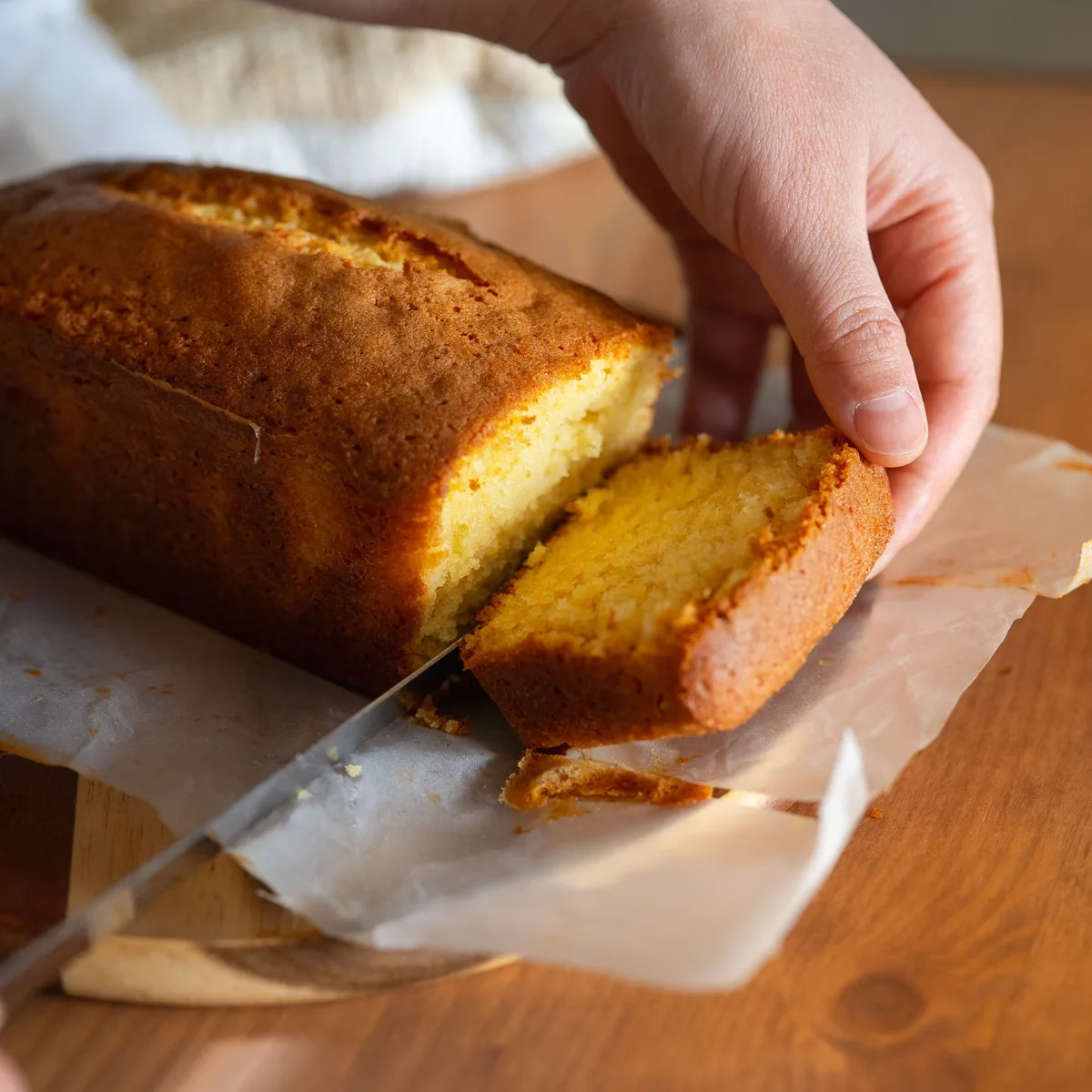
Pound cake takes its name from the old formula of a pound each of butter, sugar, eggs and flour, and it is the plainest, most buttery cake there is: dense, fine-crumbed and rich, with nothing to hide behind. That simplicity is also why technique matters, because with so few ingredients there is nowhere for a heavy, dry or split cake to hide. Get the creaming and the temperatures right and it is a reliable, keeping cake. This version is calculated from USDA FoodData Central so the number under each slice is real, and the sweetness is real sugar, never a substitute, which also carries the structure and moisture of the crumb.
Ingredients
Method
- Heat the oven to 325F and grease and line a loaf tin.
- Cream the softened butter and sugar together for a full three to four minutes, until pale and fluffy, which beats in the air that lifts the cake.
- Beat in the room-temperature eggs one at a time, mixing well after each so the batter does not break.
- Beat in the vanilla.
- Whisk the flour, baking powder and salt together, then fold into the batter in two additions, just until no flour remains.
- Spread into the tin and bake for about 60 to 70 minutes, until golden and a skewer in the centre comes out with a few moist crumbs.
- Cool in the tin for fifteen minutes, then turn out onto a rack to cool completely.
Why Creaming Matters Most Here
A pound cake has no chemical leavening to speak of, so most of its lift comes from the air beaten into the butter and sugar. That is why the creaming step is not optional: beat the softened butter and sugar for a full three to four minutes until pale and fluffy, because the sharp sugar crystals cut pockets into the fat that trap air and expand in the oven. Rush it and the cake bakes dense and heavy. This single step decides a pound cake more than anything else.
Room Temperature Throughout
With so much butter and egg, temperature is critical. Room-temperature eggs and butter emulsify into a smooth, stable batter that holds its air, while cold eggs added to creamed butter can make the batter curdle and split, which costs you the rise and gives a coarse crumb. Take the butter and eggs out an hour ahead, and add the eggs one at a time so each is fully incorporated before the next.
Do Not Over-Mix the Flour
Once the flour goes in, the goal shifts from beating to folding. Over-mixing at this stage builds gluten and turns a tender pound cake tough and rubbery, so fold the flour in just until it disappears. A pound cake is meant to be dense and fine, not fluffy, but dense is not the same as tough, and the difference is in how gently the flour is handled.
Flavours and Finishes
Plain pound cake is a canvas. Lemon pound cake adds zest and a lemon glaze; a sour cream pound cake swaps in sour cream for extra moisture and a tender, fine crumb; vanilla bean, almond extract or a marble of cocoa all work. A simple glaze or a dusting of powdered sugar finishes it, and it is classic with berries and cream. The cake itself does not change, only the flavouring.
Loaf, Bundt or Pan
This batter bakes in a loaf tin for the classic shape, in a bundt pan for a decorative one, or in a round tin. A bundt wants every crevice greased and floured so the detailed shape releases cleanly, and a larger bundt bakes a little longer than a loaf, so judge by the skewer rather than the clock. Whatever the shape, fill the tin no more than two-thirds so the dense batter has room to rise without overflowing. A pound cake is also the base for other classics: cut into fingers it becomes the sponge for a trifle, griddled or toasted it takes ice cream and fruit, and split and layered it is the base for a quick strawberry shortcake. Its sturdy, close crumb is exactly what lets it hold up to soaking and toasting where a light sponge would fall apart.
Storage
Pound cake keeps better than most cakes because of its density and high butter content: wrap it and keep it at room temperature for several days, or in the fridge for a week. It freezes very well, whole or in slices, and many people find it is better the day after baking, once the crumb settles. A slice is excellent toasted with a little butter. Wrapped well, it is a good cake to post or carry, since its dense crumb does not crumble the way a light sponge would.
FAQ
Why is my pound cake dense and heavy? The butter and sugar were not creamed long enough to trap air, or the ingredients were cold. Cream for a full three to four minutes until pale and fluffy, and use room-temperature butter and eggs.
Why did my pound cake batter curdle? Cold eggs were added to the creamed butter, or they went in too fast. Use room-temperature eggs and add them one at a time, beating well after each so the batter stays smooth.
Why is my pound cake tough? The flour was over-mixed, which built gluten. Fold the flour in just until it disappears, rather than beating it in.
Why did my pound cake crack on top? A crack down the centre is normal for a loaf-shaped pound cake and not a fault: the outside sets while the inside is still rising, so it splits as it pushes up. It does not affect the texture.
How do I keep pound cake moist? Do not overbake it, so pull it when a skewer shows moist crumbs, and store it well wrapped. A sour cream version stays especially moist.
Can I use a sugar substitute? This recipe does not, because sugar provides structure, moisture and part of the aeration, which substitutes cannot do. It uses real sugar, counted honestly from USDA data.
Where to Go Next
For every cake method see the cake recipes guide, for the topping the frosting recipes guide, and for the baking behind every cake, the dessert recipes guide.
Written by Frank Thomson, Skillet & Spoon editorial. Every nutrition figure on this site is calculated ingredient by ingredient from the USDA FoodData Central database, never estimated and never rounded to look better. We do not publish net-carb figures or use non-nutritive sweeteners. How we develop and source recipes is set out in our editorial policy.