Why Is My Mexican Rice Mushy? (And How to Fix It)
Why is my Mexican rice mushy? In almost every case the pot held too much liquid, and the reason cooks miss it is that the tomato sauce counts as liquid. Add a normal water ratio on top of the tomato and the grains drown. Fix the total liquid, stop stirring, and toast the rice first, and the mush problem disappears.
The good news is that mushy Mexican rice comes from a handful of fixable causes, not bad luck. Below is the exact ratio, the starch reason stirring ruins the pot, and how to rescue a batch that already went soft.
The Number One Cause: Too Much Liquid (Yes, Tomato Sauce Counts)
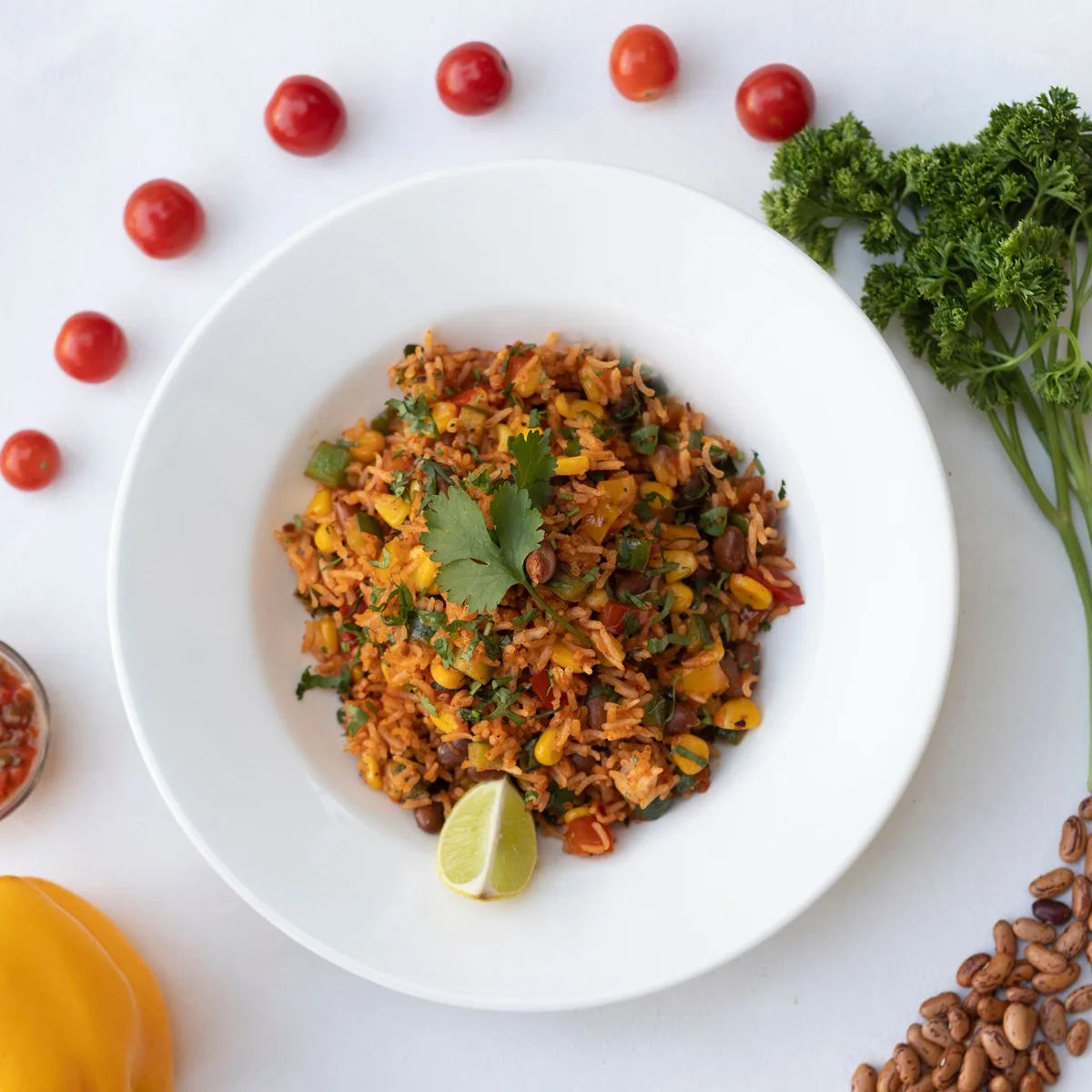
Mexican rice, or arroz rojo, cooks in a tinted broth of tomato plus stock, and canned tomato sauce is roughly ninety percent water. That means every half cup of sauce behaves like a half cup of cooking liquid, so a recipe that pours in the usual water ratio and then adds tomato on top is running a surplus from the start. The grains absorb what they can, and the rest turns the surface starch into paste.
This is why the same measuring habit that gives you clean white rice gives you a mushy pot here. The tomato is not a seasoning you add for free, it is part of the liquid budget. Count it, subtract it from the water, and the ratio comes back into range.
The Right Mexican Rice Water Ratio
For long-grain white rice, total liquid of about 1.25 to 1.5 cups per cup of dry rice is the working window, and the tomato sauce lives inside that number, not beside it. If a cup of rice needs 1.5 cups of liquid and you are using half a cup of tomato sauce, you add one cup of stock, not one and a half. The Mexican rice water ratio problem is almost always an accounting error, not a technique failure.
Here is the fast diagnosis when a pot goes wrong, matched to its cause and fix.
| Result | Most likely cause | The fix next time | |—|—|—| | Mushy and soft throughout | Too much total liquid; tomato not counted | Cut liquid, subtract the tomato sauce from the water | | Crunchy or hard center | Too little liquid, or heat too high, or a loose lid | Add liquid, drop to low, seal the lid | | Mushy on top, raw underneath | Uneven heat or lid opened early | Keep covered, use a heavy pot, low and slow | | Sticky and gummy, clumps | Stirred during cooking, or short-grain rice | Do not stir; switch to long-grain |
Save this table for the next batch, because most mushy Mexican rice falls into the first row and clears up with one adjustment.
Fresh Tomatoes vs Canned Sauce
The liquid math shifts with the tomato you choose, so it helps to know where the water hides. Canned tomato sauce is smooth and consistent at roughly ninety percent water, which makes it easy to measure into the ratio but also easy to overpour. Fresh Roma tomatoes, blended and often strained, carry even more water along with their pulp, so a cup of fresh puree adds more free liquid than the same cup of thicker canned sauce.
If you blend fresh Romas for a more traditional arroz rojo, cut the added stock further to compensate, or simmer the puree down in the pan for a few minutes before the stock goes in. Straining the blended tomato removes seeds and skin and tightens the texture, which trims the water it contributes. Whichever tomato you reach for, weigh it inside the liquid budget, never on top of it.
Stop Stirring: Here Is Why It Turns to Mush
Rice grains are packed with two starches. Amylose is the straight-chain starch that sets firm, and amylopectin is the branched, sticky one that turns gluey when it leaves the grain. Every time you stir a simmering pot, the grains rub against each other and shed amylopectin into the liquid, which is the exact mechanism that makes risotto creamy on purpose.
Mexican rice is not risotto, so that released starch is the enemy. Stir the pot two or three times and you build a sticky coating that reads as mush even when your liquid was correct. Bring the pot to a simmer, put the lid on, and leave it alone until the timer is up.
Toast the Rice First
Frying the dry rice in a little oil until it smells nutty and turns chalky-opaque is not a flavor flourish, it is insurance against mush. The oil coats each grain and the dry heat toasts the surface starch, so the exterior resists water and the grains stay separate instead of gluing together. Skip this and the raw surface starch swells and clumps the moment liquid hits it.
Toast over medium heat and keep the grains moving in the fat, not in liquid, for two to three minutes. You want the color of pale straw and a popcorn smell before any tomato or stock goes in. This one step is the biggest single reason restaurant arroz rojo comes out fluffy.
Rest It, Then Uncover
When the timer ends, the pot is still full of steam and the grains near the bottom are wetter than the ones on top. A rest of about ten minutes off the heat, still covered, lets that moisture spread evenly so the whole pot finishes at the same texture. Cutting into it straight away is how you get a gluey bottom layer.
The step cooks forget is the second half: uncover and fluff with a fork after the rest. Trapped steam under a lid keeps condensing back into the rice and softens it further, so venting that steam is what locks the texture. Rest covered, then open and fluff, in that order.
Should You Rinse the Rice?
Rinsing rice under cold water until it runs clear washes away loose surface starch, which lowers the odds of clumping and is a legitimate move for plain steamed rice. For Mexican rice the trade-off is real, because the toasting step already seals the grain, and rinsing means you must dry the rice well or it steams instead of toasts in the pan. Wet rice hitting hot oil spits and refuses to color.
If you rinse, spread the rice on a towel and let it dry for ten minutes before it goes into the fat. If you would rather skip the drying wait, do not rinse and lean on the toast instead, since both routes control surface starch, just at different stages. Pick one, do not do half of each.
Why Your Ratio Worked Last Time but Not Today
A ratio is not a law of nature, it is a balance between the liquid you add and the liquid that escapes as steam, and several kitchen variables move that balance. A wide, shallow pan evaporates faster than a narrow deep one, so the same recipe runs drier in a skillet and wetter in a tall pot. Double the batch and the surface area does not double with it, which is why a scaled-up pot often ends up too mushy at the old ratio.
Lid fit is the quiet culprit. A heavy lid that seals traps steam and keeps the liquid in the pot, while a loose or glass lid vents it, and swapping pots between batches changes the math without you touching the recipe. The knuckle test, resting a fingertip on the rice and adding liquid to the first knuckle, is a rough field check for plain rice, but for Mexican rice trust the measured ratio and hold your pot and burner steady from batch to batch.
How to Fix Mushy Mexican Rice After It Is Cooked
A soft batch is not a lost batch, because the problem is excess water and heat drives water off. Spread the rice in a thin layer on a sheet pan and set it in a low oven, around 300F, for ten to fifteen minutes, checking often, until the surface dries and the grains firm up. A hot, dry skillet works faster: press the rice into the pan in a single layer and let it sit undisturbed so the bottom crisps before you fold it.
If the rice is truly gluey, stop trying to rescue the texture and change the dish instead. Gummy rice turns into good fried rice, stuffed peppers, rice fritters, or a base under saucy beans, where softness stops being a flaw. Knowing the escape route takes the pressure off the pot.
FAQ
Why is my Mexican rice mushy every time? The liquid budget is too high because the tomato sauce is not being counted as liquid. Fold the tomato into the total ratio, keep total liquid near 1.25 to 1.5 cups per cup of rice, and stop stirring during the simmer.
How do I fix mushy Mexican rice that is already cooked? Spread it thin on a sheet pan in a 300F oven for ten to fifteen minutes, or crisp it in a dry hot skillet, to drive off the extra moisture. If it stays gluey, repurpose it into fried rice or stuffed peppers.
Why is my Mexican rice mushy and crunchy at the same time? That split usually means uneven heat or a lid that let steam escape, so the top oversoftened while the bottom stayed underdone. Use a heavy pot with a tight lid on low heat, and rest it covered before fluffing.
Does rinsing rice stop it from getting mushy? Rinsing removes surface starch and helps, but it competes with the toasting step, so dry rinsed rice well before it hits the oil. Toasting unrinsed rice controls the same starch, so choose one method rather than both.
Do I cook Mexican rice covered or uncovered? Covered for the whole simmer, so the steam stays in and cooks the grains evenly, then uncovered only after the ten-minute rest. Lifting the lid mid-cook lets steam escape and gives you the crunchy-bottom, soft-top split.
What rice is best for Mexican rice? Long-grain white rice, because it carries more amylose and less of the sticky amylopectin than short or medium grain. Long grain stays separate and fluffy, which is exactly what arroz rojo wants.
The Short Version
Mushy Mexican rice is a liquid problem wearing a technique costume. Count the tomato sauce as part of the water, keep total liquid near 1.25 to 1.5 cups per cup of rice, toast the grains, and leave the pot unstirred until it rests. Do those four things and the answer to why is my Mexican rice mushy becomes a question you stop needing to ask.
For the full method these fixes build toward, see our Authentic Mexican Rice (Arroz Rojo) recipe, put the rice to work in these Mexican rice bowl recipes, and browse the rest of the Mexican side dish recipes. It all links back to our easy Mexican recipes at home collection.
Written by Frank Thomson, Skillet & Spoon editorial. Every nutrition figure on this site is calculated ingredient by ingredient from the USDA FoodData Central database, never estimated and never rounded to look better. We do not publish net-carb figures or use non-nutritive sweeteners. How we develop and source recipes is set out in our editorial policy.