Chocolate Mousse, Light and Rich
Chocolate mousse is chocolate made light: melted chocolate lightened with whipped cream until it holds air and sets soft and rich. The classic version folds in raw egg, but a mousse set with whipped cream alone is just as light, far simpler, and carries no raw egg, which is the version here. The whole skill is in two steps, whipping the cream right and folding it in gently, so the air survives. This is calculated from USDA FoodData Central so the number under each serving is real, and the sweetness is real sugar and the chocolate’s own, never a substitute.
Ingredients
Method
- Melt the chocolate gently, over a pan of just-simmering water or in short bursts in the microwave, and let it cool until barely warm.
- Whip the cold heavy cream with the sugar and vanilla to soft peaks, stopping before it turns stiff and grainy.
- Stir a third of the whipped cream into the cooled chocolate to loosen it.
- Fold the rest of the cream in gently in two additions, cutting through and turning the mixture over until no streaks remain.
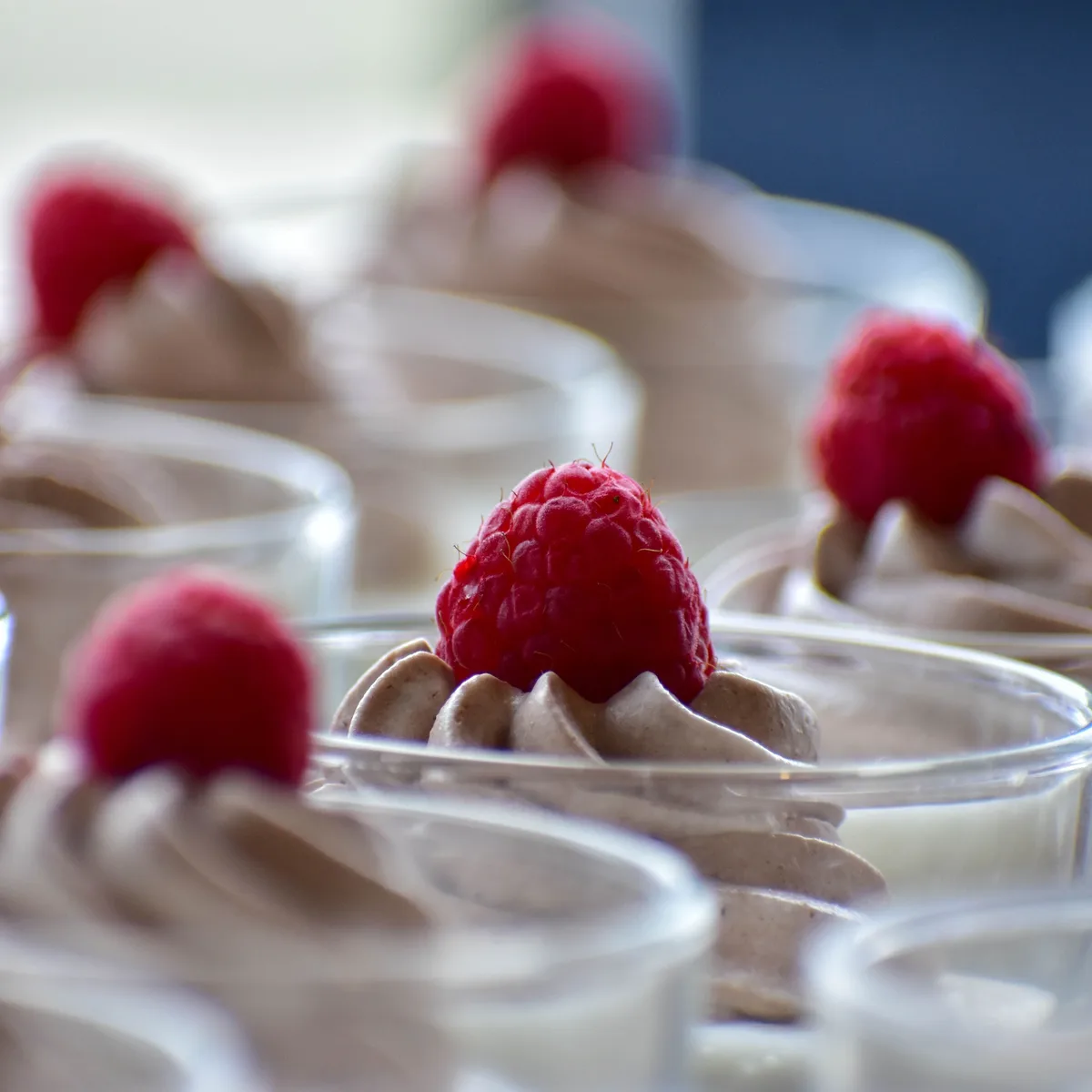
- Spoon or pipe into glasses and chill for at least two hours until set.
- Top with a little extra whipped cream or grated chocolate to serve.
How a Mousse Gets Its Lightness
A mousse is a flavoured base made light by folding in something full of air, here whipped cream. The cream traps thousands of tiny air bubbles, and folding it into the melted chocolate spreads that air through the mixture so it sets soft and airy rather than dense like a ganache. The chocolate gives the flavour and, as it cools, the structure that holds the air in place. Get enough air in and keep it there and the mousse is light; knock the air out and it sets heavy.
Whipping the Cream Right
Whip the cold cream only to soft peaks, the stage where it holds a floppy peak that folds over on itself. Stop there. Cream whipped to stiff peaks is already close to turning grainy and buttery, and it folds into the chocolate in lumps rather than smoothly, so the mousse is heavy and speckled. Cold cream whips faster and holds more air, so start with cream straight from the fridge, and watch it closely near the end because it goes from soft to over-whipped quickly.
Folding Without Knocking Out the Air
Folding is the step that makes or breaks a mousse. First stir a third of the cream into the chocolate to loosen it, because cold cream hitting warm chocolate can seize, and a loose base folds more easily. Then add the rest gently, cutting down through the middle with a spatula, along the bottom and up the side, turning the bowl as you go, until no streaks remain. Stirring or beating here knocks the air out and sets the mousse dense, so fold slowly and stop as soon as it is combined.
Getting the Chocolate Temperature Right
The melted chocolate must be cooled to barely warm before the cream goes in. Too hot and it melts the whipped cream and deflates it; too cold and it seizes into lumps the moment the cold cream touches it. Barely warm to the touch is right. Melt it gently, over just-simmering water or in short microwave bursts with a stir between each, because chocolate scorches easily and seizes if it gets too hot or catches a drop of water.
Common Problems
The faults all trace to air and temperature. Heavy, dense mousse means the air was knocked out by over-folding or the cream was over-whipped. Grainy or speckled means the cream was whipped too stiff before folding. A seized, lumpy base means the chocolate was too hot or caught water, or the cold cream hit chocolate that was too cool. A mousse that never set was not chilled long enough, so give it at least two hours.
Variations
The base takes easily to change. Use dark chocolate for a more bitter, grown-up mousse or milk chocolate for a sweeter, softer one. Fold in a spoon of coffee or a splash of orange for a flavoured mousse, or layer it with crushed biscuit or berries in the glass. Pipe it into a baked tart shell for a chocolate mousse tart. The cream-and-chocolate method stays the same.
Storage
Chocolate mousse keeps two or three days covered in the fridge, and it needs the chilling time to set anyway, so it is an ideal make-ahead dessert. Spoon it into the serving glasses before chilling so it sets in its final shape. It does not freeze well, since the texture turns grainy as the air collapses on thawing, so make it a day ahead at most and keep it cold until serving.
FAQ
Why is my chocolate mousse heavy and dense? The air was knocked out, either by over-whipping the cream or by stirring instead of folding. Whip the cream only to soft peaks and fold it in gently, stopping as soon as no streaks remain.
Why did my chocolate seize into lumps? It got too hot, caught a drop of water, or the cold cream hit chocolate that was still too cool. Melt it gently, cool it to barely warm, and loosen it with a little cream first before folding in the rest.
Do I need raw eggs for mousse? No. The classic version uses raw egg, but a mousse set with whipped cream alone is just as light and carries no raw egg. This recipe uses cream only.
Why didn’t my mousse set? It was not chilled long enough, or the chocolate was too little to give structure. Chill it at least two hours; it firms as the cooled chocolate sets around the trapped air.
How far ahead can I make it? A day ahead is ideal, since it needs at least two hours to set. Spoon it into the glasses before chilling and keep it covered in the fridge.
Can I use a sugar substitute? This recipe does not, because the sweetness balances the bitterness of the chocolate and substitutes misreport the carbohydrate. It uses real sugar and real chocolate, counted honestly from USDA data.
Where to Go Next
For more set-by-chilling sweets, see the chocolate desserts and no-bake desserts guides, and for the science behind every sweet, the dessert recipes guide.
Label note: most of the carbohydrate in this recipe comes from the semisweet chocolate chips, calculated here from USDA’s generic entry. Brands vary, and some contain added sugar, so check the label on the one in your kitchen.
Written by Frank Thomson, Skillet & Spoon editorial. Every nutrition figure on this site is calculated ingredient by ingredient from the USDA FoodData Central database, never estimated and never rounded to look better. We do not publish net-carb figures or use non-nutritive sweeteners. How we develop and source recipes is set out in our editorial policy.