Lemon Cake, Moist and Bright
Lemon cake is a plain butter cake carrying as much lemon as it can hold, and the difference between a pale, faintly lemon cake and a bright one is where the lemon comes from. Juice brings acid and moisture, zest brings the aromatic oils that actually taste of lemon, and using both is the whole trick. This version is finished with a simple lemon glaze and is calculated from USDA FoodData Central so the number under each slice is real. The sweetness is real sugar, never a substitute, which carries the structure and moisture of the crumb.
Ingredients
Method
- Heat the oven to 350F and grease and line an 8-inch round or loaf tin.
- Cream the softened butter and sugar until pale and fluffy, about three minutes, then beat in the eggs one at a time.
- Whisk the flour, baking powder and salt together, and have the milk, lemon juice and the grated zest of the lemons ready.
- Add the dry ingredients and the milk alternately, beginning and ending with the flour, then stir in the lemon juice, zest and vanilla just until combined.
- Pour into the tin and bake for 30 to 40 minutes, until a skewer comes out clean, then cool.
- Whisk the powdered sugar with the glaze lemon juice until smooth and pour over the cooled cake.
Where the Lemon Flavour Comes From
Most of a lemon’s flavour is in the zest, not the juice. The oils in the yellow skin are intensely aromatic and taste of lemon without adding acid, while the juice is mostly water and acid that brings tang and moisture but little of the perfume. A cake made with juice alone tastes faintly sour and not very lemony; adding the grated zest is what makes it taste of lemon. Grate only the yellow layer and stop at the white pith, which is bitter.
The Moist, Tender Crumb
The crumb is built by creaming: beat the softened butter and sugar for a full three minutes until pale and fluffy, which traps the air that lifts the cake, then beat in the eggs one at a time. Once the flour goes in, mix gently, because over-working builds gluten and toughens the cake. Adding the flour and milk alternately keeps the batter smooth without over-mixing, and the acid in the lemon juice tenderises the crumb as well as flavouring it.
The Lemon Glaze
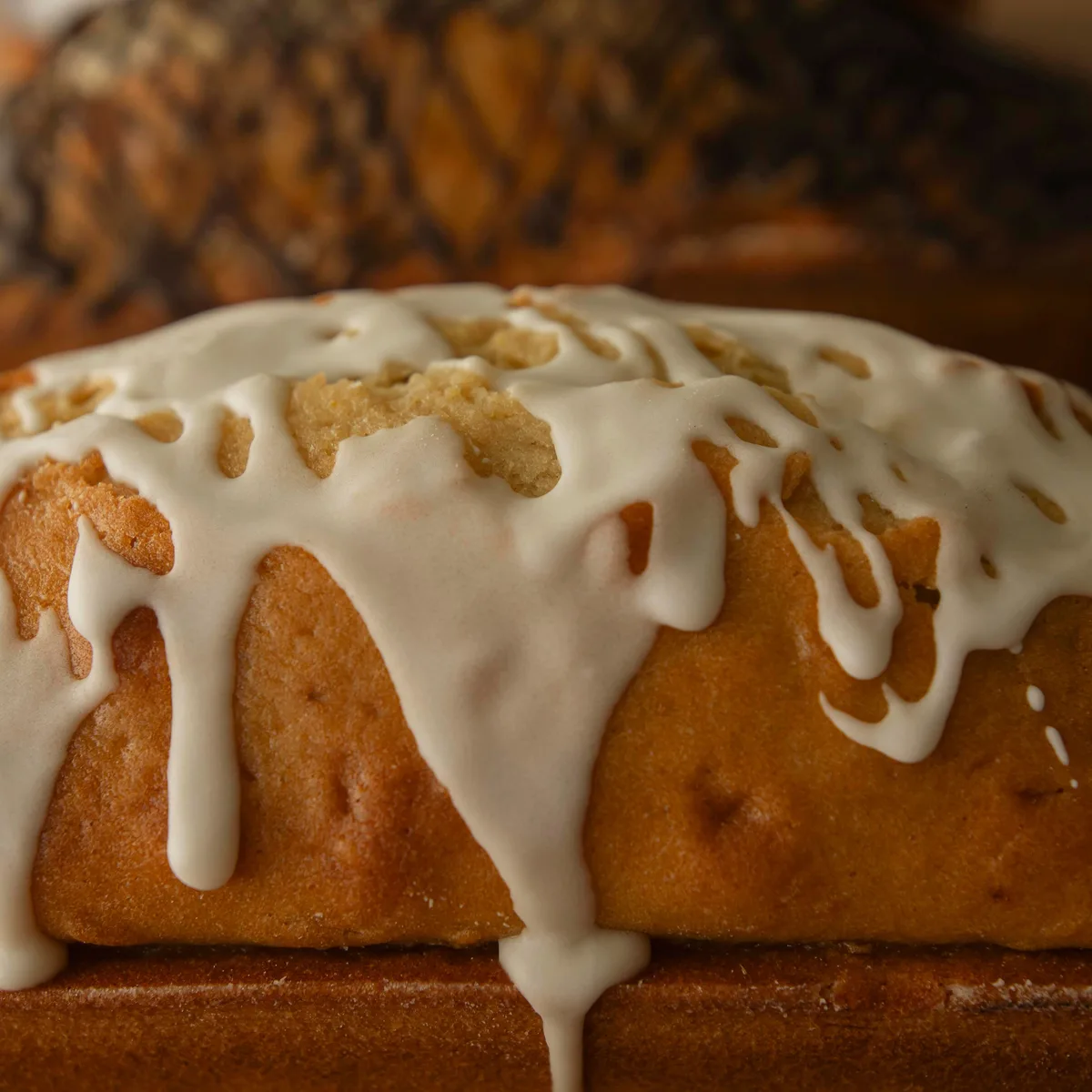
A glaze is simply powdered sugar whisked with lemon juice until pourable, and it does two jobs: it adds a sharp, sweet lemon hit on top and it seals in moisture. Pour it over the cake once the cake is fully cool, because a warm cake melts the glaze into the crumb instead of setting it as a thin, glossy layer. For a thicker glaze use less juice, for a thinner one use more, and brush a little extra lemon juice into the warm cake first for an even more lemony result.
Round Cake or Loaf
This batter bakes equally well as an 8-inch round or in a loaf tin, which gives the familiar lemon loaf. A loaf is deeper, so it bakes a little longer and a little cooler, and the centre needs to cook through before the top over-browns; test with a skewer in the middle. The round bakes faster and glazes neatly for a simple layer. The method and the glaze do not change with the shape.
Common Problems
The faults are quick to place. Not very lemony means juice without zest, so grate the lemons in. Dense or tough was under-creamed or over-mixed, so cream well and fold the flour gently. Dry was overbaked, so pull it as soon as a skewer comes clean. A glaze that soaked in and vanished was poured on a warm cake, so cool it fully first. A sunken middle is underbaking or too much raising agent.
Variations
The lemon base takes easily to change. Fold in poppy seeds for a lemon poppy seed cake, or fresh or frozen blueberries for lemon-blueberry. Swap the glaze for a cream cheese or lemon buttercream, or split and fill the round with lemon curd for a layer cake. A little more juice and zest makes it sharper; the cake method stays the same.
Storage
Lemon cake keeps two or three days airtight at room temperature, and the glaze helps seal in moisture. It freezes well unglazed: cool completely, wrap, and glaze after thawing. A glazed cake is best eaten within a couple of days before the glaze softens. Keep it covered so the crumb does not dry out, and bring refrigerated slices back to room temperature so the texture softens before serving.
FAQ
Why is my lemon cake not very lemony? You used juice but no zest. Most of a lemon’s flavour is in the aromatic oils of the zest, while the juice brings mostly acid and moisture. Grate the yellow zest of the lemons into the batter, avoiding the bitter white pith.
Why is my lemon cake dense? The butter and sugar were under-creamed, or the batter was over-mixed once the flour went in. Cream for a full three minutes until pale and fluffy, and fold the flour in gently just until combined.
Can I bake this as a loaf? Yes. The same batter makes a lemon loaf; it is deeper so it bakes a little longer and a little cooler, and you test the centre with a skewer. The glaze goes on the cooled loaf the same way.
Why did my glaze disappear into the cake? It was poured onto a warm cake and melted into the crumb. Cool the cake completely first so the glaze sets as a thin, glossy layer on top.
Can I use bottled lemon juice? Fresh is far better, and you need fresh lemons for the zest anyway, which carries most of the flavour. Bottled juice can stand in for the liquid but will taste flatter.
Can I use a sugar substitute? This recipe does not, because sugar provides moisture and structure in the crumb as well as sweetness, which substitutes cannot do. It uses real sugar, counted honestly from USDA data.
Where to Go Next
For every cake method see the cake recipes guide, and for the baking science behind all of them, the dessert recipes guide. For another citrus bake, see lemon bars.
Written by Frank Thomson, Skillet & Spoon editorial. Every nutrition figure on this site is calculated ingredient by ingredient from the USDA FoodData Central database, never estimated and never rounded to look better. We do not publish net-carb figures or use non-nutritive sweeteners. How we develop and source recipes is set out in our editorial policy.