Blueberry Muffins, Bakery-Style and Moist
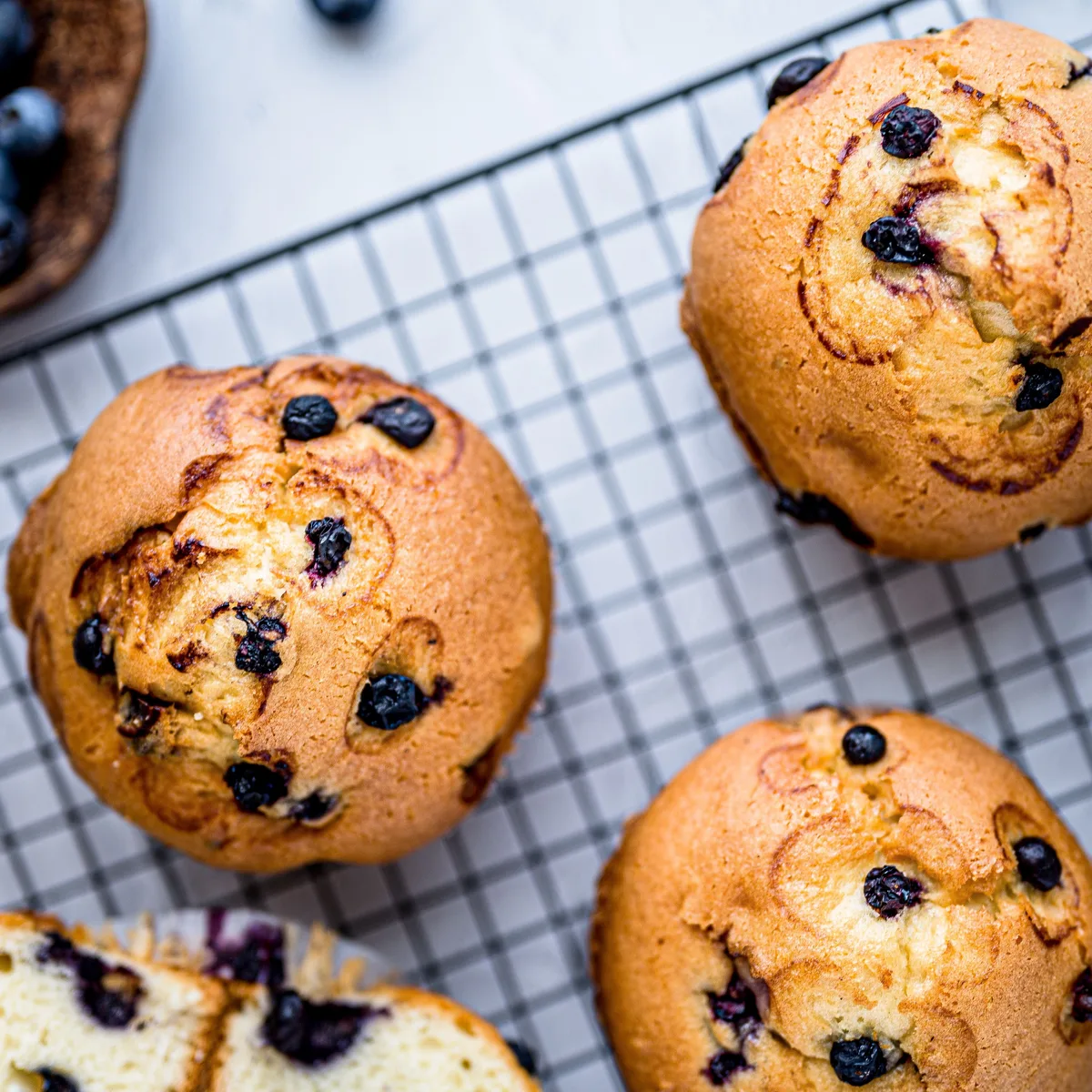
Blueberry muffins are a quick bread baked in a tin, and the bakery version succeeds on two things most home batches miss: a moist crumb and a tall, domed top. Both come from how the batter is mixed and how the tin is filled, not from any special ingredient. This version is calculated from USDA FoodData Central so the number under each muffin is real, and the sweetness is real sugar, never a substitute. The berries are fresh or frozen, folded in last so they stay whole.
Ingredients
Method
- Heat the oven to 400F and line a muffin tin with 12 paper liners.
- Whisk the flour, sugar, baking powder and salt together in a large bowl.
- In another bowl whisk the eggs, oil, milk and vanilla until smooth.
- Pour the wet into the dry and stir just until no dry flour remains, keeping the batter lumpy.
- Toss the blueberries in a spoonful of the flour mixture, then fold them in gently.
- Divide the batter between the liners, filling them nearly full for tall tops.
- Bake for 22 to 26 minutes, until the tops are golden and spring back, then cool in the tin a few minutes before lifting out.
The Moist, Tender Crumb
The crumb comes from the muffin method, which is the opposite of a cake: the wet and dry are mixed separately and then combined with as few strokes as possible. Stir only until the dry flour disappears, leaving the batter lumpy, because every extra stir builds gluten and turns a tender muffin into a tough, rubbery one with long tunnels inside. Oil rather than butter keeps the crumb moist for longer, since it stays liquid at room temperature where butter sets firm.
A Tall, Domed Top
The bakery dome is a heat trick. Fill the liners nearly full, not two-thirds, so there is enough batter to rise high, and start the muffins in a hot oven. The high initial heat sets the outside quickly and forces a fast rise that pushes up into a dome before the top sets. Some bakers drop the temperature partway through, but a steady hot oven works if the batter is cold going in. Underfilled liners bake flat because there is simply not enough batter to crest the rim.
Keeping the Berries from Sinking
Blueberries are heavier than the batter and sink to the bottom as the muffin bakes, leaving a pale top and a dense, purple base. Tossing them in a little of the flour mixture before folding them in gives the batter something to grip, which slows the sinking. Folding them in last and gently also keeps them whole rather than crushed, so the crumb stays pale instead of streaking blue. Frozen berries work and need no thawing, though they bleed a little more.
Fresh or Frozen Berries
Both work. Fresh berries give the cleanest look and the least bleeding, so they suit a muffin where the pale crumb matters. Frozen berries are picked ripe and are reliable all year, and they go into the batter straight from the freezer, because thawing them first turns them to mush and streaks the batter grey. Whichever you use, the flour toss is what keeps them suspended, and gentle folding is what keeps them whole.
Common Problems
The usual faults trace back to mixing and heat. Tough, rubbery muffins with tunnels were over-mixed, so stir only until the flour disappears. Flat tops mean the liners were underfilled or the oven was not hot enough, so fill them near full and preheat fully. Berries all at the bottom were not tossed in flour and the batter was too thin. Dry muffins were overbaked, so pull them as soon as the tops spring back. Pale, greasy liners point to too much oil or an oven that ran cool.
Variations
The plain blueberry base takes additions easily. A streusel of flour, butter and sugar rubbed to crumbs and scattered on top before baking gives a crunchy lid. Lemon zest in the batter brightens the berries, a classic pairing. Swap the blueberries for raspberries or diced strawberries, or fold in a handful of chocolate chips alongside them. The batter and method do not change with the fruit.
Storage and Make Ahead
Blueberry muffins keep two or three days airtight at room temperature, and the oil in the crumb keeps them moist longer than a butter muffin. They freeze well: cool completely, freeze in a bag, and thaw at room temperature or warm briefly in the oven. The batter is best baked fresh rather than held, since the baking powder begins working once it is wet, so mix and bake in one go for the best rise.
FAQ
Why are my blueberry muffins tough? The batter was over-mixed. The muffin method needs the wet and dry combined with as few strokes as possible, stirring only until the flour disappears, because over-mixing builds gluten and makes muffins rubbery with tunnels inside.
How do I get tall, domed muffin tops? Fill the liners nearly full so there is enough batter to rise high, and bake in a hot oven so the outside sets fast and forces a quick rise into a dome. Underfilled liners bake flat.
Why do my blueberries sink to the bottom? They are heavier than the batter. Toss them in a little of the flour mixture before folding them in, which gives the batter grip and slows the sinking, and fold them in gently and last.
Can I use frozen blueberries? Yes, and straight from the freezer, not thawed, because thawed berries turn to mush and streak the batter. Frozen berries bleed a little more but bake up well.
Why are my muffins dry? They were overbaked. Pull them as soon as the tops are golden and spring back to a light touch, and use oil, which keeps the crumb moist longer than butter.
Can I use a sugar substitute? This recipe does not, because sugar provides moisture and tenderness in the crumb as well as sweetness, which substitutes cannot do. It uses real sugar, counted honestly from USDA data.
Where to Go Next
For every muffin type and the quick-bread method behind them, see the muffin recipes guide, and for the baking science across all of them, the dessert recipes guide. For a loaf version of a fruit quick bread, see banana bread.
Written by Frank Thomson, Skillet & Spoon editorial. Every nutrition figure on this site is calculated ingredient by ingredient from the USDA FoodData Central database, never estimated and never rounded to look better. We do not publish net-carb figures or use non-nutritive sweeteners. How we develop and source recipes is set out in our editorial policy.