Esquites (Mexican Street Corn in a Cup)
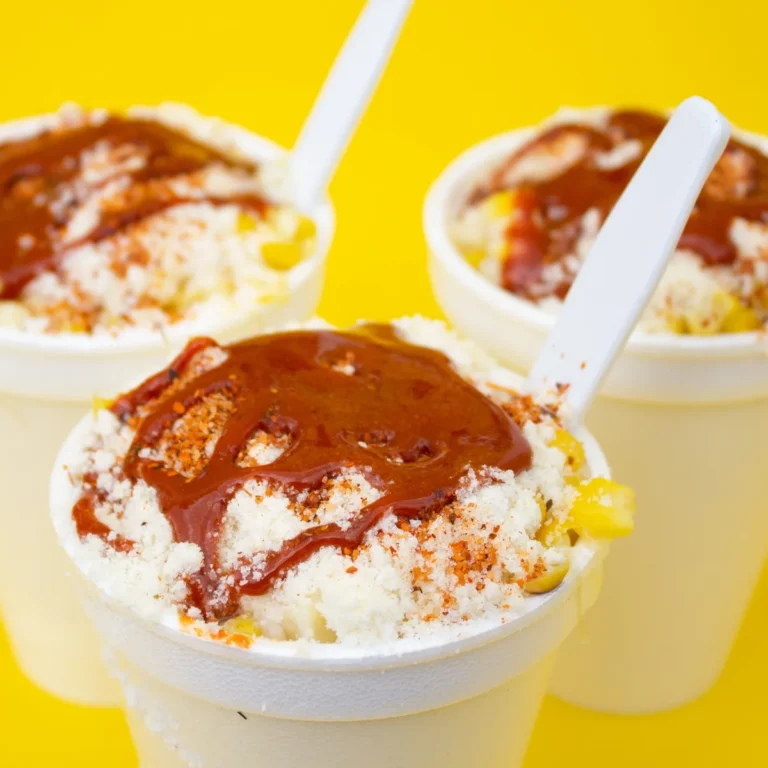
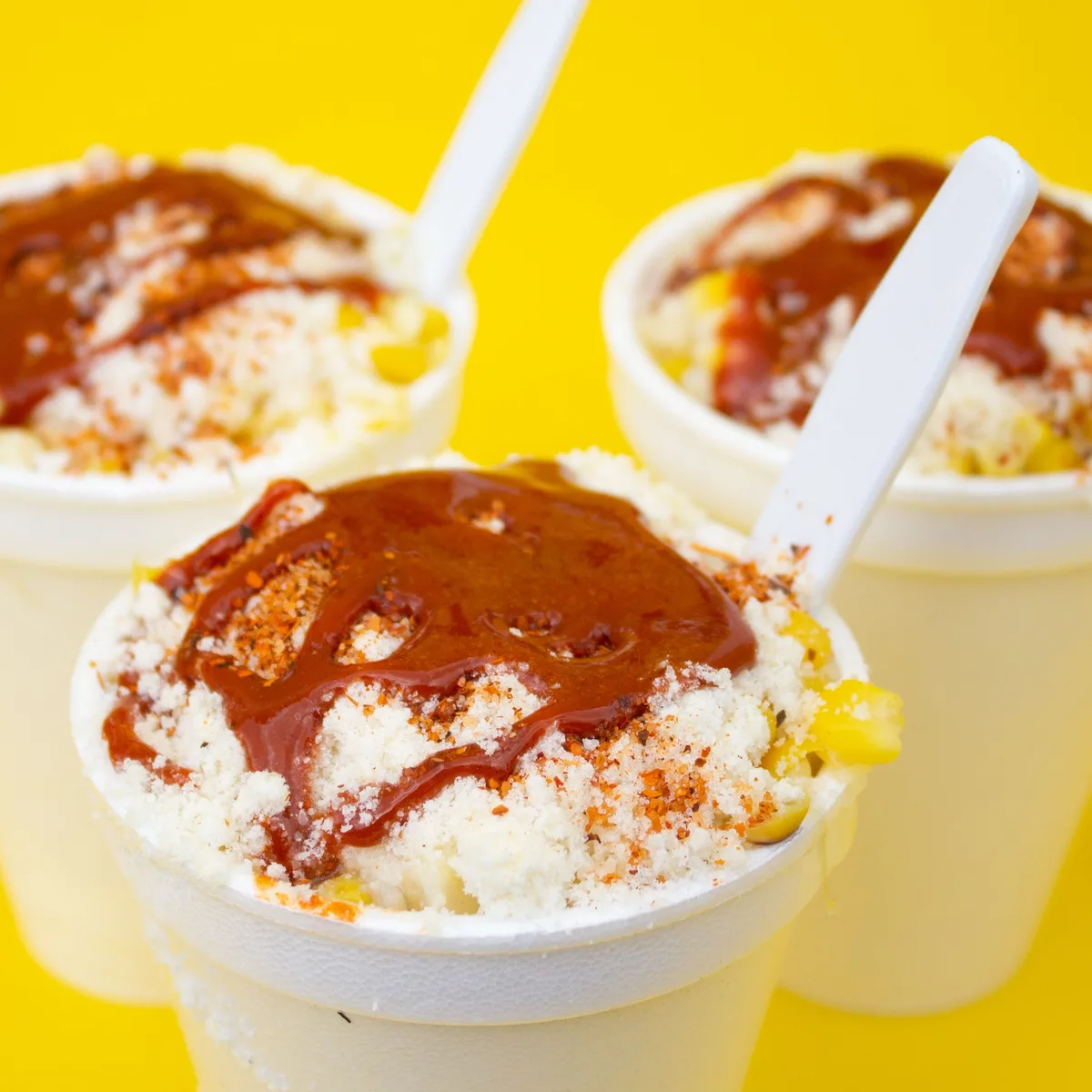
Esquites is Mexican street corn served in a cup: charred kernels, a creamy lime dressing, salty crumbled cheese and chile, eaten warm with a spoon. It is the same flavours as elote without the cob, and it is the easier of the two to make well, because kernels in a skillet brown far more evenly than a whole cob over a flame. The one thing that decides the result is whether you let the pan brown them or let them steam. The recipe card carries the full method with USDA-calculated numbers.
Ingredients
Method
- Pat the corn kernels dry, especially if they were frozen. Wet kernels steam and never brown.
- Melt the butter in a wide skillet over high heat until it stops foaming.
- Add the corn in a single layer and leave it undisturbed for 3 to 4 minutes, until the underside is browned in spots. Stir once and repeat, 8 to 10 minutes total.
- Add the onion and serrano and cook 3 minutes more, until the onion softens.
- Take the pan off the heat and let it cool for 2 minutes. Stirring dairy into a screaming hot pan splits it.
- Stir in the mayonnaise, sour cream, lime juice and salt until every kernel is coated.
- Fold in half the cotija and half the cilantro, then spoon into cups.
- Top with the remaining cheese, the chili powder and the rest of the cilantro. Serve warm with a spoon and extra lime.
Esquites and Elote
Both are sold from the same carts. Elote is the cob in hand; esquites is the cup with a spoon. The word comes from the Nahuatl izquitl, meaning toasted corn, which is a useful reminder that toasting is the point rather than an optional step. Cart versions are often simmered briefly in a little water with epazote and then dressed, which gives a softer, soupier cup; the skillet version here chars the kernels instead and is drier and nuttier. Both are authentic and they taste noticeably different, so it is worth knowing which one you are making.
Why This Recipe Works
- Dry kernels brown, wet kernels steam. Browning needs the surface above boiling point, and water sitting on the corn holds it right at boiling until that water has gone. Thawed frozen corn carries a surprising amount, so patting it dry can be the difference between brown spots at four minutes and grey kernels at ten.
- A single layer, left alone. Corn piled two deep traps its own steam and the pan never dries out. Spread thin and left undisturbed, the kernels in contact with the metal colour properly, and that toasted flavour is what separates esquites from creamed corn.
- The dairy goes in off the heat. Mayonnaise and sour cream are emulsions, and both split when they get too hot: the fat separates out and the sauce turns grainy and greasy. Two minutes off the burner drops the pan below the temperature where that happens, and the sauce stays smooth.
Ingredient Notes
The corn. Fresh kernels cut from the cob are best, and the easiest way to cut them is to stand the cob in a wide bowl and run a knife down it. Frozen corn is a genuinely good substitute here, better than it is for elote, because the kernels are already off the cob. Canned corn is the weakest option: it is packed in liquid, arrives soft, and will not char.
The chile. Serrano minced fine, cooked with the onion. The dressing is rich, so the heat has somewhere to work.
The cheese. Cotija, dry and salty, half stirred through and half on top. Stirring it all in loses the contrast; it is meant to be visible.
Epazote. If you can find it, fresh or dried, a teaspoon added with the onion gives esquites its characteristic cart flavour. It has no close substitute and the dish is good without it, so it is not in the card.
The Method, In Short
Dry the corn, char it hard in butter, soften the onion and chile, cool the pan briefly, stir in the dairy and lime, top and serve warm. Fifteen minutes, one skillet.
How brown is brown enough. You are looking for scattered deep golden and almost-black spots across maybe a third of the kernels, not an even colour. Uniform browning means the heat was too low and too long, which dries the corn out before it toasts.
The Brothy Cart Version
To make the softer version sold from carts, simmer the kernels in just enough water to cover, with a sprig of epazote and the onion, for about ten minutes, then drain most of the liquid, leaving a few spoonfuls in the pan, and dress as written. The result is looser and milder, somewhere between a side dish and a soup, and it is traditionally served in a styrofoam cup with the liquid still in it. The card counts the charred skillet version.
What to Serve It With
Esquites is a side dish and a snack at the same time. It goes beside anything grilled, especially carne asada, and it holds its own on a party table where cobs would be awkward; see Mexican party food. It is also a good topping: spoon it over tostadas, fold it into a quesadilla, or use it to finish a rice bowl. For more alongside, see Mexican side dish recipes.
Storage
Esquites keeps three days refrigerated and is decent cold, closer to a corn salad, which is a legitimate second life rather than a consolation. Reheating is where it struggles: the dressing can split if it gets too hot, so warm it gently in a pan over low heat and stir, or let it come to room temperature instead. If you are making it ahead for a party, char the corn and keep it separate from the dressing, then combine and top just before serving, which costs five minutes and keeps the texture intact.
Why the Dressing Goes Greasy or Thin
Greasy means heat. Mayonnaise and sour cream both carry their fat in suspension, and a hot pan breaks that suspension so the oil pools out, which is irreversible once it happens. Letting the pan cool for two minutes prevents it entirely. Thin and watery means the corn was wet when it was dressed, usually thawed frozen corn that was not dried or canned corn that was not drained properly, so the moisture diluted the sauce rather than the sauce coating the corn. You can see which you have in the cup: a slick on the surface is split fat, a pool at the bottom is water.
FAQ
What are esquites? Mexican street corn served in a cup: kernels cooked off the cob, dressed with mayonnaise, crema, lime, cotija and chile, and eaten warm with a spoon.
What is the difference between esquites and elote? Only the format. Elote is the whole cob eaten in hand; esquites is the kernels in a cup. The flavours are the same and they are sold side by side.
Can I use frozen or canned corn? Frozen works well, thawed and patted thoroughly dry. Canned corn is too soft and too wet to char and is the weakest option.
Why did my dressing split? The pan was too hot when the mayonnaise and sour cream went in. Take it off the heat for a couple of minutes first, because both are emulsions that break when overheated.
What can I use instead of cotija? Queso fresco, which is milder and moister, or parmesan, which matches the dryness and salt though not the flavour. Say which you used when you serve it.
Is esquites served hot or cold? Warm, traditionally. It is also good cold the next day, where it eats more like a corn salad.
Where to Go Next
The cob version is elote, the wider collection is Mexican street corn recipes, and it belongs beside carne asada. The whole library starts at easy Mexican recipes at home.
Written by Frank Thomson, Skillet & Spoon editorial. Every nutrition figure on this site is calculated ingredient by ingredient from the USDA FoodData Central database, never estimated and never rounded to look better. We do not publish net-carb figures or use non-nutritive sweeteners. How we develop and source recipes is set out in our editorial policy.