Elote (Mexican Street Corn on the Cob)
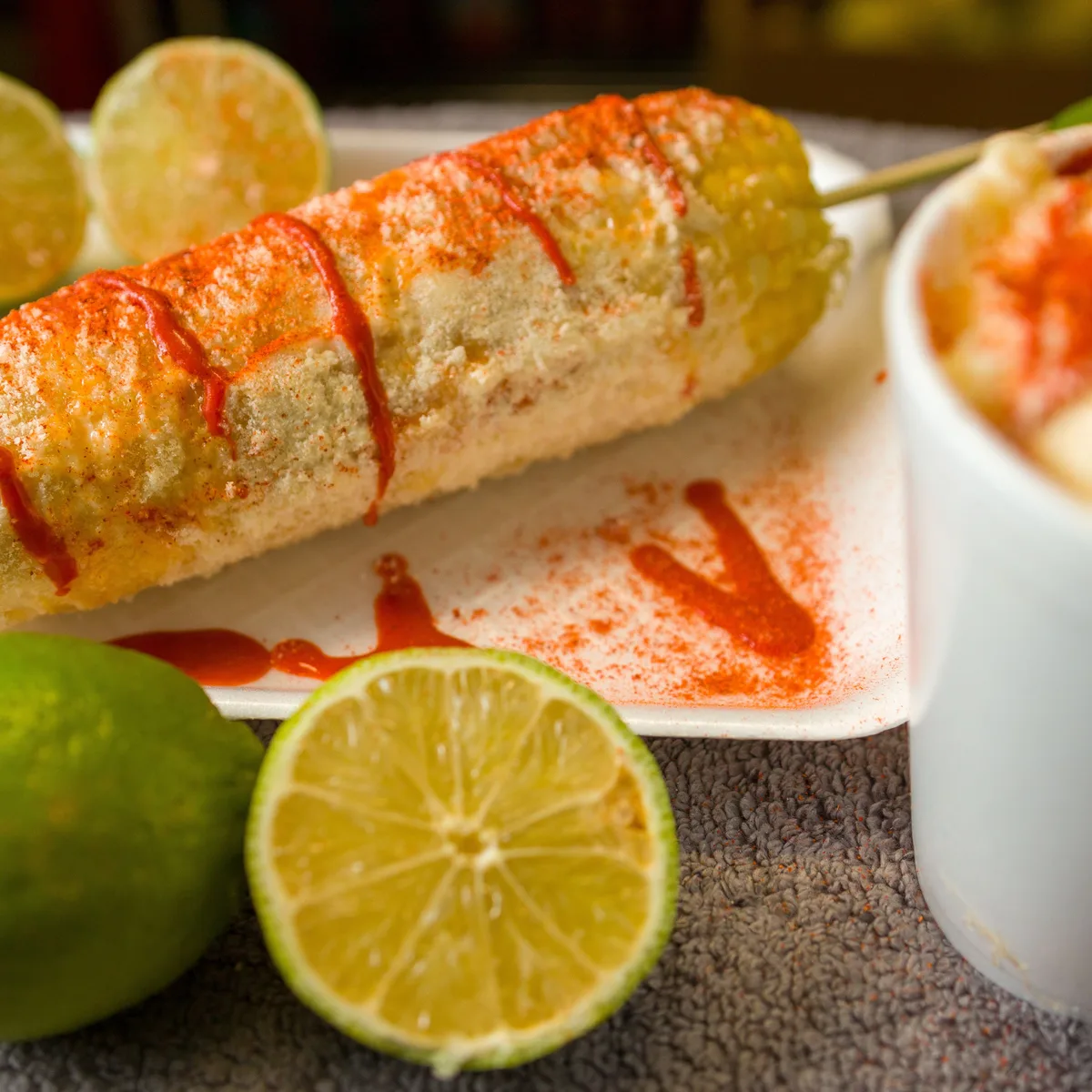
Elote is grilled corn rolled in a creamy sauce, crumbled salty cheese, chile and lime, sold from carts all over Mexico. It takes fifteen minutes and goes wrong in only two ways: the corn never really chars, or the toppings slide off onto the plate. Both come down to heat and to the order things happen in. The recipe card carries the full method with USDA-calculated numbers, and this page covers the char, the glue and the cheese.
Ingredients
Method
- Heat a grill or a heavy ridged pan to high. The corn needs direct contact with hot metal or flame to char rather than steam.
- Stir the mayonnaise, sour cream, lime juice and salt together in a shallow dish wide enough to roll a cob in.
- Grill the husked corn, turning every 2 to 3 minutes, for 10 to 12 minutes total, until kernels are blistered and blackened in patches all round.
- Move the hot cobs straight into the sauce and roll to coat completely. Hot corn grips the sauce; cooled corn sheds it.
- Roll each coated cob in the crumbled cotija on a plate, pressing lightly so it sticks.
- Dust with chili powder, scatter with cilantro, and serve with extra lime. Eat immediately, with a skewer or the husk pulled back as a handle.
Elote and Esquites
Elote is the cob version, eaten in hand from a stick or by the pulled-back husk. Esquites is the same flavours cut off the cob and served in a cup with a spoon, usually with the kernels cooked in butter and often a little broth. They are sold side by side from the same cart and the choice is about how you want to eat it, not about the recipe being different. If you are feeding a crowd or anyone wearing a white shirt, the cup wins.
Why This Recipe Works
- Char needs dry heat and direct contact. Sugars and amino acids on the kernel surface brown only above boiling point, so the surface has to be dry. Corn boiled or steamed first arrives at the grill wet and spends its time on the grate shedding water instead of colouring. Husked corn straight onto a hot grill blisters in about ten minutes.
- Mayonnaise is glue, not just flavour. It is an emulsion of oil and egg, thick and tacky enough to cling to a wet, curved surface where cream alone runs off. It is also what the dry cheese sticks to. This is the structural reason it appears on a dish that otherwise has nothing to do with it.
- Hot corn grips, cold corn sheds. Sauce applied to a hot cob thins slightly on contact and works into the gaps between kernels, then sets as it cools. The same sauce on a cooled cob sits on top in a layer that slides off at the first bite.
Ingredient Notes
The corn. Fresh and in season, the sweeter the better, since nothing here masks a bland cob. Frozen cobs work out of season: thaw them completely and pat them very dry first, or they will steam rather than char.
The cheese. Cotija, crumbled fine. It is dry, salty and does not melt, which is exactly what this dish needs: it stays as distinct white crumbs against the sauce. Queso fresco is milder and a little moister but acceptable. Parmesan is the common substitute outside Mexico and it works on the salt-and-dryness axis, though the flavour is different and it is worth labelling honestly when you serve it.
The chile. Chili powder is the easy route. Tajin, the lime and chile salt sold in most supermarkets, is closer to what the carts use and adds acidity as well as heat. Ground chile de arbol is the hottest of the three.
The lime. Juice in the sauce and wedges at the table. The acid is what keeps a cob coated in mayonnaise, cream and cheese from reading as heavy.
The Method, In Short
Grill the husked corn hard, roll it in the sauce while it is still hot, roll it in cheese, dust with chile, eat straight away. Nothing about elote improves with waiting.
On the grill marks. Turn the cob every two or three minutes rather than constantly. Each face needs uninterrupted contact with the grate to blister, and rolling it continuously heats the corn evenly without ever charring any of it.
Without a Grill
A heavy ridged grill pan over high heat gives the closest result indoors, with the same turning schedule. A broiler works: put the cobs on a tray on the top shelf and turn them every few minutes, watching closely. A gas burner with the cob held directly in the flame on a long fork chars fastest of all. What does not work is an oven at a normal roasting temperature, which dries the corn out long before it colours.
Serving a Crowd
Elote is messy by design, and that is part of its appeal. For a party, cut the grilled cobs in half crosswise so they are easier to handle, push a wooden skewer into the cut end, and set the sauce, cheese and chile out in bowls so people coat their own. Prepping that way also avoids the only real timing problem, which is that a tray of pre-coated cobs sitting out for twenty minutes will have shed most of its topping by the time it is eaten. For the rest of the spread, see Mexican party food and Mexican side dish recipes.
Storage
This is a cook-and-eat dish. Coated elote does not keep: the sauce slackens in the fridge, the cheese absorbs moisture and the char goes soft. Leftover grilled corn, uncoated, keeps three days and is genuinely useful, because cutting the kernels off gives you the base for esquites, a salad, or a salsa. The sauce itself keeps a week refrigerated, so making it ahead is the sensible shortcut.
Why the Topping Falls Off
Three things cause it and all three are timing. The cob was too cool when the sauce went on, so nothing bonded; coat it the moment it leaves the heat. The corn was wet, either from boiling first or from frozen cobs that were not dried, so the sauce was diluted at the surface where it needed to grip. Or the cheese went on too late, after the sauce had set, leaving it nothing tacky to stick to. The sequence that works is heat, sauce, cheese, chile, with no pauses between them, and you can see the difference at the plate: a properly built cob loses almost nothing on the first bite.
FAQ
What is elote? Mexican street corn: grilled corn on the cob coated in a mayonnaise and crema mixture, rolled in crumbled cotija, and dusted with chile and lime.
What is the difference between elote and esquites? Elote is on the cob and eaten in hand. Esquites is the same flavours with the kernels cut off and served in a cup with a spoon.
Can I make elote without a grill? Yes. A ridged grill pan, a broiler, or holding the cob directly over a gas burner all char it properly. A standard oven dries the corn before it colours.
What cheese is used on elote? Cotija, a dry, salty, crumbly Mexican cheese that does not melt. Queso fresco is a milder substitute, and parmesan is the common stand-in outside Mexico.
Why does mayonnaise go on corn? It is a thick emulsion, so it clings to a wet curved surface where thinner cream runs off, and it gives the dry cheese something to stick to. It is doing a structural job as much as a flavour one.
Can I use frozen corn on the cob? Yes. Thaw it fully and pat it very dry before grilling, otherwise the surface steams and never chars.
Where to Go Next
The cup version is esquites, the wider collection is Mexican street corn recipes, and more sides are at Mexican side dish recipes. The whole library starts at easy Mexican recipes at home.
Written by Frank Thomson, Skillet & Spoon editorial. Every nutrition figure on this site is calculated ingredient by ingredient from the USDA FoodData Central database, never estimated and never rounded to look better. We do not publish net-carb figures or use non-nutritive sweeteners. How we develop and source recipes is set out in our editorial policy.