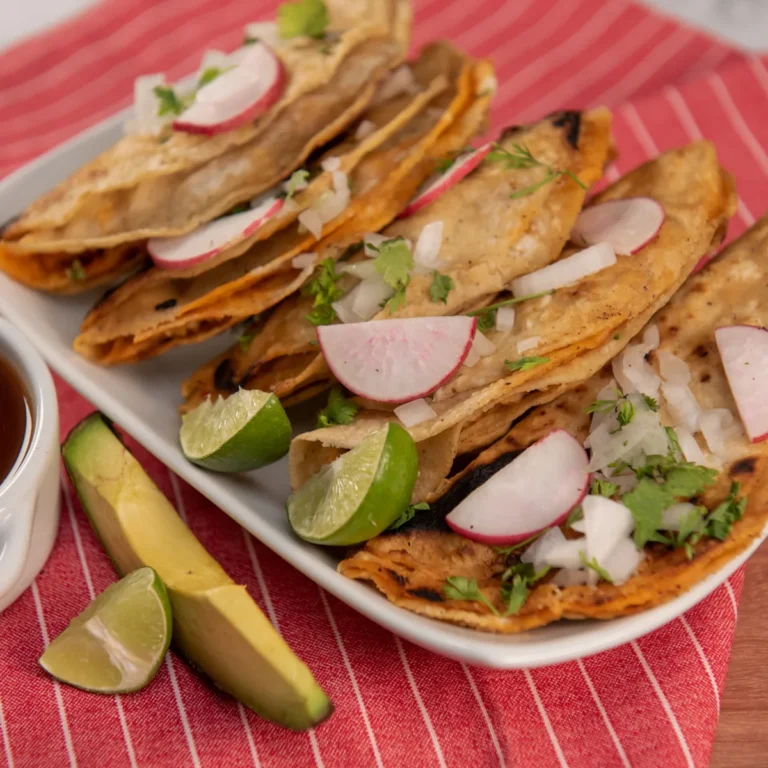
Carne Asada (Citrus Marinated Grilled Beef)
Carne asada is beef marinated in citrus, garlic and herbs, grilled hard and fast over high heat, then sliced thin across the grain and piled into tacos or onto a plate with rice and beans. Three things decide whether it comes out like a taqueria version or like grey pot roast: how long the meat sits in the acid, how dry the surface is when it hits the grill, and which direction you cut it. The recipe card carries the full method with USDA-calculated numbers; this page explains the reasons behind those three.
Ingredients
Method
- Whisk the orange juice, lime juice, garlic, cilantro, jalapeno, cumin, oregano, oil, salt and pepper together in a dish or a bag.
- Add the flank steak, turn to coat, and refrigerate for 2 to 4 hours. Do not go past about 8 hours, because the citrus acid will begin to break the surface of the meat down to a mushy texture.
- Take the steak out of the marinade and pat both faces completely dry with paper towel. Let it sit at room temperature for about 20 minutes while the grill heats.
- Heat a grill or a heavy cast iron pan until it is genuinely hot, hot enough that a drop of water skitters and vanishes rather than sitting and steaming.
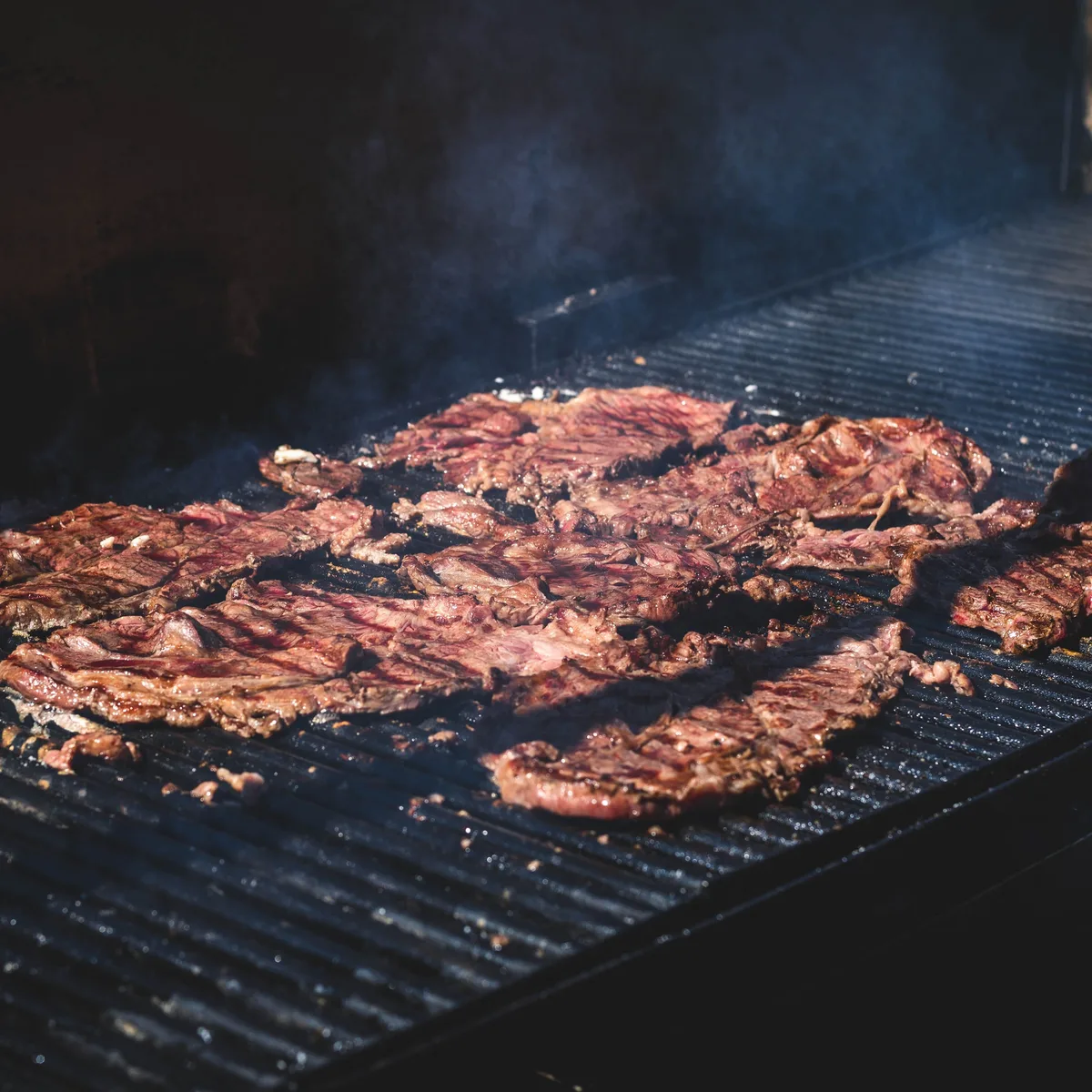
- Grill the steak undisturbed for 4 to 5 minutes a side for medium rare, until a dark crust has formed and the centre reaches 130F to 135F on an instant read thermometer. Flank is thin, so this happens fast.
- Move the steak to a board and rest it for a full 10 minutes before cutting.
- Find the direction of the long muscle fibres, then slice thinly straight across them, at a slight angle. Serve with lime wedges.
Why This Recipe Works
- The marinade is short on purpose. Citrus juice is acidic enough to denature the proteins at the surface of the meat, which is useful for flavour and texture up to a point and destructive past it. A few hours seasons the outer layer and tenderises it slightly. An overnight soak keeps going and turns that same layer chalky and mealy, the texture ceviche has, which is fine in ceviche and wrong on a grilled steak.
- A dry surface is what lets a crust form. Water boils off at 212F, and browning reactions need a surface well above that. As long as the meat is wet, all the energy from the grill goes into evaporating the marinade instead of browning the beef. Patting it dry is the difference between a dark crust and a steamed grey exterior, and it costs thirty seconds.
- Cutting across the grain is what makes it tender to chew. Flank and skirt are made of long, thick muscle fibres running in one clear direction. Slice parallel to them and every mouthful is a bundle of full length fibres you have to chew apart. Slice across them and the knife has already cut them into short segments. The cut does more for tenderness here than the marinade does.
Ingredient Notes
The cut. Flank and skirt are the two traditional choices, and they are traditional for a reason: both are thin, both have pronounced grain, and both take a hard sear without overcooking through. Skirt is fattier and more intensely beefy, flank is leaner and a little more even in thickness. Either works with this marinade. The card counts flank.
The citrus. Orange plus lime is the standard pairing. The orange brings sweetness that helps the surface brown and balances the lime, which on its own is sharp. Some cooks add a splash of vinegar or Mexican beer; both work on the same principle of adding acid, so if you add one, pull back on the lime.
The oil. A few tablespoons of neutral oil in the marinade is not for flavour. It carries the fat soluble aromatics from the garlic, cumin and oregano onto the surface of the meat and helps them stay there instead of dripping off.
The aromatics. Garlic, cilantro, cumin and oregano is the honest taqueria baseline. If you have achiote, a teaspoon shifts the colour and adds an earthy note. This is a marinade, not a spice rub, so nothing here should be measured in tablespoons except the oil.
The Method, In Short
The card carries the full steps. The sequence is: whisk the marinade, soak the beef a few hours, dry it thoroughly, grill it hot and fast, rest it, then slice across the grain. Almost all of the skill is in the last three.
On heat: this cut wants the hottest surface you can give it. Flank at room temperature, on a properly preheated grill, takes about four to five minutes a side. A cooler grill needs longer, and because the steak is thin, longer means the middle is overcooked by the time the outside looks right. If you only have a moderate burner, use cast iron rather than a grate, because a solid pan holds and delivers far more heat than thin bars do.
Why the Rest Matters More on Thin Steak
Resting is often explained as juices redistributing, and the practical version is simpler. During grilling, the muscle fibres near the surface contract hard and squeeze moisture toward the cooler centre. Cut into it immediately and that concentrated moisture runs straight out onto the board. Give it ten minutes and the fibres relax and reabsorb a good deal of it. On a thick roast the effect is modest because there is a lot of interior. On a thin, hot-grilled cut like flank, where a large proportion of the meat was near the surface, it is the difference between a juicy slice and a dry one with a puddle underneath. You can watch this happen on your own board: compare how much liquid pools under a steak cut straight away against one that rested.
What to Serve With It
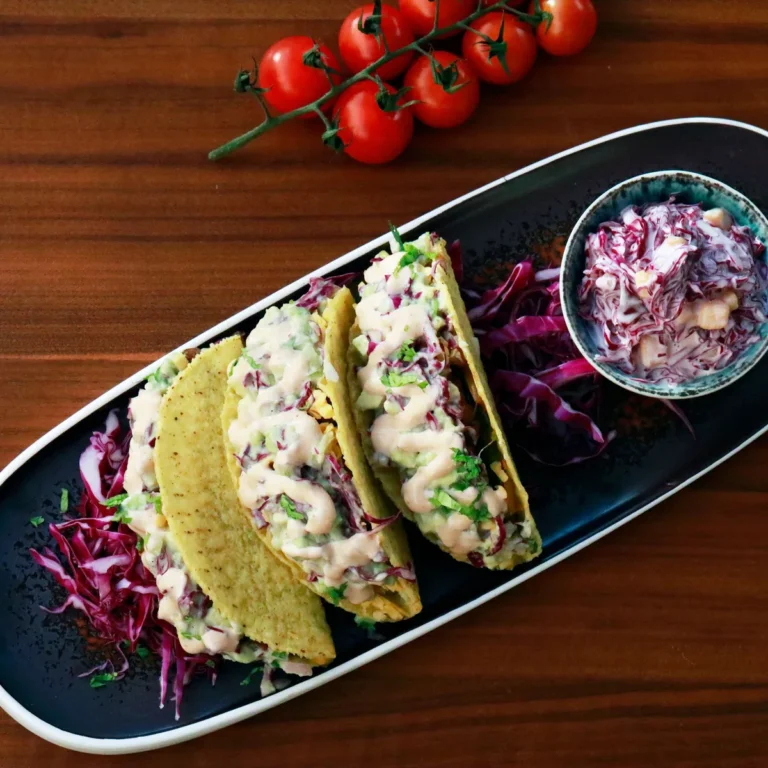
Carne asada is a component more than a finished plate. The classic taco build is two warm corn tortillas, the sliced beef, diced white onion, chopped cilantro and a squeeze of lime, with salsa on the side. As a plate, it wants rice and beans: see authentic Mexican rice and Mexican black bean recipes. Grilled spring onions and a charred jalapeno alongside are traditional and cost nothing extra, since the grill is already hot.
Storage and Reheating
Sliced carne asada keeps three days refrigerated. It reheats badly in a microwave, which drives the remaining moisture out of thin slices and toughens them, so warm it briefly in a hot dry pan instead, thirty seconds or so, just to take the chill off. Leftovers are better used cold or barely warm in a salad or a torta than reheated to hot. Cooked beef freezes for three months, though the texture of thin slices suffers, so freeze it in larger pieces and slice after thawing if you can.
FAQ
What cut is carne asada? Traditionally skirt steak or flank steak. Both are thin with a pronounced grain, which suits fast, very hot grilling and slicing across the fibres. Flap meat, also sold as sirloin flap, is a common substitute.
How long should carne asada marinate? Two to four hours, and not more than about eight. The citrus acid keeps working on the surface of the meat the whole time, and past that window it turns the outer layer soft and mealy rather than tender.
Can I cook carne asada without a grill? Yes. A cast iron pan or a griddle, heated until it is very hot, gives an excellent crust, often better than a domestic grill, because a solid surface transfers more heat than grill bars do. Ventilate the kitchen, it smokes.
What temperature should carne asada be? Pull it at 130F to 135F for medium rare. Because the cut is thin, it carries over a few degrees while resting. Cooked well done, flank and skirt both turn noticeably tough.
Why is my carne asada tough? The two usual causes are slicing with the grain instead of across it, and overcooking. Check the direction of the fibres on the board before you cut, and use a thermometer rather than time.
Is carne asada the same as fajita meat? They overlap. Fajitas were originally skirt steak, the same cut, but they are cooked with peppers and onions and served in flour tortillas as a Tex-Mex dish. Carne asada is grilled on its own and usually served in corn tortillas.
Where to Go Next
The slow-cooked side of the silo is at Mexican beef recipes, the quick end of the week is at Mexican dinner recipes, and the whole library starts at easy Mexican recipes at home.
Written by Frank Thomson, Skillet & Spoon editorial. Every nutrition figure on this site is calculated ingredient by ingredient from the USDA FoodData Central database, never estimated and never rounded to look better. We do not publish net-carb figures or use non-nutritive sweeteners. How we develop and source recipes is set out in our editorial policy.