Bariatric Protein Shake, Built for Texture Not Numbers
A bariatric protein shake is the one recipe on this site that arrives without a nutrition panel, and the reason is printed under the card: powders vary so much between brands, in protein and in carbohydrate per scoop, that any number we published would be wrong for most of the tubs actually sitting in readers’ kitchens. So this page publishes what a recipe site can honestly own, the build and the technique, and hands the arithmetic to the label in your hand. What is here instead is the part most shake recipes skip entirely: how to make one that does not taste chalky.
Ingredients
Method
- Put the liquid in the blender first, always. Powder against a dry blade packs into the bottom and never fully disperses.
- Add the powder next, then the frozen banana and ice on top.
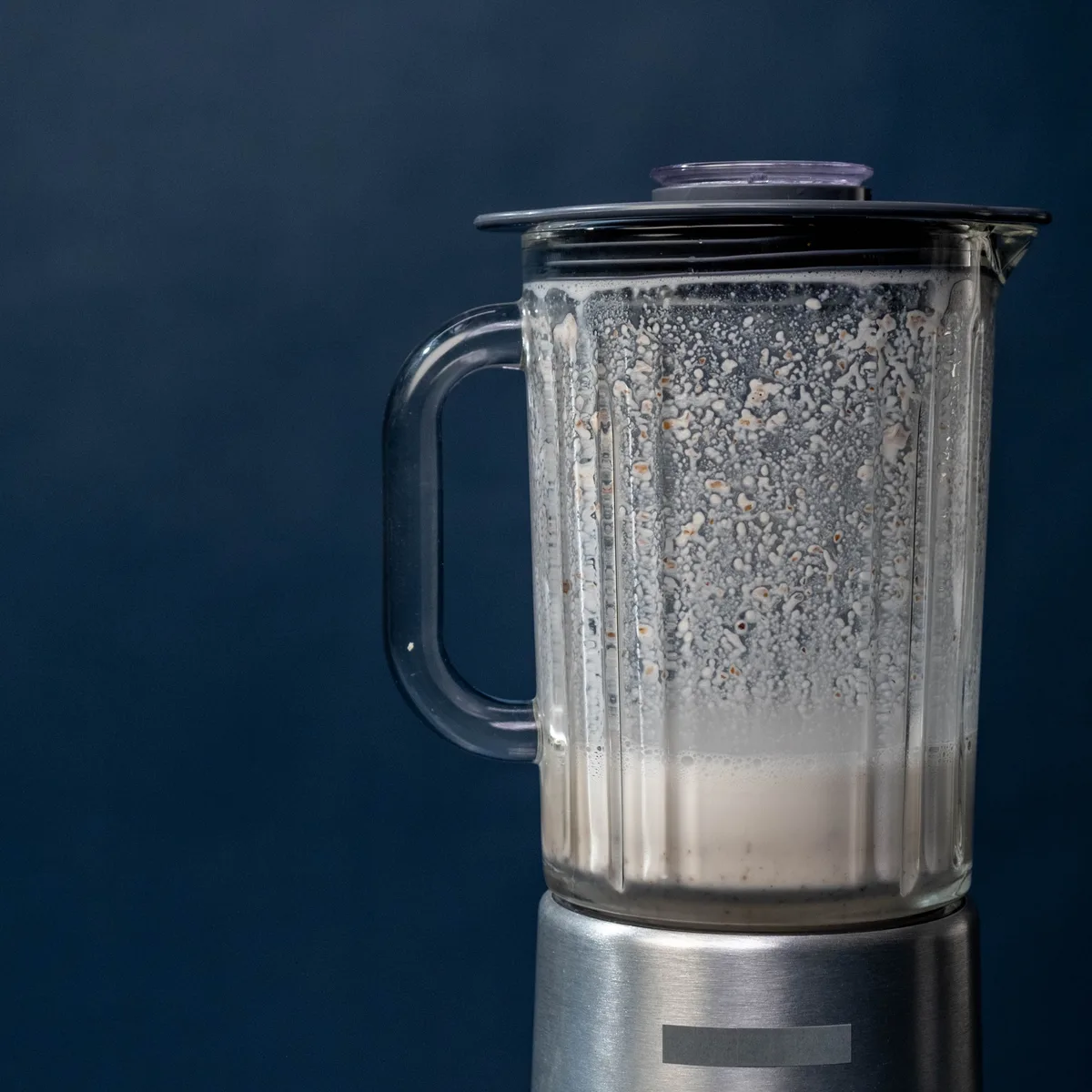
- Blend 45 seconds, longer than feels necessary, until there is no grit against the tongue. Under-blended powder is the single most common reason these taste chalky.
- Let it stand 2 minutes before drinking. The foam settles and the texture thickens noticeably.
- Pour into a glass rather than drinking from the blender jar, and rinse the jar immediately; dried protein powder is genuinely hard to clean off later.
Why This Recipe Works
- Liquid goes in the blender first. Powder added to a dry jar packs against the blade and stays there in clumps, which is the mechanical cause of most gritty shakes.
- Forty five seconds is not the same as thirty. Powder hydrates slowly, and the last fifteen seconds are where the grit disappears. Grit that survives into the glass is unhydrated powder rather than a formulation flaw, so the fix is more time in the blender, not a different tub.
- The two minute rest changes the texture. Blending whips air in; standing lets the foam collapse and the powder finish absorbing, and the same shake is meaningfully thicker and smoother after it waits.
Ingredient Notes
The powder. Your usual one, whatever your program or preference has landed on. This site takes no position on brands, publishes no comparisons and never pins a branded database entry, which is both a policy and an admission: we cannot verify what is in your specific tub, so we do not pretend to. Read your own label, and if your program has an opinion about what to look for, theirs outranks ours.
The liquid. A cup of cold unsweetened almond milk as written, though dairy milk, soy milk or water all work and all change the result. Water makes the thinnest shake and lets the powder’s own flavor dominate, which is either a feature or a warning depending on the powder.
The frozen banana. Half a banana, frozen in chunks, doing two jobs: real fruit sweetness so the drink needs nothing else, and the cold thickness that makes a shake feel like a shake. Freezing bananas at full freckle is a standing habit worth keeping, per the ripeness reasoning at bariatric dessert recipes.
The cinnamon. Optional and worth it. A quarter teaspoon reads as sweetness without being sweet, and it covers the faint edge some powders carry.
The Method, In Short
The card carries the steps and the order is the whole method: liquid, powder, frozen items, then a long blend. Loading in that sequence lets the blade pull the powder down into liquid immediately rather than compacting it, and it is worth being fussy about because the alternative is unfixable once it happens.
Blend longer than instinct says. Forty five seconds with a good blender, closer to a minute with a modest one, and the test is the tongue rather than the clock: rub a drop against the roof of your mouth and it should be completely smooth. Any remaining grain means more blending, not more liquid.
Variations Worth Making
The cocoa build adds a teaspoon of unsweetened cocoa powder, which pairs with almost any vanilla or chocolate powder and adds real depth. The berry build swaps the banana for a half cup of frozen berries, which makes a thinner and sharper drink. The coffee build uses cold brewed coffee as half the liquid, which suits the mornings when two drinks were going to happen anyway. And the thickest version blends in two tablespoons of Greek yogurt, which also adds whole-food protein whose numbers we could count if this recipe were countable, and which is exactly the argument for the whole-food builds at high protein bariatric recipes.
Why Blending Time and Load Order Matter
Powder particles have to hydrate before they stop reading as grit, and liquid penetrates a dry protein or starch granule gradually rather than all at once. A short blend leaves particles only partly wetted, and the tongue registers those dry cores as chalkiness on the finish. Nothing about the ingredients has to change for the texture to change; the extra seconds are simply finishing the hydration the powder needs, and they cost nothing.
Load order is mechanical for a related reason. Powder tipped against a dry blade compacts into the base of the jar, below the point where the blade can pull it up into the vortex, so it sits there as a dry clump that a full minute of blending can fail to break and that has to be strained out. Liquid in first gives the blade a moving column of fluid to draw the powder down into, which is why the order in the card is not a preference but the thing that keeps the shake smooth.
FAQ
Why does this recipe have no nutrition numbers? Because they would be wrong for most readers. Protein powders differ substantially between brands in both protein and carbohydrate per scoop, and this site publishes only figures it can verify against the USDA database. The note under the card says so, and your own label completes the arithmetic.
Should I be drinking protein shakes? That is entirely a question for your surgical team, not a recipe site. If shakes are part of what they have you doing, this page is about making a good one; if they are not, nothing here is a suggestion otherwise.
Which powder should I buy? We do not recommend brands and never will, for the same reason we do not publish numbers for them. Your program is the right source for that conversation.
Can I make it ahead? Blended shakes separate within an hour and the frozen elements melt, so this one is made and drunk. If mornings are the problem, freeze the banana and pre-measure the powder into a small container the night before; the blending itself takes ninety seconds.
What if I would rather eat than drink? Then the whole-food builds are the better answer, and this section says so plainly: they carry full nutrition cards, better texture and better satisfaction. Start at high protein bariatric recipes.
Where to Go Next
The powder policy in full is on the bariatric recipes pillar, the whole-food protein bench at high protein bariatric recipes, and the rest of the morning at bariatric breakfast ideas.
Nutrition note: protein powders vary substantially by brand, in both protein and carbohydrate per scoop, so we do not publish values that would be wrong for most readers. Check the label on the tub in your own kitchen.
Written by Frank Thomson, Skillet & Spoon editorial. Every nutrition figure on this site is calculated ingredient by ingredient from the USDA FoodData Central database, never estimated and never rounded to look better. We do not publish net-carb figures or use non-nutritive sweeteners. How we develop and source recipes is set out in our editorial policy.