12 Diabetic Pasta Recipes, Counted and Unashamed
Diabetic pasta recipes on most sites split into two dishonest camps: pages that pretend pasta is over, and pages that pretend a swap makes it disappear from the card. This page runs a third way. Pasta appears here measured dry by the scale, counted in full from USDA data, and built into dishes where vegetables and protein carry half the bowl. Alongside it, the legume and vegetable alternatives are treated as themselves, with their real textures and real numbers, not as impostors.
The scale is the page’s one non-negotiable tool. Dry pasta portions drift wildly when poured by eye, and a kitchen scale ends the drift in five seconds. Every card below states its dry weight per serving, and the cooked bowl is built around that stated number.
The Noodle Ledger, Counted Plainly
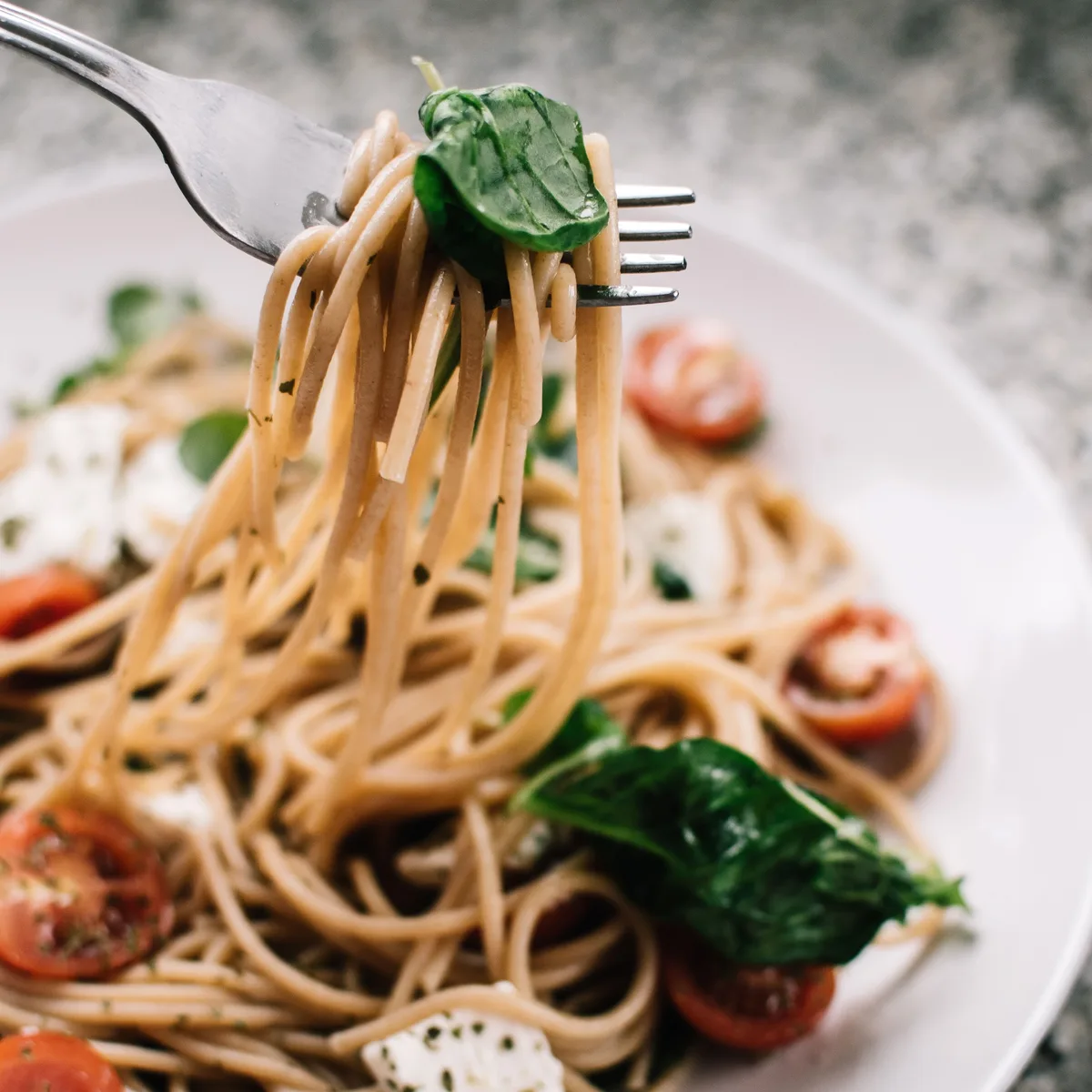
Whole wheat pasta. The house default for the real thing: nuttier than white, sturdier in a sauce and honest on the card. It wants one extra minute past the box time to lose its cardboard edge, and it holds al dente longer than white pasta once it gets there.
Chickpea and lentil pastas. The best of the legume shelf, and they behave differently: they foam in the pot, soften fast in the final minute and turn to paste if boiled past their window. Cook them a minute shy of the box, taste at the pot, and rinse briefly so the surface starch stops cooking. Their flavor is bean-forward, which the tomato and sausage builds below use rather than hide.
Zucchini ribbons and spaghetti squash. Vegetables being noodles, treated as vegetables: salted and squeezed ribbons, squash roasted cut side down at 400F for forty minutes then forked into strands. They star in the lightest builds and they are labeled as what they are, per the same honesty that runs the burger page’s bun ledger.
Red Sauce Builds
Weeknight marinara with whole wheat spaghetti, 30 minutes. Canned crushed tomatoes, garlic bloomed in olive oil, basil, measured pasta finished in the sauce with a ladle of its water. The finish-in-sauce step is where thin marinara becomes a coat; the starch in that ladle is the glue.
Turkey bolognese, 60 minutes. Ground turkey browned hard, tomato, a counted splash of milk, simmered forty minutes over chickpea rigatoni. The milk is the old trick that rounds the sauce’s acid, and it is on the card because everything is.
Eggplant and sausage rigatoni, 45 minutes. Cubed eggplant roasted at 425F until collapsing, one real Italian sausage crumbled and browned, tomato, whole wheat rigatoni. One sausage seasons four bowls when the eggplant does the bulk; that ratio is the recipe’s engine.
Shrimp fra diavolo, 25 minutes. Chili-flaked tomato sauce, shrimp in for the final two minutes, over lentil linguine. The shrimp rule from our diabetic shrimp recipes page applies verbatim: last in, ninety seconds, out.
Green and Pale Builds
Chicken and broccoli pasta, 30 minutes. Seared chicken, broccoli steamed in the pasta pot’s final three minutes, garlic, olive oil, lemon and whole wheat penne. One pot cooks both; the broccoli rides the pasta’s water and the timing folds flat.
Spinach ricotta shells, 40 minutes. Whole wheat shells with a filling of ricotta, squeezed frozen spinach and nutmeg, baked under marinara. Squeeze the spinach until it stops giving water, then squeeze again; wet spinach makes soup inside the shells.
Zoodle scampi with white beans, 20 minutes. Salted, squeezed zucchini ribbons, garlic butter counted by the knob, white beans warmed through. The lightest bowl on the page and honest about being a vegetable dish wearing pasta’s clothes.
Spaghetti squash carbonara-style, 55 minutes. Roasted squash strands folded off the heat with egg, parmesan and pepper, bacon counted plainly. Off the heat means off: the egg sauces at warm and scrambles at hot, and the difference is about thirty seconds of impatience. Labeled as an adaptation, since Rome would riot.
Pesto chicken pasta salad, 25 minutes. Chickpea fusilli cooled under running water, seared chicken, cherry tomatoes, a measured spoon of real pesto. Legume pasta shines cold; its firm bite reads as a feature in a salad where soft white pasta goes gummy.
Tuna white bean pasta, 20 minutes. Whole wheat shells, jarred tuna in olive oil, white beans, lemon, parsley and capers. A pantry dinner from a closed grocery store, and the oil from the tuna jar is the dressing, counted.
Lasagna, the honest one, 90 minutes. Real lasagna noodles, half the usual count, interleaved with salted zucchini planks, turkey bolognese and ricotta. Neither a fake lasagna nor a full-noodle one: the card states exactly what a slice holds, and the zucchini layers must be salted and blotted or the bake floods.
The Sauce Pantry That Makes It Work
Every bowl above leans on a short shelf that deserves naming. Canned crushed tomatoes and whole peeled tomatoes are the backbone; the whole ones, crushed by hand, make a chunkier weekend sauce, and neither needs the sugar that jarred sauces almost always carry. Read any jar’s label against the can’s and the case for the can makes itself. Olive oil, garlic, chili flakes, capers, olives and anchovies are the flavor bank: tiny counted amounts, enormous returns, and the anchovy dissolves into savory depth that no one will identify or object to.
Parmesan belongs here too, bought as a wedge and grated at the pan. The pre-grated tubs are cut with anti-caking starch, which both dulls the flavor and quietly changes what the card should say, and a wedge’s rind simmered into any red sauce above is the free upgrade this page endorses hardest. With that shelf stocked, the marinara, the tuna white bean shells and the fra diavolo are all pantry dinners, cookable the night the fridge offers nothing, which is precisely the night takeout usually wins.
How the Numbers Work
Every card counts its bowl ingredient by ingredient from USDA FoodData Central, source entries archived, per our editorial policy. Pasta is stated as dry weight per serving, weighed, not eyeballed. Total carbohydrates and fiber are stated separately, never as a net figure, and the legume pastas are counted from their own USDA entries rather than borrowed wheat numbers. What any bowl means for your day is a conversation for you and your care team; our job is that the bowl’s arithmetic is real.
Why the Scale and the Timer Matter
Two mechanisms drive this page. Dry pasta gives the eye nothing to anchor to: a serving of spaghetti is a small bundle with no obvious visual reference, so pouring by sight can swing the portion well past a stated serving in either direction, which moves a bowl’s real numbers further than any noodle swap here. That is why every card states a dry weight and why the scale is the one non-negotiable tool. The legume pastas move on a knife edge for a physical reason: their structure is protein rather than wheat gluten, and once that protein has set and begun to break down it collapses from firm to paste in a minute or two at the boil. Cook them a minute shy of the box time and taste at the pot, because the window is short by nature, not by preference.
FAQ
Is real pasta allowed on this site? Counted, yes, always. This section publishes verified numbers and lets you and your care team decide what fits; it does not confiscate foods. The dry-weight habit and the vegetable-heavy builds are how pasta stays a food rather than an event.
Which alternative pasta actually tastes good? Chickpea and lentil pastas work especially well cold and under bold sauces, because their protein structure keeps a firm bite where soft white pasta goes gummy. They are their own food with a bean voice, best where the recipe plans for it. The ones we skip are the ones whose labels we cannot verify against the USDA database.
Why finish pasta in the sauce? The starchy pasta water emulsifies the sauce so it coats instead of pooling. One ladle of pot water into the pan, one minute of tossing, and thin sauce becomes cling. It is the single technique that most upgrades weeknight pasta.
Do these reheat well? The baked builds and the bolognese improve overnight. Skillet pastas reheat gently with a splash of water. The zoodle and squash builds do not store assembled; keep components separate and finish fresh.
Which recipe first? The weeknight marinara. Thirty minutes, pantry staples, and it teaches the weigh-and-finish-in-sauce rhythm that carries the entire page.
Where to Go Next
The beef that fills the bolognese lives at diabetic ground beef recipes, the shrimp rules at diabetic shrimp recipes, and the whole section starts from the diabetic recipes pillar.
Written by Frank Thomson, Skillet & Spoon editorial. Every nutrition figure on this site is calculated ingredient by ingredient from the USDA FoodData Central database, never estimated and never rounded to look better. We do not publish net-carb figures or use non-nutritive sweeteners. How we develop and source recipes is set out in our editorial policy.