Banana Pudding, Classic and Creamy
Banana pudding is a Southern classic: a creamy vanilla custard layered with vanilla wafers and sliced bananas, chilled until the wafers soften into a cake-like layer. The custard is the only cooked part, and like any custard it can turn lumpy or grainy if rushed, so the trick is to thicken it gently and temper the eggs. This from-scratch version is calculated from USDA FoodData Central so the number under each serving is real, and the sweetness is real sugar and the bananas’ own, never a substitute.
Ingredients
Method
- Whisk the sugar and cornstarch together in a saucepan, then whisk in the milk until smooth.
- Cook over medium heat, stirring constantly, until it thickens and comes to a gentle boil.
- Whisk a ladle of the hot mixture into the beaten eggs to temper them, then return it all to the pan and cook another minute, stirring, until thick.
- Off the heat, stir in the vanilla, then press plastic wrap onto the surface and cool slightly.
- Layer the vanilla wafers, sliced bananas and warm custard in a dish, repeating to finish with custard, and chill for at least four hours.
- The wafers soften into a cake-like layer as it chills, so make it ahead.
Making a Smooth Custard
The custard is thickened two ways: cornstarch, which sets it, and eggs, which enrich it. Both need care. Whisk the cornstarch into the sugar and then the cold milk so it disperses without lumps, and cook it to a gentle boil, because cornstarch only thickens fully at a boil. The eggs are the lumping risk: temper them by whisking in a little of the hot mixture first to warm them gradually, then return everything to the pan, so they never meet the full heat cold and scramble. If any lumps form, pass the custard through a sieve while it is still warm.
Why It Is Made Ahead
Banana pudding is an assembled, chilled dessert, and the chilling is not just to set it, it transforms it: the vanilla wafers draw moisture from the custard overnight and soften into a soft, cake-like layer, which is the whole point. A banana pudding eaten straight after layering has crisp, biscuit-like wafers; left overnight, they become tender and the dessert comes together. So make it at least four hours ahead, ideally the day before.
Keeping the Bananas from Browning
Cut bananas brown as they sit, which is largely cosmetic but can look unappealing in a pale pudding. Using ripe but still firm bananas, slicing them just before layering, and making sure they are covered by custard rather than exposed to air all slow the browning. A squeeze of lemon on the slices slows it further, at the cost of a faint tang.
Variations
The classic uses vanilla wafers, but shortbread or graham crackers work too. Many versions fold whipped cream into the cooled custard for a lighter, fluffier pudding, or top it with meringue or whipped cream. The custard base is the constant; what it is layered with and topped with varies by family.
Make It Lighter with Whipped Cream
Many banana puddings fold whipped cream into the cooled custard, which lightens the dense base into something softer and fluffier, closer to the trifle-like versions. To do it, cool the custard completely, whip cold cream to soft peaks, and fold it in gently so the air survives. It makes a lighter, more mousse-like pudding, though a little less rich. A meringue baked on top is the old-fashioned alternative finish, spooned over and browned in the oven.
Serving
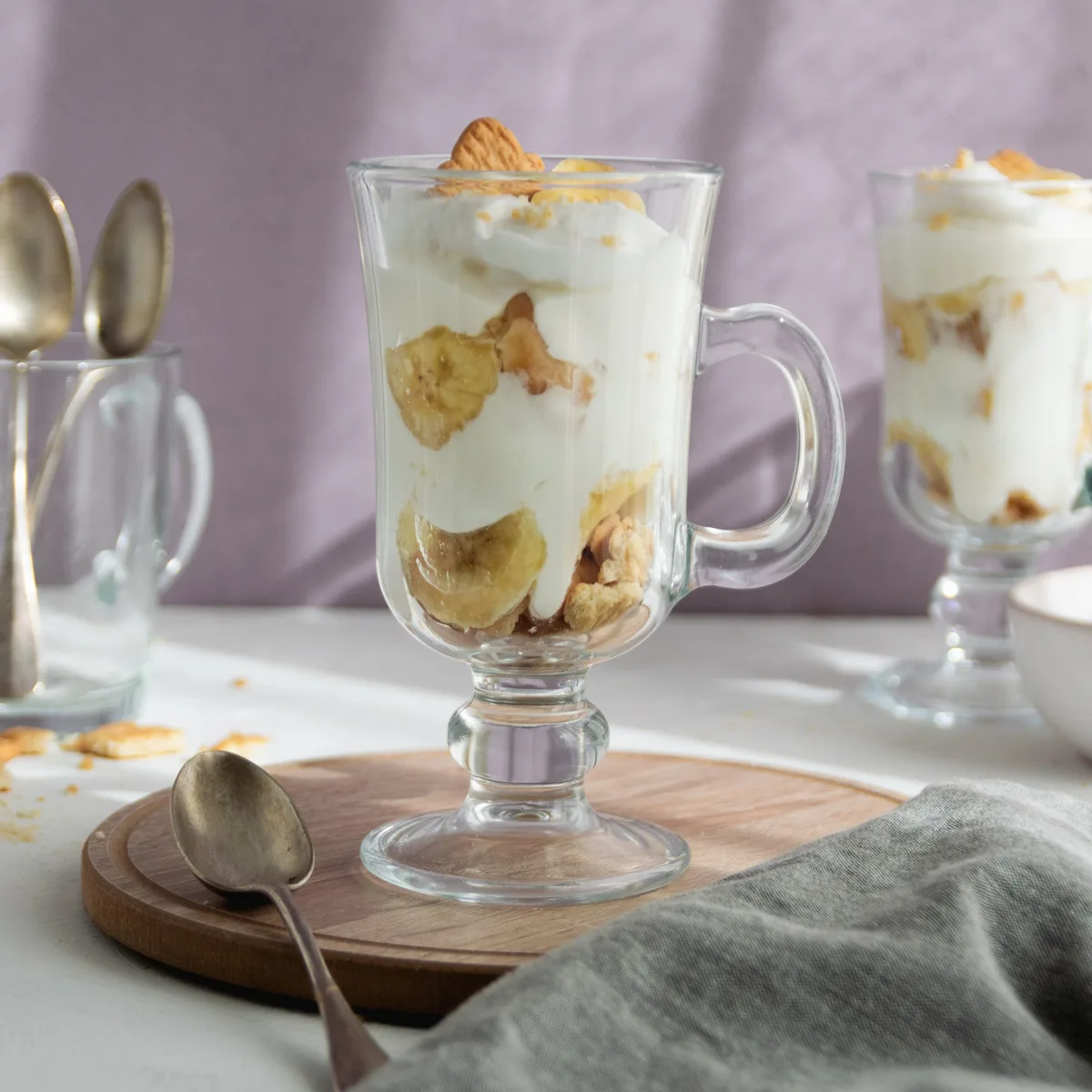
Banana pudding is served cold, scooped from a big dish, which is part of its homely, shareable appeal, and it scales up easily for a crowd in a large trifle bowl where the layers show through the glass. Individual cups or jars are a tidy party version that also set faster and travel better. Top with a few extra wafers or a swirl of whipped cream just before serving so they stay fresh and crisp. It is a classic potluck and holiday dessert for exactly this reason, made ahead and shared from one big bowl.
Storage
Banana pudding keeps covered in the fridge for a couple of days, though it is best within a day of assembling, before the bananas brown and the wafers go fully soft. It does not freeze well, because the custard separates and the bananas turn on thawing, so it is a make-a-day-ahead dessert rather than a freezer one. Made in a clear glass dish, it doubles as its own centrepiece, with the layers showing through and no plating needed.
FAQ
Why is my banana pudding custard lumpy? The eggs scrambled or the cornstarch clumped. Whisk the cornstarch into the sugar and cold milk first, temper the eggs with a little hot mixture before adding them, and stir constantly. Sieve the custard if lumps form.
Why is my custard runny? It did not reach a boil. Cornstarch only thickens fully at a boil, so bring it to a gentle boil, stirring, and it will set as it cools and chills.
Why make banana pudding ahead? Chilling lets the vanilla wafers soften into a cake-like layer by drawing moisture from the custard, which is what makes the dessert. Made and eaten straight away, the wafers stay crisp. Give it at least four hours, ideally overnight.
How do I keep the bananas from browning? Use ripe but firm bananas, slice them just before layering, cover them with custard, and optionally add a squeeze of lemon to the slices. Browning is mostly cosmetic.
Can I use a shortcut with boxed pudding? You can, but a from-scratch custard tastes cleaner and lets you control the sugar, and the numbers here are for the scratch version. The layering and chilling are the same either way.
Can I use a sugar substitute? This recipe does not, because sugar sweetens and balances the custard and bananas, and substitutes misreport the carbohydrate. It uses real sugar, counted honestly from USDA data.
Where to Go Next
For the custard science behind it, see the pudding recipes and dessert recipes guides, and for a no-bake layered sweet, no-bake desserts.
Written by Frank Thomson, Skillet & Spoon editorial. Every nutrition figure on this site is calculated ingredient by ingredient from the USDA FoodData Central database, never estimated and never rounded to look better. We do not publish net-carb figures or use non-nutritive sweeteners. How we develop and source recipes is set out in our editorial policy.