Coffee Cake Recipes: Tender Crumb and a Streusel Top
Coffee cake recipes cause one small confusion worth clearing up first: a coffee cake usually has no coffee in it at all. The name means a cake to eat with coffee, a tender, not-too-sweet cake with a cinnamon swirl or a crumbly streusel top, the kind served at brunch. What makes a good one is a moist, tender crumb that stands up to a generous streusel, and both come down to a few choices about fat, acidity and mixing. This page groups the coffee cakes on this site and explains how to get that soft crumb and crunchy top. Every number here is from USDA FoodData Central, and the sweetness is real sugar, counted honestly, never a substitute.
Why Sour Cream Makes It Tender
The classic coffee cake is built on sour cream or yogurt, and that is not just for tang. The fat adds richness and the acidity tenderises, because acid slows gluten development and keeps the crumb soft and fine rather than tough. Sour cream also carries moisture that keeps the cake fresh for days, which is why a sour cream coffee cake stays good longer than a plain one. Buttermilk does a similar job through the same acidity.
The Streusel Topping
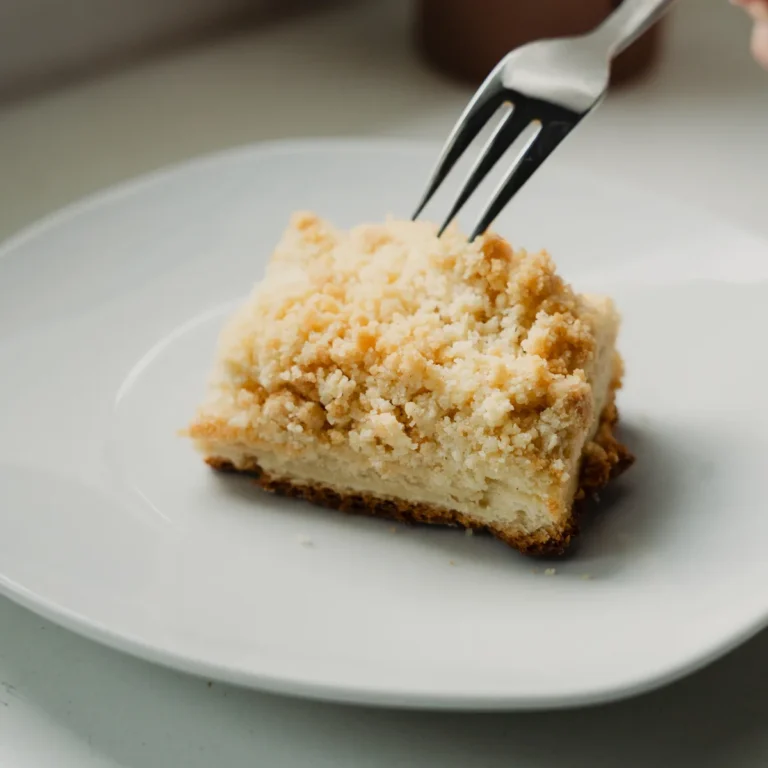
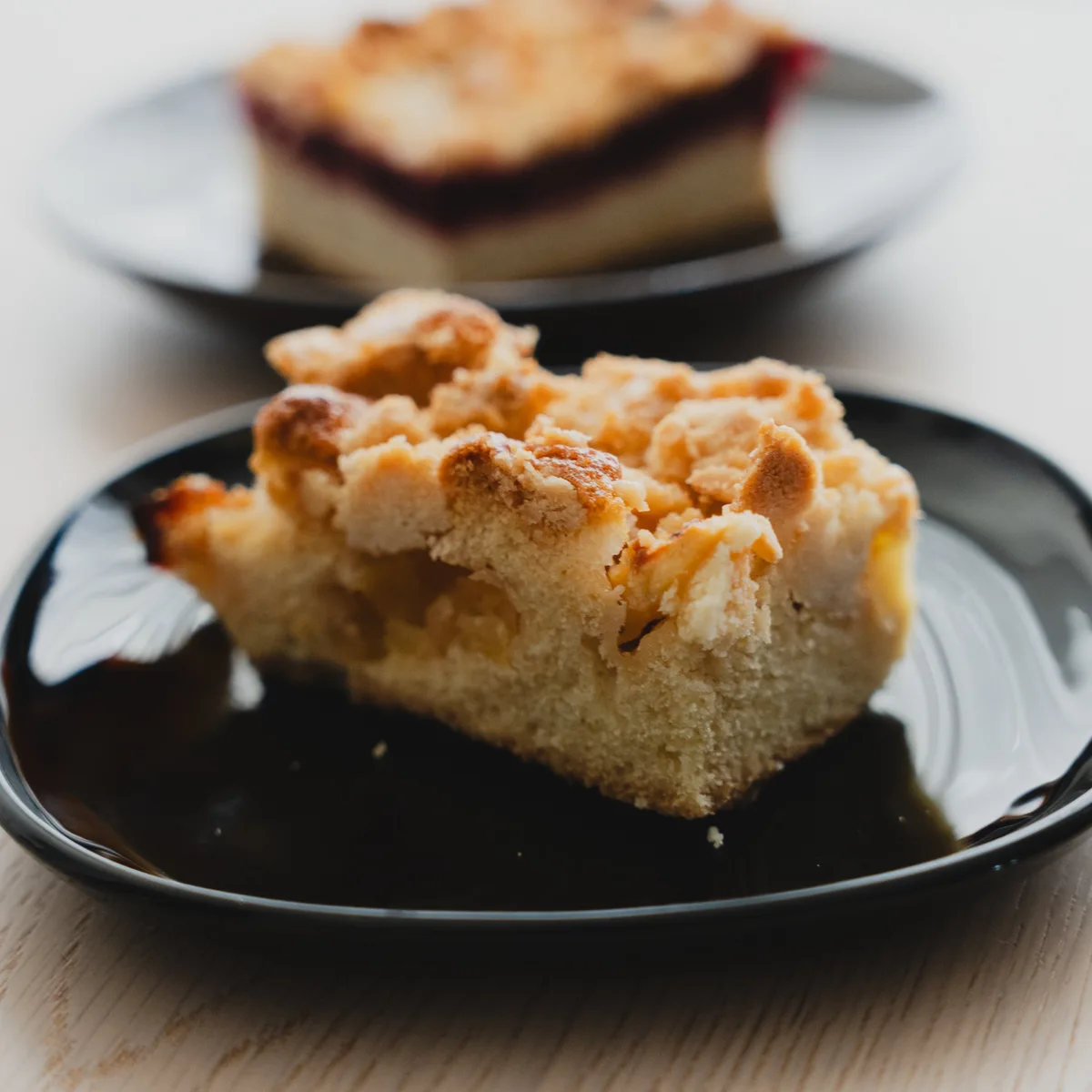
Streusel is the crumbly topping that defines a coffee cake, and it is simply flour, sugar, butter and usually cinnamon rubbed together into coarse crumbs. The ratio decides the texture: more butter makes it clump into bigger, richer crumbs, more flour keeps it fine and sandy. Scatter it on before baking, and for a thick, craggy top, press some into larger pieces by hand. Cold butter keeps the crumbs distinct, while warm butter melts them into the batter.
The Cinnamon Swirl
Many coffee cakes carry a ribbon of cinnamon sugar through the middle as well as streusel on top. The swirl is a mix of sugar and cinnamon, sometimes with a little flour or nuts, layered into the batter halfway. Keep the swirl mixture dry and not too heavy, because a wet or overloaded swirl sinks to the bottom instead of staying as a defined ribbon.
Mixing for a Fine Crumb
Coffee cake uses the creaming method, so the same cake rules apply: cream the butter and sugar for air, add eggs one at a time, and fold the flour in just until combined, because over-mixing builds gluten and toughens the crumb. The sour cream goes in alternately with the flour to keep the batter smooth. The full creaming method is in the cake recipes guide.
Shapes: Round, Square and Bundt
Coffee cake bakes in any shape, and the shape changes how the streusel and swirl sit. A square or round pan holds a thick streusel layer on top; a bundt pan, with the batter and swirl layered in, turns out with the cinnamon ribbon running through and is often finished with a glaze rather than streusel, since the streusel would fall off the sloped sides. For a bundt, grease every crevice so the detailed shape releases cleanly.
Serving and Storing
Coffee cake is at its best slightly warm, when the crumb is soft and the cinnamon aromatic, so a few seconds of reheating revives a stored slice. It keeps several days airtight at room temperature thanks to the sour cream’s moisture, and it freezes well, whole or in slices, wrapped against air. A simple glaze drizzled over adds sweetness and a little shine to a plain top.
Add-Ins and Variations
Coffee cake takes additions easily. Nuts, pecans or walnuts, go into the streusel or the cinnamon swirl for crunch, and a layer of fruit, blueberries, apple or rhubarb, folds into the batter or sits between layers for a fruit coffee cake. Chocolate chips scattered through turn it toward a sweeter treat. The one caution is weight: heavy add-ins sink through a thin batter, so toss fruit and chips in a little flour first, the same trick that keeps blueberries suspended in a muffin. Keep the batter on the thick side, which a sour cream coffee cake naturally is, and the add-ins stay put.
Glaze or Streusel
A coffee cake is finished one of two ways, and they suit different shapes. A streusel top belongs on a flat round or square cake, where the crumbs sit in a thick layer and bake crunchy. A glaze, powdered sugar whisked with a little milk or lemon juice, belongs on a bundt or any cake with sloped sides that streusel would slide off, and it goes on once the cake has cooled so it sets rather than soaks in. Some cakes carry both, a streusel baked on and a thin glaze drizzled over after.
Common Problems
The usual faults are easy to place. A dry coffee cake was over-baked or short on the sour cream that keeps it moist, so check it early and do not skimp on the dairy. A sunken middle is underbaking or too much raising agent. Streusel that sank in rather than sitting on top had butter too warm, melting it into the batter, so use cold butter in coarse crumbs. And a swirl that disappeared was too wet or too thin, so keep the cinnamon-sugar mixture dry and use enough to show as a ribbon.
A Note on Sugar
Sugar in a coffee cake sweetens the crumb, browns the streusel, and holds moisture for a cake that keeps. This site uses real sugar, counted honestly from USDA data, and never non-nutritive sweeteners, which cannot brown a streusel or hold moisture and misreport carbohydrate. For carb-counted bakes, see the diabetic cake recipes collection.
Quick-Bread Versus Yeasted Coffee Cake
There are two traditions behind the name, and they are quite different. The common American coffee cake is a quick bread: raised with baking powder or soda, mixed and baked in under an hour, which is the familiar sour-cream crumb cake. An older tradition is the yeasted coffee cake, closer to an enriched bread, where yeast raises the dough over a longer rise and gives a softer, more pull-apart texture, as in a babka or a kringle. Both are served with coffee and both can carry cinnamon and streusel, but they are made by different methods and take very different times. This guide centres on the quicker, baking-powder version, which is the more forgiving place to start, while the yeasted kind rewards anyone comfortable with bread dough. If you are short on time, reach for the quick-bread version; if you want a weekend baking project, the yeasted one is worth the longer rise.
FAQ
Does coffee cake have coffee in it? Usually no. The name means a cake to serve with coffee, not a coffee-flavoured cake. It is typically a tender cinnamon cake with a streusel top or a cinnamon swirl.
Why does sour cream make coffee cake better? Its fat adds richness and its acidity tenderises the crumb by slowing gluten development, and it carries moisture that keeps the cake fresh for days. Buttermilk works similarly.
Why did my streusel melt into the cake? The butter was too warm, so the crumbs melted rather than staying distinct. Use cold butter, rub it into coarse crumbs, and scatter them on just before baking.
Why did my cinnamon swirl sink to the bottom? The swirl mixture was too wet or too heavy. Keep it dry, sometimes with a little flour, and use a moderate amount so it stays as a ribbon rather than sinking.
Can I make coffee cake in a bundt pan? Yes. Layer the batter and cinnamon swirl in, grease every crevice so it releases, and finish with a glaze rather than streusel, which would slide off the sloped sides.
Can I use a sugar substitute in coffee cake? This site does not, because sugar browns the streusel and holds moisture, not just sweetens, and substitutes do not. We use real sugar and count it honestly.
Where to Go Next
Start with the cake recipes guide for the creaming method, and the muffin recipes guide for the related streusel-topped quick breads. For the baking behind every cake, see dessert recipes. For a related moist quick bread, see the banana bread recipe. For a sour-cream crumb under a cinnamon streusel, see the worked coffee cake single.
Written by Frank Thomson, Skillet & Spoon editorial. Every nutrition figure on this site is calculated ingredient by ingredient from the USDA FoodData Central database, never estimated and never rounded to look better. We do not publish net-carb figures or use non-nutritive sweeteners. How we develop and source recipes is set out in our editorial policy.