
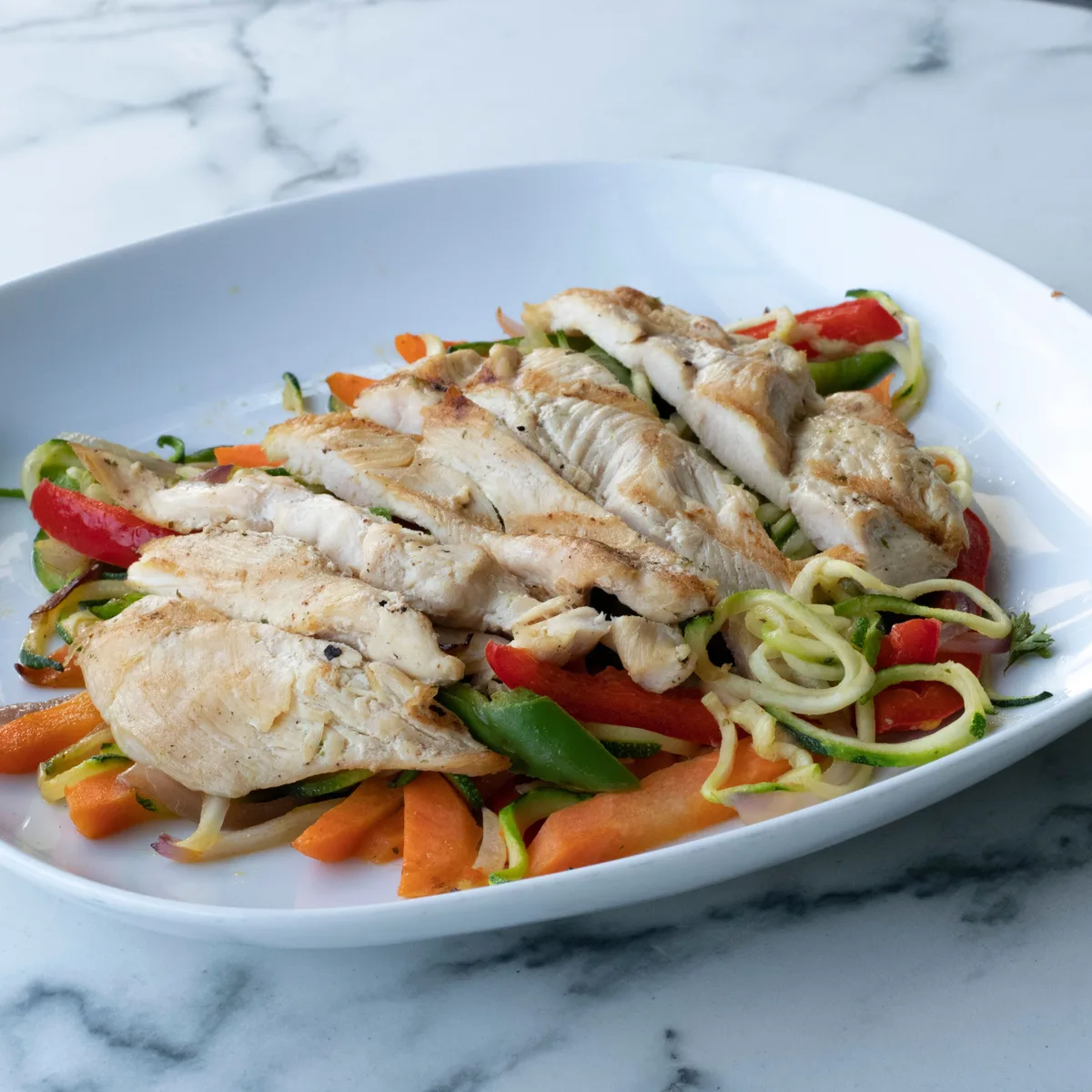
High Protein Meals: Breakfast, Lunch, Dinner and Snacks
High protein meals are mostly a shopping and timing problem rather than a cooking problem. The food that carries protein is not exotic, and almost none of it needs a supplement aisle: eggs, dairy, chicken, fish, beans, lentils, tofu. What goes wrong is that the protein arrives dry, or it arrives at dinner only, or the number on the packet turns out to describe a dry weight rather than a cooked portion. This page is the index for the whole collection, and it starts with the figures, because every number here comes from USDA FoodData Central rather than from an estimate.
What This Page Does Not Do
It does not tell you how much protein to eat. That depends on your body, your training and your medical situation, and it is a question for a doctor or a dietitian rather than a recipe site. There is no daily target here, no grams per kilogram, and no plan to follow.
What it does instead is show which foods actually carry protein, what that costs in calories, and how to cook them so the protein does not arrive dry or rubbery. The cooking is the part a recipe site can genuinely help with.
Protein Per 100 g, Measured Rather Than Guessed
Every figure below was pulled from USDA FoodData Central against the same exact catalog entries this site uses to calculate its recipe cards. The entry and its FoodData Central ID are listed so you can check any row yourself.
| food | protein per 100 g | calories per 100 g | USDA entry |
|---|---|---|---|
| monterey jack cheese | 24.5 g | 373 | Cheese, monterey (170844) |
| red lentils | 23.9 g | 358 | Lentils, pink or red, raw (174284) |
| chicken breast | 22.5 g | 120 | Chicken, broilers or fryers, breast, skinless, boneless, raw (171077) |
| peanut butter | 22.2 g | 598 | Peanut butter, smooth style, with salt (174266) |
| almonds | 21.2 g | 579 | Nuts, almonds (170567) |
| shrimp | 20.1 g | 85 | Crustaceans, shrimp, raw (175179) |
| chicken thighs | 19.7 g | 121 | Chicken, broilers or fryers, dark meat, thigh, meat only, raw (173627) |
| beef chuck | 18.4 g | 237 | Beef, chuck, roast, boneless, choice, raw (2646174) |
| queso fresco | 18.1 g | 299 | Cheese, fresh, queso fresco (172223) |
| cod | 17.8 g | 82 | Fish, cod, Atlantic, raw (171955) |
| tofu | 17.3 g | 144 | Tofu, raw, firm, prepared with calcium sulfate (172475) |
| ground beef, 80/20 | 17.2 g | 254 | Beef, ground, 80% lean meat / 20% fat, raw (174036) |
| pork shoulder | 17.2 g | 236 | Pork, fresh, shoulder, whole, raw (167843) |
| quinoa | 14.1 g | 368 | Quinoa, uncooked (168874) |
| rolled oats | 13.2 g | 379 | Cereals, oats, regular and quick, dry (173904) |
| eggs | 12.6 g | 143 | Egg, whole, raw, fresh (171287) |
| edamame | 11.9 g | 121 | Edamame, frozen, prepared (168411) |
| cottage cheese | 11.1 g | 98 | Cheese, cottage, creamed (172179) |
| greek yogurt | 10.2 g | 59 | Yogurt, Greek, plain, nonfat (170894) |
| black beans | 8.9 g | 134 | Black beans, from canned (2707363) |
| pinto beans | 7.7 g | 137 | Pinto beans, from canned (2707375) |
| ricotta cheese | 7.5 g | 150 | Cheese, ricotta, whole milk (170851) |
Read that table carefully, because some rows of it are a trap. Lentils, quinoa and oats are catalogued dry, and dry weight is not what you eat. A dry grain or pulse roughly triples in weight as it absorbs water, so a cooked portion carries about a third of the protein per 100 g that the dry figure suggests. Cheese and nuts sit at the top of the protein column and also near the top of the calorie column, which is why the two columns are printed side by side rather than ranking protein alone. The recipe cards on this site compute the finished dish, which is the only number that answers what is actually on the plate.
Breakfast
Breakfast is the meal where protein most often goes missing, because the default breakfast foods are starch: toast, cereal, pastry, fruit. The fix is not elaborate.
Eggs, cooked gently. Eggs sit mid-table above, and the cooking matters more than the count: egg protein sets between about 145F and 160F, and past that the proteins contract and squeeze out water, which is what makes a rubbery, weeping scramble. Low heat, pulled off while still glossy.
Greek yogurt, strained rather than sweetened. Plain Greek yogurt has the best protein-to-calorie ratio in the table above. Flavoured versions add sugar and dilute that ratio, so sweeten it yourself with fruit.
Cottage cheese. Mild, cheap, high in the table for its calories, and it works savoury as readily as sweet.
Oats with something added. Oats alone are a starch breakfast with modest protein that drops further once cooked with water. Stirring Greek yogurt in after cooking, or building them around milk rather than water, is what lifts them.
Worked examples on this site: diabetic carrot cake baked oatmeal and the egg-and-salsa builds in Mexican breakfast recipes.
Lunch
Lunch has a specific constraint the other meals do not: it usually has to survive several hours and often has to be eaten cold.
Cooked and chilled is a feature, not a compromise. Poached chicken, hard-boiled eggs, canned fish, beans and firm cheeses all hold their texture cold. Fried and breaded things do not, because the crust takes moisture from the air and from whatever it is packed against.
Pack wet and dry apart. Dressing in the bottom of a jar with sturdy items above it, greens on top, shaken at the table. Anything crisp travels in its own container or it will not be crisp.
Beans do more work than their row suggests. Canned pinto and black beans sit at the bottom of the protein column per 100 g, but they are eaten in large portions and they bring fibre with the protein, so a cup of them contributes meaningfully where a sprinkle of cheese does not.
See Mexican lunch ideas for the packing logic, and bariatric cottage cheese salad for a cold lunch built on dairy protein.
Dinner
Dinner is where protein is easiest, so the useful advice is about not ruining it.
Lean cuts need a short, hot cook; tough cuts need a long, low one. Chicken breast, shrimp and white fish are lean, and their proteins tighten and expel moisture quickly past done, which is the whole reason they end up dry. Chuck, shoulder and thigh are the opposite: they carry collagen that needs an hour or more at a bare simmer to convert to gelatin, and rushing them with high heat makes them tough rather than tender.
Carryover is real. A thick piece of meat keeps cooking after it leaves the heat, so the moment to stop is slightly before it looks done.
Resting is not a ritual. During cooking the fibres near the surface contract and push moisture toward the centre. Cut immediately and that moisture runs onto the board; wait a few minutes and the fibres relax and reabsorb much of it.
Dinners on this site that are built on protein: carne asada at 31 g per serving, chicken tinga at 31 g, chicken fajitas, beef barbacoa and chicken tortilla soup at 29 g.
Snacks
A snack is where protein either gets added easily or gets replaced by starch entirely.
The whole-food options need no recipe: Greek yogurt, cottage cheese, hard-boiled eggs, a handful of almonds, edamame, cheese with fruit. The almonds row is worth noticing, because nuts carry real protein at a real calorie cost, so they suit a small portion rather than open-bag grazing.
Where this site has structured snack recipes, they sit in the bariatric collection, which is built around protein by design: whipped cottage cheese and ricotta custard cups.
Vegetarian and Plant Protein
Plant protein is entirely workable and it needs one adjustment: plant sources carry more water and more carbohydrate alongside the protein, so the portions are larger.
Tofu is the densest common option at 17.3 g per 100 g. Firm or extra firm, pressed to remove water, then browned hard. Press it and the surface can brown; skip that and it steams in its own moisture.
Lentils and beans work in volume. Red lentils cook down fast enough for a weeknight and thicken whatever they are in.
Edamame is the easiest of all, since it arrives frozen and needs only heat and salt.
Dairy and eggs, for anyone eating them, are the simplest route of all, and the top of the table is mostly dairy.
See braised tofu with edamame and vegetarian Mexican recipes.
How to Lift a Meal You Already Cook
This is more useful than adopting new recipes, because the meals you already make are the ones you will actually repeat.
- Swap the dairy, not the dish. Greek yogurt in place of sour cream, cottage cheese blended in place of cream. In cold applications it is a direct swap; in hot pans both split, so they go in off the heat.
- Add a second protein rather than more of the first. Beans into a beef dish, an egg onto a rice bowl, cheese over a vegetable bake. This raises the total without making the portion of meat implausible.
- Keep a cooked protein in the fridge. Poached chicken, boiled eggs, a pot of beans. A low-protein meal is often the result of nothing being ready, rather than of a decision.
- Treat the starch as the variable. Keeping the protein constant and adjusting rice or pasta is easier than the reverse, because the protein is usually the thing that takes planning.
What the Numbers on This Site Mean
Every recipe card here is calculated by pinning each ingredient to an exact USDA FoodData Central entry and summing the result. Nothing is estimated, and where USDA cannot model something the post says so rather than quietly averaging the gap: fried dishes count the whole panful of oil, strained drinks count the solids that get thrown away, and dried chiles carry no sugar figure in the database at all.
Two consequences worth knowing. Protein powder recipes on this site publish no nutrition numbers, because powders vary so much between brands that a published figure would be wrong for most readers. And no recipe here uses non-nutritive sweeteners, which keeps the carbohydrate column honest.
FAQ
What foods are highest in protein? By weight, cheese, lean poultry, nuts, fish and tofu lead the table above, with dairy such as Greek yogurt and cottage cheese offering the best protein for the fewest calories. Dry pulses and grains look high but lose roughly two thirds of that density once cooked.
How much protein should I eat? This site does not answer that, because it depends on your body, your activity and your medical situation. That is a question for a doctor or a registered dietitian.
Why does the protein figure change once food is cooked? Because weight changes. Dry lentils and grains absorb water and roughly triple in weight, so the protein per 100 g falls; meat loses water and the figure rises slightly. The recipe cards compute the finished dish rather than the raw ingredient.
Can I get enough protein without meat? Yes. Tofu, lentils, beans, edamame, dairy and eggs all carry it. The practical difference is portion size and that plant sources bring carbohydrate along with the protein.
Do I need protein powder? Not for any recipe on this site. Powders are convenient rather than necessary, and because brands differ so widely, recipes here that use them publish no nutrition numbers at all.
Why is my chicken breast always dry? It is lean, so its proteins tighten and force out moisture quickly once past done. Cook it hot and briefly, pull it slightly early because it keeps cooking off the heat, and let it rest before cutting.
Where to Go Next
Start with the protein-heavy dinners already on the site: carne asada, chicken tinga and chicken tortilla soup. For cold, portable protein see bariatric cottage cheese salad, and for the plant route see braised tofu with edamame.
Written by Frank Thomson, Skillet & Spoon editorial. Every nutrition figure on this site is calculated ingredient by ingredient from the USDA FoodData Central database, never estimated and never rounded to look better. We do not publish net-carb figures or use non-nutritive sweeteners. How we develop and source recipes is set out in our editorial policy.