Diabetic Shakshuka: One Skillet, Six Eggs, Real Sauce
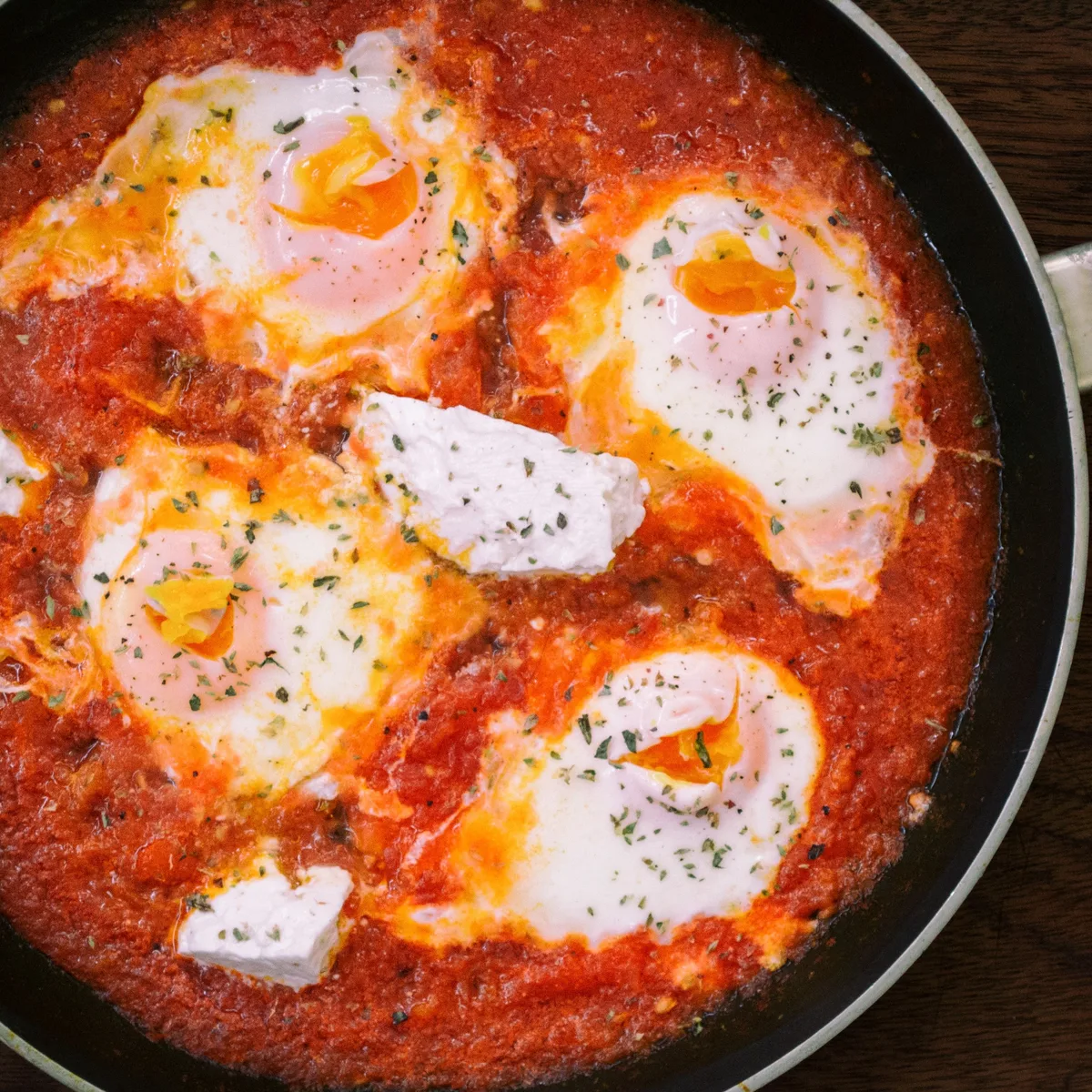
Diabetic shakshuka is what this section serves when eggs need to be dinner and nobody wants to hear the word omelette. Six eggs poached in a skillet of cumin-spiced tomato and slumped peppers, feta over the top, the pan itself on the table. It is a North African and Middle Eastern classic and we present it as exactly that, cooked straight, because the traditional dish already fits how this section eats: vegetables and eggs, one pan, nothing that needs replacing. The card carries USDA-calculated numbers, and the technique lives in two stages most versions rush.
Ingredients
Method
- Soften the onion and peppers in the oil over medium heat until the peppers slump and the onion edges color, 8 to 10 minutes. Do not rush this stage; it is the sauce’s backbone.
- Add the garlic, cumin and smoked paprika and stir for 30 seconds until fragrant.
- Pour in the crushed tomatoes, season with salt, and simmer uncovered for 10 minutes, until the sauce thickens enough that a spoon dragged through it leaves a brief trail.
- Make six wells with the back of the spoon and crack an egg into each.
- Cover and cook over low heat for 5 to 7 minutes, until the whites are set and the yolks still shake. Check at 5; they go from perfect to hard fast.
- Scatter the feta over, kill the heat, and bring the whole skillet to the table.
Why This Recipe Works
- The sauce is cooked before the eggs ever appear. Ten unhurried minutes for the peppers and onion, ten more for the tomatoes to thicken. Eggs poached in watery sauce taste like eggs in tomato juice.
- The wells hold the eggs still. Pockets pressed into thick sauce keep whites gathered, so they set as neat islands instead of spreading into ribbons.
- The lid finishes the top. Five to seven covered minutes steam the whites set while the yolks stay loose; the pan does the basting.
Ingredient Notes
The tomatoes. One 28 ounce can of crushed tomatoes is the body of the dish and, as the card shows, the majority of its carbohydrate, which is why this post carries a label note under the card. Canned tomato products vary by brand more than the produce they came from, and a few carry added sugar; one glance at your can’s label keeps the arithmetic yours. Whole peeled tomatoes crushed by hand work identically and run chunkier.
The peppers. Two bell peppers, any color, though red reads sweeter against the spice. Their softening stage is not negotiable; crisp peppers in shakshuka read raw no matter how long the sauce simmers afterward.
The eggs. Six large, as fresh as the fridge offers. Fresher whites hold tighter wells. Crack each into a cup first if you do not trust your aim; one broken yolk in the pan is fine, six is scrambled sauce.
The feta. Two ounces, crumbled over at the end, counted on the card. It is the salt and the creaminess in one move. Skip it and add a pinch more salt to the sauce; swap goat cheese if that is what the fridge holds and recount.
The Method, In Short
The card carries the steps, and the shape is simple: build the sauce, thicken the sauce, poach the eggs in it. The two failure points are both about patience. First, the vegetables: eight to ten minutes over medium, until the peppers genuinely slump. Second, the simmer: the sauce is ready for eggs when a spoon dragged through it leaves a trail that holds for a beat before closing. Loose sauce cannot hold wells, and wells are what keep the eggs poaching instead of drifting.
The eggs themselves want low heat and a lid, five minutes before the first check. The window between trembling yolks and hard ones is about ninety seconds, so check early and pull the pan while the yolks still shake; they finish setting on the way to the table. Serve with spoons straight from the skillet, and if bread is on your table it gets counted like everything else; a counted slice of the seeded loaf from diabetic bread recipes is the house pairing.
Substitutions and Storage
Harissa or chili flakes belong in the garlic stage if your table likes heat. A handful of spinach wilted into the sauce before the eggs is a quiet upgrade. Ground turkey browned first turns it into a heartier dinner; recount the card for any of these.
Shakshuka is a cook-and-eat dish; poached eggs do not reheat with dignity. The sauce, though, meal-preps beautifully: make a double batch of sauce alone, refrigerate up to four days or freeze flat for three months, and any weeknight becomes wells, eggs, lid, seven minutes. That split, sauce banked ahead and eggs always fresh, is how this dish becomes a weekday food instead of a weekend one.
Why Sauce Thickness Sets the Eggs
Wells only hold if the sauce is thick enough to keep its shape. A spoon dragged through loose sauce closes on itself immediately, so an egg cracked into it drifts and the white cooks in ragged ribbons instead of a gathered island. Reduce the sauce until a dragged trail holds for a beat and the pockets stay open long enough for the whites to set inside them. Reduce too far and the sugars in the tomato catch on the pan bottom before the eggs are done, so thick with a trail, not dry, is the target.
The narrow timing window is heat, not luck. Egg yolk proteins begin to firm around 150F and set solid not far above, so the residual heat that leaves a yolk trembling one moment turns it to custard and then firm within a minute or two. That is why the lid comes off early: check while the yolks still shake and pull the pan, because carryover heat keeps setting them on the way to the table.
FAQ
Is shakshuka breakfast or dinner? Traditionally either, and in this section it is mostly dinner, because it turns pantry staples into a hot meal in thirty five minutes. The eggs make it feel like morning; the skillet makes it feel like enough.
Can I make it with fresh tomatoes? In high summer, yes: about two pounds, grated or chopped, simmered longer to concentrate. Out of season, the can beats pale fresh tomatoes every time, which is why the recipe is written on the can.
How spicy is this version? As written, warm but gentle: cumin and smoked paprika, no chile. It is the base build; the heat dial is yours, and harissa is the traditional direction to turn it.
What do I serve it with? It stands alone as an egg and vegetable dinner. Bread for the sauce is classic and counted; the crustless quiche crowd will find it needs nothing at all.
Where to Go Next
The vegetarian bench this dish anchors lives at diabetic vegetarian recipes, the egg technique file continues at diabetic breakfast recipes, and the whole section starts from the diabetic recipes pillar.
Label note: most of the carbohydrate in this recipe comes from the canned crushed tomatoes, calculated here from USDA’s generic entry. Brands vary, and some contain added sugar, so check the label on the one in your kitchen.
Written by Frank Thomson, Skillet & Spoon editorial. Every nutrition figure on this site is calculated ingredient by ingredient from the USDA FoodData Central database, never estimated and never rounded to look better. We do not publish net-carb figures or use non-nutritive sweeteners. How we develop and source recipes is set out in our editorial policy.