Diabetic Hamburger Recipes: 10 Builds That Respect a Burger
Diabetic hamburger recipes tend to arrive with an apology, as if the burger were being confiscated and replaced with a sad substitute. This page refuses the framing. A burger is a patty cooked with skill plus a set of decisions around it, and every one of those decisions, bun or wrap, cheese or not, sauce by the spoon or by the pour, appears below with its real numbers on the card. Nothing is banned here; everything is counted.
The patty craft comes first, because a mediocre patty ruins every build equally. Then ten burgers, from the leanest lettuce wrap to a whole wheat bun stated plainly at its true values. The rest of the ground beef file lives at diabetic ground beef recipes.
Patty Craft, the Ten Minute Course
Handle the meat like it owes you nothing. Overworked beef bounces. Divide, shape into loose pucks with cool hands, and stop the moment they hold together. Smooth, kneaded patties cook up dense and springy.
Dimple the center. A thumbprint in the raw patty’s middle counters the bulge that heat creates, so the cooked burger sits flat and holds its toppings instead of shedding them.
Salt the outside, not the mix. Salt worked through ground beef dissolves protein and turns the texture toward sausage. Season the surfaces just before the heat, generously.
Cook to temperature, once flipped. Ground beef is done at 160F internal, a food safety line rather than a preference, because grinding distributes surface bacteria all the way through. A thermometer through the patty’s side reads the center accurately; through the top, it lies.
The smash alternative. Thin patties pressed hard onto a screaming hot surface for ninety seconds build more crust per ounce than any thick patty can. Smash burgers reach 160F almost by definition; the tradeoff is you need two per serving and a truly hot pan.
The Ten Builds
The lettuce wrap standard, 20 minutes. A quarter pound patty, iceberg leaves doubled into a cup, tomato, red onion, pickles, mustard. Iceberg specifically, and two layers: single leaves of soft lettuce collapse before the second bite.
Smash burger, protein style, 20 minutes. Two thin smashed patties, cheese between them, wrapped in iceberg with grilled onions. The crust does the work a bun usually does, giving structure and chew.
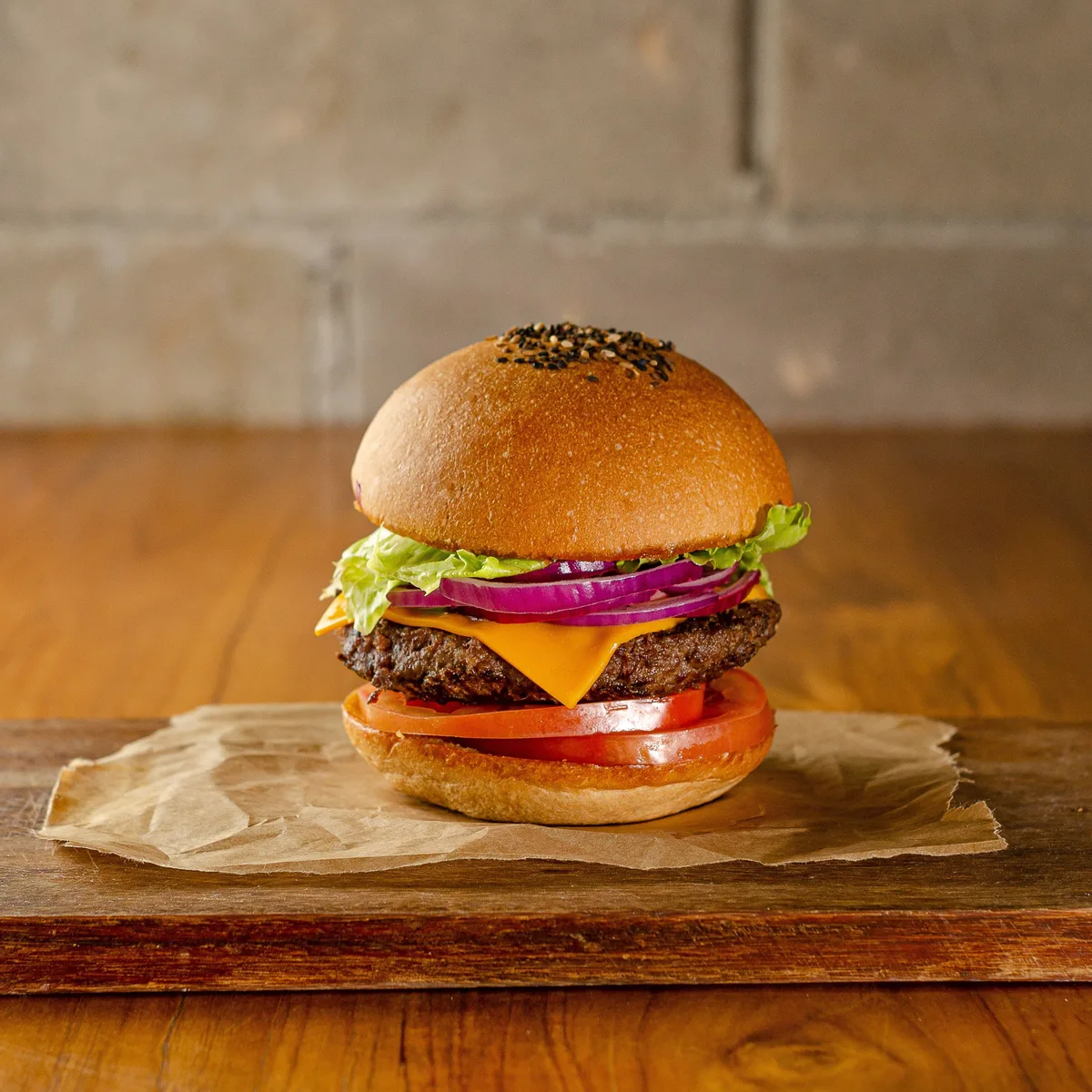
The counted classic, 25 minutes. One patty on a whole wheat bun with the works, the bun stated on the card at its real values. This build exists because pretending buns do not exist is not a policy; counting them is. Eat it knowingly, enjoy it fully.
Portobello bun burger, 30 minutes. Two roasted portobello caps standing in for bread. Roast them gill side up at 425F for ten minutes first and blot them; raw caps flood the napkin by the third bite.
Burger bowl, 20 minutes. Crumbled or sliced patty over romaine, tomato, pickles, red onion, cheddar and a measured special sauce of mayonnaise, mustard and dill pickle brine. The sauce is a spoon, not a ladle, and the card says exactly what the spoon holds.
Mushroom Swiss skillet burger, 30 minutes. Dry-seared mushrooms, a patty finished under a slice of Swiss, everything over the mushrooms with pan juices. Mushrooms first and alone until browned; wet mushrooms never brown next to a patty.
Greek turkey burger, 25 minutes. Ground turkey with garlic, oregano and grated squeezed zucchini for moisture, feta crumbled over, in a lettuce cup with cucumber and tomato. Turkey is done at 165F, five degrees past beef’s line, and the zucchini is what keeps it juicy there.
Salmon burger, 25 minutes. Chopped fresh salmon, not canned, with mustard and scallion, chilled fifteen minutes so the patties set, seared three minutes a side. The chill is structural; skip it and the patties break on the flip.
Green chile smash, 25 minutes. Smashed patties under roasted, peeled green chiles and a slice of Monterey Jack. Char the chiles until blistered black, steam them covered ten minutes, then peel; unpeeled chile skin turns to plastic ribbon under cheese.
The freezer bank, 45 minutes for eight. A batch of seasoned-surface patties frozen raw between parchment squares. From frozen, they sear four minutes a side to 160F, which puts a real burger eleven minutes from a weeknight decision. This build is why the other nine happen on a Tuesday.
The Bun Ledger
Every option has a card entry, so here is the shelf in plain words. Lettuce brings crunch and nearly nothing else, which is its whole appeal. Portobellos bring savor and moisture risk, managed by the roast-and-blot step. Whole wheat buns bring real bread pleasure and real numbers, stated in full. What never appears is a bun-shaped product pretending to be bread while its label does gymnastics; if we cannot verify it against the USDA database, it does not get a card, per our editorial policy.
The Topping Bar, Counted
Toppings are where a careful burger quietly becomes a different meal, so here is the bar this page cooks from. The free-spirited tier: tomato, onion raw or grilled, pickles, shredded lettuce, mustard, and jarred jalapenos, all of which change flavor far more than they change the card. The counted tier: cheese by the slice, avocado by the quarter, bacon by the strip, mayonnaise and every sauce built from it by the measured spoon. Nothing in the second tier is banned; each appears on the cards above at its real values, and the difference between one spoon of special sauce and three is exactly the kind of arithmetic this site exists to make visible.
Two topping techniques earn their space. Grill the onions: half an onion sliced thick, charred in the patty’s pan while it rests, turns sweet and smoky for zero added anything. And salt the tomato slices five minutes ahead on a paper towel; seasoned, blotted tomato tastes like summer instead of like water, which matters most in the lettuce builds where there is no bun to hide behind.
How the Numbers Work
Each build’s card counts its complete assembly from USDA FoodData Central data, source entries archived: patty, cheese, sauce, bun or wrap, everything. Total carbohydrates and fiber are stated separately, never as a net figure. Two builds with the same patty can read very differently once the decisions around it are counted, and that visibility is exactly the point of publishing burgers this way.
Why the Dimple and the Freezer Bank Work
A raw patty domes in the pan because heat makes its proteins contract, and that contraction pulls hardest at the thick center. A thumbprint pressed into the raw middle gives the contraction somewhere to go, so the cooked patty finishes flat instead of bulging into a ball that sheds its toppings. Searing straight from frozen works because crust is a surface event: browning happens where the meat meets hot metal, and that surface climbs past the browning threshold whether the interior started at room temperature or at freezer temperature. A frozen seasoned patty given four minutes a side builds the same crust and still reaches 160F internal, which is why a raw-frozen bank costs the burger nothing.
FAQ
Do these burgers taste like a compromise? The patty is identical in every build; only the surroundings change. A smash patty in iceberg with grilled onions is not a lesser burger, it is a different chassis for the same engine.
Why is the doneness line 160F when steak can be served pink? Grinding moves surface bacteria through the whole patty, so the center needs the same treatment a steak’s outside gets. It is the one number on this page that is not a preference. A thermometer in through the side is the honest way to know.
What about turkey instead of beef? The Greek build shows the method: ground turkey wants added moisture, grated squeezed zucchini or onion, and its own finished temperature of 165F. Straight-swapped into a beef recipe with no help, turkey cooks up dry and everyone blames the turkey.
Can I grill these instead of using a skillet? Every thick-patty build, yes, same temperatures, and the wet brine advice from our chicken pages does not apply here; beef patties need nothing but surface salt. Smash burgers are the exception: they need a flat surface, so a cast iron pan or griddle plate goes onto the grill grates.
Which build first? The freezer bank, on a Sunday. Every burger after it costs eleven minutes, and the counted classic on a real bun is the right first spend of that convenience.
Where to Go Next
The full ground beef file is at diabetic ground beef recipes, the chicken answer to weeknight speed lives at easy diabetic chicken breast recipes, and the whole section starts at the diabetic recipes pillar.
Written by Frank Thomson, Skillet & Spoon editorial. Every nutrition figure on this site is calculated ingredient by ingredient from the USDA FoodData Central database, never estimated and never rounded to look better. We do not publish net-carb figures or use non-nutritive sweeteners. How we develop and source recipes is set out in our editorial policy.