Mexican Street Corn Recipes: Elote and Esquites
Mexican street corn recipes fail at the first step and never recover when the corn is boiled or steamed, because pale, wet kernels shed their toppings on the first bite. Real elote is charred dry over hard heat until the kernels blister, and that char is not cosmetic. It concentrates the sugars, dries the surface so the crema layer grips, and adds the faint bitterness that keeps the whole thing from tasting like corn-flavored dessert.
The recipe card below is the classic on-the-cob elote. The same flavors work off the cob as esquites, covered further down, which is the version to make for a table of people wearing clothes they like.
Ingredients
Method
- Heat a dry cast iron pan, comal or grill to high. No oil and no butter yet; the corn chars dry.
- Char the husked ears, turning every 2 to 3 minutes, until blackened in patches on all sides, 10 to 12 minutes total. Kernels should look blistered in spots, not uniformly brown.
- Stir the mayonnaise, crema and grated garlic together while the corn cooks.
- Brush or spoon the mayo-crema mix over the hot ears the moment they leave the heat, so it melts into the kernels.
- Shower each ear with crumbled cotija, pressing gently so it sticks, then dust with chili powder.
- Finish with chopped cilantro and serve immediately with lime wedges. The lime goes on at the table, squeezed over every few bites.
Why This Recipe Works
- Dry char before anything touches the corn. Blistered kernels hold the dressing; steamed kernels shed it. This is the single difference between street-cart elote and backyard disappointment.
- Mayo and crema together, not either alone. Mayo alone is heavy and slides off hot corn; crema alone is thin and vanishes. The blend clings and stays put.
- Cotija on top where you taste it. The salty crumble is the seasoning, applied at the surface, not melted invisibly in.
Ingredient Notes
Corn. Fresh summer ears are the ideal, but a hard char forgives supermarket corn in any month. Look for tight green husks and heavy ears; size matters less than freshness.
Crema. Mexican crema is the traditional choice and sour cream is the honest everyday stand-in, which is also what our nutrition figures are calculated against. Thin either with a squeeze of lime if it resists spreading.
Cotija. The salty, crumbly aged cheese that defines the finish. Feta is the accepted substitute; parmesan works but reads Italian. Buy a wedge over pre-crumbled when you can, since it crumbles fresher and saltier.
Chili powder. Standard chili powder is mild and correct here. Tajin, chile-lime salt, is the street upgrade; cayenne is for tables that have earned it.
The Method, Step by Step
Char the corn dry. A cast iron pan, comal or grill over high heat, husked ears straight on the metal or grate, no fat. Turn every couple of minutes until every side carries blackened patches, ten to twelve minutes. The corn is done when it smells toasted and the kernels have gone from opaque to glossy with blistered spots. Resist the instinct to move it constantly; char needs contact time.
Mix the dressing while it cooks. Mayo, crema and a clove of finely grated garlic, stirred smooth. Grate the garlic rather than mincing; raw garlic chunks ambush people.
Dress hot, in order. The mayo-crema goes on the moment the ears leave the heat so it melts into every crevice. Then cotija pressed on while the surface is tacky, then chili powder, then cilantro. Lime is squeezed at the table, a few bites at a time, so the acid stays bright instead of soaking in.
Esquites: The Cup Version
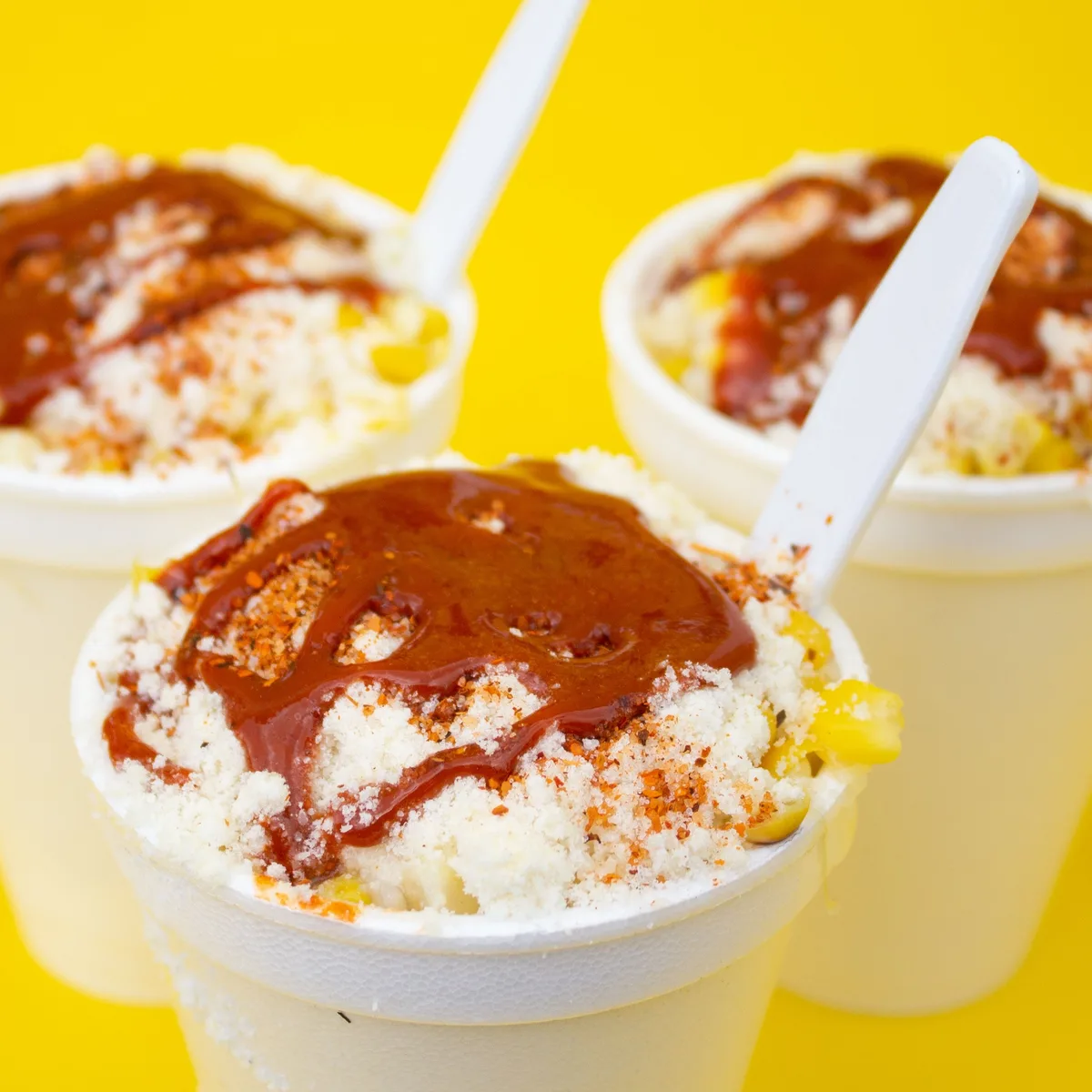
Cut the charred kernels off the cob, or char cut kernels directly in a screaming hot dry skillet until some pop and brown, about five minutes without stirring much. Fold the same dressing through the warm kernels, top with cotija and chili powder, and serve in cups with spoons and a lime wedge riding each one. Esquites hold better than elote on a buffet, travel to potlucks without drama, and let the corn-to-dressing ratio run richer since every spoonful is mixed. Same recipe, different physics.
Substitutions, Storage and Make-Ahead
Frozen corn works for esquites: thaw it fully, dry it aggressively with towels, and char it in a dry skillet; wet kernels steam and never brown, the same water rule our squash and shrimp pages keep proving. Grilled corn for a crowd can be charred an hour ahead and held loosely covered; dress only at serving. Leftover dressed elote does not keep its dignity, but leftover esquites reheat acceptably in a skillet for two days and convert beautifully into the corn salad from our sides collection. The dressing alone keeps four days refrigerated and doubles as a taco crema.
Why the Char and the Timing Matter
Any high dry heat does the job because the goal is the same everywhere: drive the surface of the kernels past the boiling point of water so their sugars and amino acids brown through the Maillard reaction, which is what builds the toasted flavor. A gas grill, a cast iron pan and a broiler all clear that threshold, so the difference between them is only how evenly they deliver the heat, which is why blistered patches, not a clock, are the doneness signal. Boiling cannot get there at all: water caps the surface at 212F, so the kernels only steam and never brown. The dressing has its own mechanism. As charred corn leaves the heat, escaping steam keeps the surface slick, and once that steam stops the surface turns tacky, which is when crema and cotija grip best. A short pause between char and dressing lets that tackiness set instead of dressing onto a film of steam.
FAQ
Can I boil the corn first and just brown it after? You can, and it will be second-best on purpose: par-cooked corn chars faster but waters down the toasted flavor. If your heat source is weak, boil three minutes maximum, dry the ears, then char hard.
What if I do not have cotija? Feta first, then a dry salty parmesan. The job is salt and crumble; soft melting cheeses slide off and are the wrong tool.
Is elote spicy? As written, barely. The chili powder is warmth and color. Heat arrives when you swap in Tajin plus cayenne, or serve with a fierce salsa on the side per the opt-in rule of the whole cuisine.
How do I scale this for a party? Char ahead, dress at serving, or switch entirely to esquites in a big bowl, which is engineered for exactly that job. Count one ear or one generous half-cup of esquites per guest alongside other food.
More recipes to try
- easy mexican recipes at home
- mexican side dish recipes
- mexican rice bowl recipes
- mexican cornbread recipes
- mexican squash recipes
- mexican black bean recipes
Nutrition note: values are calculated from USDA FoodData Central. Where USDA has no exact entry, the closest catalog item is used and named here: Mexican crema was calculated as “Sour cream, regular”.
Written by Frank Thomson, Skillet & Spoon editorial. Every nutrition figure on this site is calculated ingredient by ingredient from the USDA FoodData Central database, never estimated and never rounded to look better. We do not publish net-carb figures or use non-nutritive sweeteners. How we develop and source recipes is set out in our editorial policy.