Brownie Recipes: Fudgy, Cakey and the Shiny Crust
Brownie recipes split into two camps, fudgy and cakey, and which one you get is set by a single ratio: fat to flour. More butter and chocolate with less flour gives the dense, fudgy brownie; more flour and a little leavening gives the lighter, cakey one. Neither is the real recipe and neither is wrong, they are two different desserts from nearly the same ingredients. This page explains how to steer toward the brownie you want, how to get that shiny, papery crust on top, and when to pull the pan. Every number here is from USDA FoodData Central, and the sweetness is real sugar, counted honestly, never a substitute.
Fudgy Versus Cakey
The ratio decides it. Fudgy brownies are high in fat, butter and chocolate, and low in flour, with no or little leavening, so they bake dense and moist. Cakey brownies have more flour and some baking powder, so they rise and set lighter and drier, closer to a chocolate cake. Chewy brownies sit between the two and often use a mix of melted chocolate and cocoa plus a higher sugar level for that bendy texture. Decide which you want and adjust the flour and leavening toward it.
The Shiny, Crackly Crust
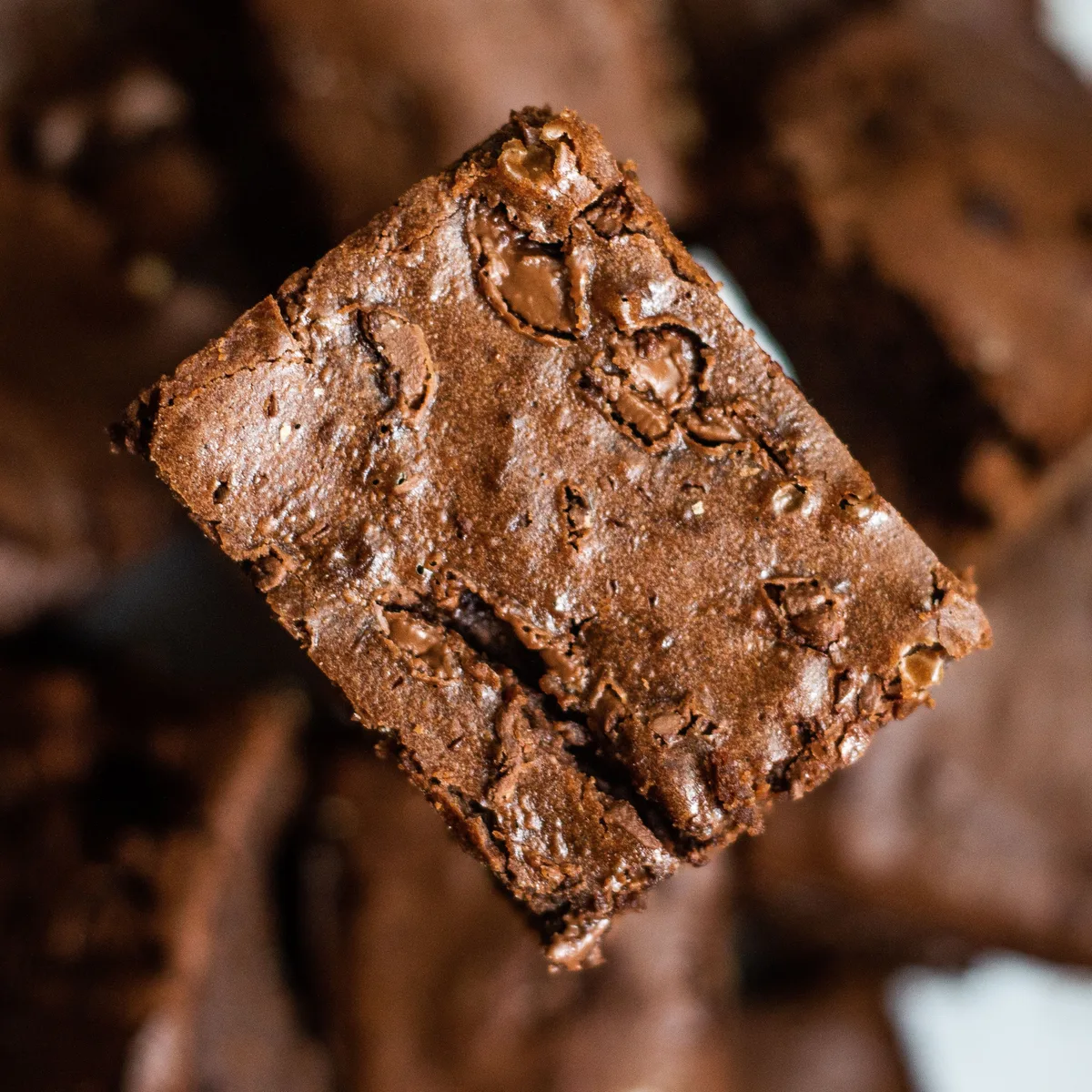
That thin, glossy, tissue-paper top is not luck. It forms when the sugar is properly dissolved into the eggs before baking, usually by whisking or beating the eggs and sugar until the mixture lightens and thickens, which brings sugar to the surface where it sets into a shiny crust. Brownies stirred together quickly and casually tend to bake up matte, because the sugar never dissolved and rose. So the crackly top is a mixing step, not an ingredient.
When to Pull the Pan
Fudgy brownies are meant to be underbaked relative to a cake, so a skewer should come out with moist crumbs clinging, not clean. Baked until a skewer comes out clean, a fudgy brownie is already dry. They also keep cooking in the hot pan, so pull them a touch early and let them set as they cool. Cakey brownies bake more like a cake and can go until just set.
Melting the Chocolate
Many brownies start with melted chocolate, and chocolate seizes into a grainy clump if even a drop of water hits it or if it overheats, so melt it gently, over low heat or in short bursts, and keep it dry. Butter melted with the chocolate is fine because it is fat, not water; it is stray moisture and scorching that ruin it.
Add-Ins and Variations
Nuts, chocolate chunks, swirls of peanut butter or cream cheese all ride on either base without changing the method. A cream cheese or caramel swirl is just a thicker mixture dropped on top and drawn through with a knife before baking. Keep add-ins modest, because too many weigh down the batter and can stop a fudgy brownie from setting.
Lining the Pan and Cutting Cleanly
Line the pan with a sling of parchment that overhangs two sides, and the whole slab lifts out in one piece once cooled, which beats digging squares from the pan. Let brownies cool completely, ideally chilled, before cutting, because warm brownies tear and smear. A clean cut comes from a knife wiped between slices, and for very fudgy brownies a knife dipped in hot water and dried drags less.
Cocoa Versus Melted Chocolate
Brownies built on cocoa powder taste intense and lean slightly cakey, because cocoa brings chocolate flavour with little fat, while brownies built on melted chocolate are richer and fudgier, because the cocoa butter in the chocolate adds fat that keeps them moist and glossy. Many of the best use both, cocoa for depth and melted chocolate for texture. Swapping one for the other changes the fat balance, so it also shifts the fudgy-to-cakey result.
Storing and Freezing
Brownies keep several days airtight at room temperature, and they stay moist longer than most bakes because of their high fat and sugar. They freeze well whole or cut, wrapped against air, and a frozen brownie thaws in under an hour, which makes a batch worth doubling. Many brownies taste better the day after baking, once the crumb has settled.
Serving Warm
A brownie served warm with ice cream is a different dessert from a cold one, softer and more molten, so a few seconds of reheating brings a stored brownie back to that state. Keep the reheat brief, because too long dries even a fudgy brownie out.
Common Brownie Problems
A greasy brownie usually had too much butter or was over-mixed once the flour went in. A brownie that baked cakey when you wanted fudgy had too much flour or leavening, so cut both toward the fudgy ratio. Hard, dry edges with a raw middle mean the oven ran too hot, so lower the temperature and give it longer, and check the centre with a skewer that should show moist crumbs, not wet batter.
A Note on Sugar
Sugar in a brownie sweetens, holds the moist texture, and is the whole reason the shiny crust can form. This site uses real sugar, counted truthfully from USDA data, and never non-nutritive sweeteners, which cannot dissolve and set into that crust or hold the fudgy texture. For the baking behind every chocolate bake, see the dessert recipes guide.
Choosing Your Chocolate
The chocolate sets the depth of a brownie. Bittersweet and semisweet both work, with bittersweet giving a more grown-up, less sweet result and semisweet a familiar sweetness, so the choice is taste rather than technique. Good chocolate and a real cocoa, rather than a cheap drinking-chocolate mix cut with sugar and milk powder, make a clear difference, because the flavour is doing most of the work in so simple a bake. If a recipe calls for unsweetened chocolate and you only have semisweet, the sugar balance shifts, so they are not a direct swap. Chips are stabilised to hold their shape and do not melt as smoothly as chopped bar chocolate, which is why chopped chocolate is better melted into the batter and chips are better left whole as pockets.
Scaling and Portioning
Brownies are rich, so they are usually cut smaller than cake. Scaling a recipe to a different pan changes the thickness, and thickness changes the bake: the same batter spread thin in a larger pan bakes faster and firmer, while piled into a smaller pan it bakes slower and fudgier in the middle. If you change the pan, watch the centre rather than the clock, and adjust the time to the new depth. A standard square pan is the safe default, since most recipes are written for it and need no adjustment at all.
FAQ
How do I make brownies fudgy instead of cakey? Raise the fat and lower the flour, and leave out or cut back the baking powder. More butter and chocolate with less flour bakes dense and moist; more flour and leavening bakes light and cakey.
How do I get the shiny, crackly top? Dissolve the sugar into the eggs by beating them together until the mixture lightens and thickens before adding the rest. That brings sugar to the surface where it sets shiny. Casually stirred batter bakes matte.
Why are my brownies dry? They were overbaked, often because they were baked until a skewer came out clean. Fudgy brownies want moist crumbs on the skewer, and they finish setting in the hot pan, so pull them a touch early.
Why did my melted chocolate turn grainy? It seized, from a drop of water or from overheating. Melt chocolate gently and keep it dry; butter melted with it is fine because it is fat, not water.
Can I make brownies with a sugar substitute? This site does not, because sugar holds the fudgy texture and forms the shiny crust, not just sweetens. We use real sugar and count it honestly.
Where to Go Next
Start with the dessert recipes guide for the chocolate and baking science behind every brownie. For related sweets see cookie recipes, cake recipes and no-bake desserts. For a worked recipe with a shiny top and nutrition per brownie, see fudgy brownies. For the brown-sugar cousin of the brownie, see blondies.
Written by Frank Thomson, Skillet & Spoon editorial. Every nutrition figure on this site is calculated ingredient by ingredient from the USDA FoodData Central database, never estimated and never rounded to look better. We do not publish net-carb figures or use non-nutritive sweeteners. How we develop and source recipes is set out in our editorial policy.